Key takeaways
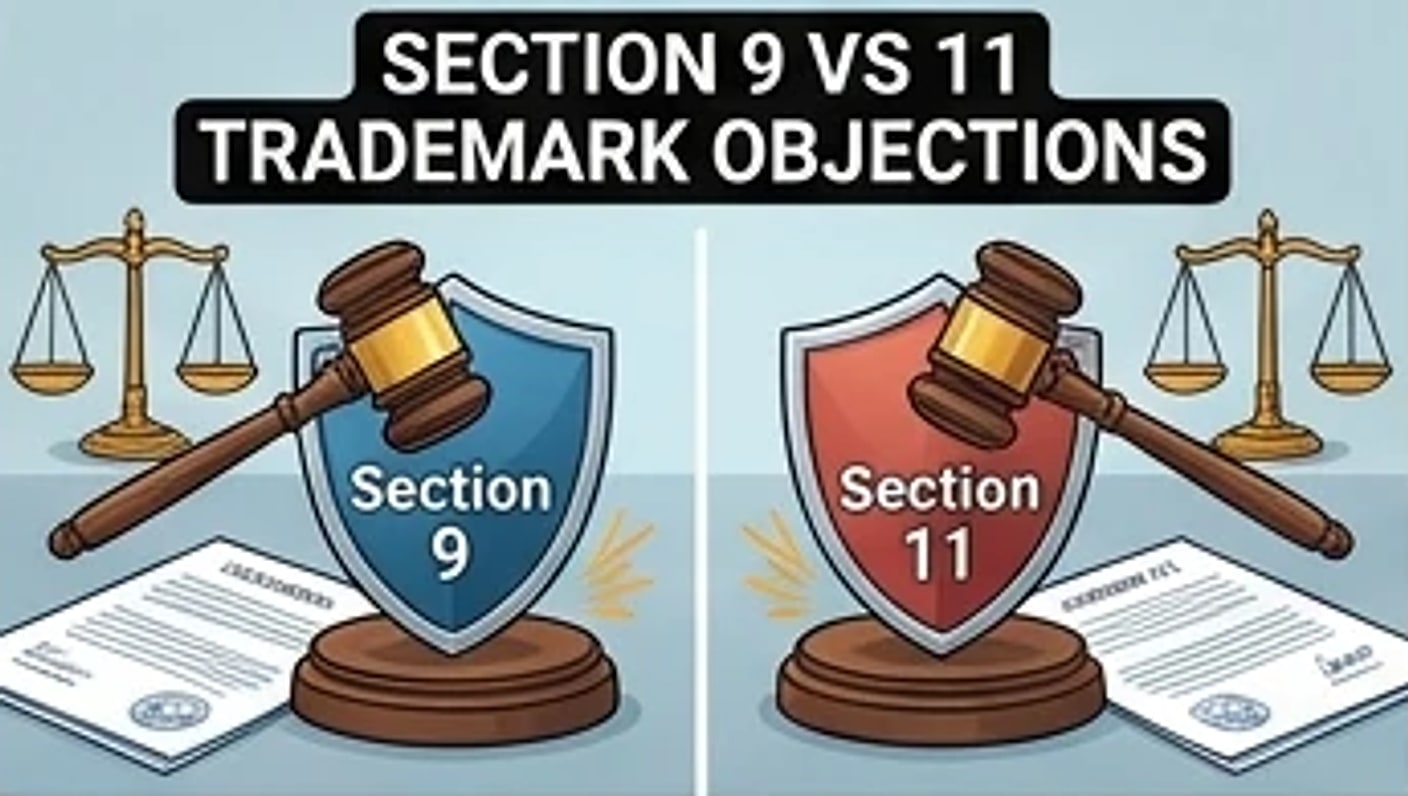
- Section 9 deals with absolute grounds about the mark itself, such as lack of distinctiveness and descriptiveness.
- Section 11 deals with relative grounds, mainly likelihood of confusion with earlier marks.
- A Section 9 answer needs evidence of use; a Section 11 answer needs comparison, narrowing or consent.
- Answer each ground in a separate heading and prepare for a hearing.
An Indian examination report usually raises one of two kinds of problem. A Section 9 objection says something is wrong with the mark itself. A Section 11 objection says the mark conflicts with someone else’s earlier rights. Understanding the trademark objection Section 9 Section 11 difference tells you what evidence to collect and what strategy to choose, and it is the second step after you understand what an examination report is asking. This article treats the trademark objection Section 9 Section 11 question as a sorting exercise: first classify, then respond.
This guide explains absolute and relative grounds, the sub-grounds founders see most often, how to overcome each with evidence, amendments and consents, and when to expect a hearing. It supports our guides on replying to an examination report and on why applications fail. It is general information, not legal advice. Check the Trade Marks Act, 1999 and your report.
Absolute and relative grounds
The Trade Marks Act, 1999 separates two families of refusal. Absolute grounds in Section 9 look at the mark in isolation and ask whether it can function as a trade mark. Relative grounds in Section 11 look at the mark against others and ask whether registration would conflict with earlier rights. The absolute grounds relative grounds trademark India distinction matters because the cure is different. Every trademark objection Section 9 Section 11 combination starts with reading which ground the examiner has actually cited.
An absolute objection is about the mark’s inherent nature, for example that it is descriptive, generic or deceptive. You cannot fix it by contacting another owner. You must show that the mark is distinctive, or that it has become distinctive through use, or you must change the mark. A relative objection is about someone else’s rights, so you can sometimes fix it by narrowing your goods, obtaining consent or showing that the earlier mark is not used.
Reports can contain both. A common pattern is a Section 9 objection to a descriptive word and a Section 11 objection to an earlier mark with a similar word. Treat them separately in your reply. A mixed objection needs a mixed strategy, and a clear table of grounds helps your team and your attorney to keep track.
Section 9: problems with the mark
Section 9(1)(a) allows refusal of a mark that is devoid of distinctive character, meaning that it is not capable of distinguishing the goods or services of one person from those of others. A Section 9(1)(a) lack of distinctiveness objection often targets very plain names, common words and simple shapes. Section 9(1)(b) targets marks made only of signs that describe the kind, quality, quantity, purpose, value, geographical origin or time of production of the goods. Section 9(1)(c) targets signs that are customary in the language or trade.
Section 9(2) lists other grounds: marks likely to deceive or cause confusion, to hurt religious sensibilities, that contain scandalous or obscene matter or whose use is prohibited by law. The proviso to Section 9(1) allows registration where a mark has acquired a distinctive character through use before the date of application, or is a well-known mark. This is the main route to overcome a descriptive objection for an established brand.
Practical examples help. A word that names the product, such as a plain term for the goods, is likely to be objected to. A coined word, an unusual combination or a stylised logo with distinctive elements is safer. If you are choosing a new brand, test it against these grounds before you file. If you are already using a descriptive name, plan to gather evidence of use.
Section 11: conflicts with earlier rights
Section 11 deals with relative grounds. Section 11(1) refuses registration where, because of identity with an earlier mark and similarity of goods or services, or similarity to an earlier mark and identity or similarity of goods, there is a likelihood of confusion on the part of the public, including a likelihood of association with the earlier mark. A Section 11(1) similar mark objection will cite one or more registered or pending marks by number and class.
Other parts of Section 11 deal with well-known marks, which can be protected against dilution, and with earlier unregistered rights such as passing off or copyright. The Registrar can also consider bad faith under Section 11(10). A cited mark can be pending, registered or even removed, so check its status and owner before replying.
Compare the marks as a whole in sound, appearance and meaning, and compare the goods, the customers and the trade channels. A mark that shares a common element with a crowded field of marks has a weaker claim to exclusivity. Show other marks on the register with the same element. Check whether the cited mark is used or vulnerable to removal for non-use, which may be useful in negotiation or a later action. A trademark objection Section 9 Section 11 reply should therefore keep the two grounds in separate headings with separate evidence.
How to overcome each objection
For a Section 9 objection, build evidence of distinctiveness. Gather invoices, advertising, sales figures, press, awards and website data from before the application date, and prepare a user affidavit. Argue that the mark is arbitrary or suggestive for your goods, that the mark as a whole is distinctive and that it has acquired distinctiveness. You can also offer a disclaimer Section 17 trademark rules permit for a non-distinctive part, so the Registrar accepts the distinctive rest.
| Objection | Ground | Typical answer |
|---|---|---|
| Section 9(1)(a) | Lack of distinctiveness | Evidence of acquired distinctiveness, affidavit of use |
| Section 9(1)(b) | Descriptive of the goods | Argue the mark is suggestive or arbitrary, or disclaim a word |
| Section 9(2) | Deceptive, offensive or prohibited | Amend the mark or the specification |
| Section 11(1) | Similar to an earlier mark | Compare marks, narrow goods, obtain consent |
| Section 11 well-known marks | Dilution or unfair advantage | Show different goods and no link |
For a Section 11 objection, choose between argument, amendment and agreement. Argue that the marks and goods are different. Narrow the specification to avoid overlapping goods. Provide a consent or coexistence letter from the owner of the earlier mark, which the Registrar will consider, though it is not binding. If the earlier mark is unused, you can plan a removal action in parallel. These are the main ways how to overcome trademark objection India applicants rely on.
Prepare for a hearing. If the reply does not persuade the Registrar, a hearing is fixed. Bring a concise note, a comparison table and evidence. Consider a fall-back filing of a modified mark or logo as a safety net. If the mark is accepted, it is advertised for four months, and you must be ready for opposition. If refused, review the options to appeal. Handled this way, a trademark objection Section 9 Section 11 notice becomes a checklist rather than a crisis.
Next steps and quick answers
When the report arrives, sort each objection into Section 9 or Section 11, list evidence for each, decide on amendments or consents and diarise the reply date. Take advice for important marks. This is general information, not legal advice. Keep the trademark objection Section 9 Section 11 table in your file so that hearing preparation is quick.
Related reading: what a trade mark examination report is asking, why trademark applications fail in India, how to reply to a trademark examination report, trademark show cause hearings, defending a trademark opposition in India and trademark classes in India.
Quick answers
What is the difference between a Section 9 and a Section 11 objection?
Section 9 is an absolute ground about the mark itself, such as lack of distinctiveness or descriptiveness. Section 11 is a relative ground about conflict with earlier marks or rights.
How can I overcome a Section 9 objection?
Show that the mark is distinctive or has acquired distinctiveness through use before the application date, with evidence and an affidavit, or offer a disclaimer for a non-distinctive element.
How can I overcome a Section 11 objection?
Argue the marks and goods differ, narrow the specification, obtain consent from the earlier owner or show the earlier mark is not used. A hearing may follow.
What is the difference between absolute and relative grounds?
Absolute grounds concern the mark alone. Relative grounds concern conflict with someone else’s earlier rights.
Final word
Halverton & Co. is an Indian law firm advising founders, startups, technology companies and investors on Indian law, including trade mark prosecution, objection replies and hearings, brand strategy for startups and foreign applicants. We practise in Jharkhand, Maharashtra and before the Supreme Court of India, and act as fractional legal counsel for technology-driven businesses. Halverton & Co.: Where tech needs law! If you have a question about Indian law, write to us at office@halvertonandco.com, or get in touch.
This article reflects developments reported up to 31 October 2026. It is for general information only, is not legal advice, and does not create an advocate-client relationship. Halverton & Co. is an Indian law firm.
Sources
Related practice area
Intellectual Property
Trade marks, copyright, patents and designs. Searched, filed, licensed and enforced under Indian law.
View the practice areaComments
No account needed. Comments are reviewed before they appear, so yours will show here once approved. Please do not share confidential details or describe your own legal matter: replies are general discussion, not legal advice, and do not create an advocate-client relationship. For your own situation, write to office@halvertonandco.com.