Key takeaways
- Contain and preserve evidence first, and appoint one incident lead.
- CERT-In’s directions require ransomware and other listed incidents to be reported within six hours of noticing them.
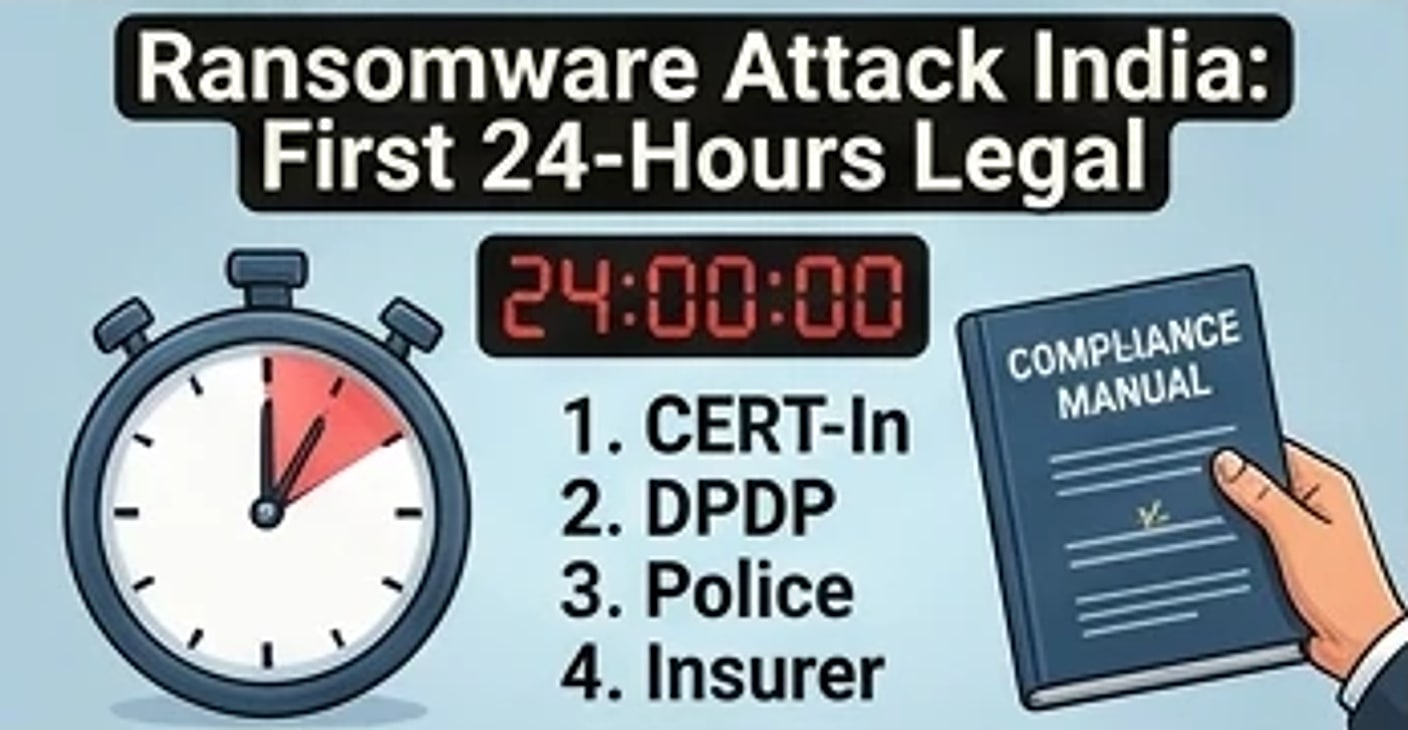
- Notify your insurer, file a police complaint and assess DPDP breach duties within the first day.
- Take legal, insurer and law-enforcement advice before any ransom decision.
If you are asking ransomware attack India what to do, the first hours matter more than anything else. Systems are locked, a note demands payment, and several legal clocks may already be running: a six-hour report to CERT-In, notice duties under the DPDP framework, contract notices to customers, sector regulator reports and the notice window in your cyber insurance policy. The decisions you make now, and the records you keep, will be examined later.
This guide gives a first-24-hours legal checklist for an Indian company, in plain steps. It is general information, not legal advice, and the technical response should be led by your security team and forensic specialists. Rules differ by sector, so check your own regulator’s directions and take legal advice on the facts. The question of ransomware attack India what to do is easier to answer if the plan exists before the attack.
Hour 0 to 2: contain and preserve
Activate your incident response plan and appoint one person to lead. Isolate affected systems from the network, but do not wipe or reinstall machines yet, because logs and malware samples are evidence. Take copies of the ransom note, screenshots and the time of discovery. Start a written log of who did what and when, and keep it going for the whole incident.
Engage your lawyers early and let them engage forensic specialists where possible, so that communications about the investigation can be protected by privilege to the extent the law allows. Keep the group of people with access to details small, and avoid speculating in email or chat. Notes written in panic can be quoted back to you.
Identify what is affected: systems, data types, personal data of customers or employees, regulated data and critical operations. Check backups: are they intact, offline and tested? If you are a critical information infrastructure operator, tell the National Critical Information Infrastructure Protection Centre as your rules require. Ransomware attack India what to do planning should include who has authority to isolate systems.
Hour 2 to 6: report to CERT-In and regulators
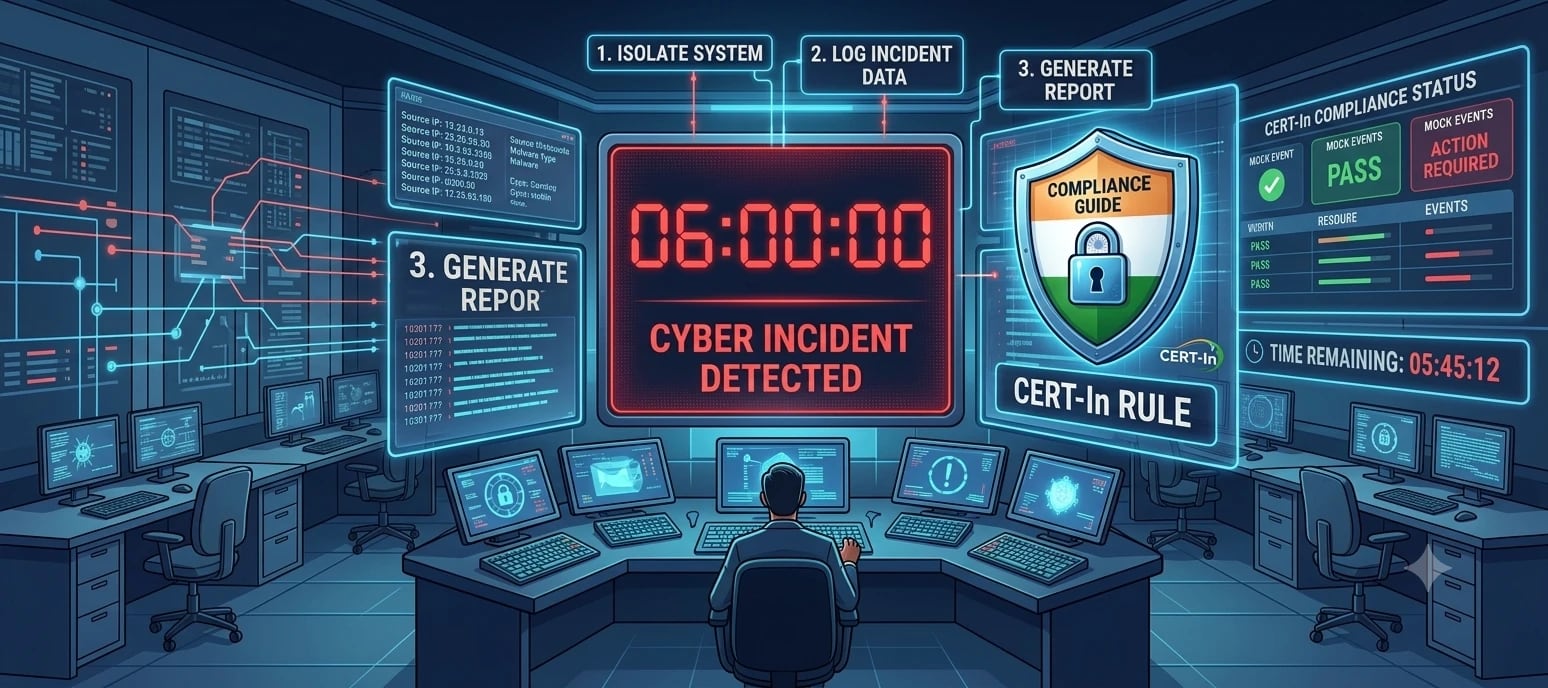
CERT-In’s directions of April 2022 under Section 70B of the IT Act require specified cyber incidents, including ransomware and data breaches, to be reported within six hours of noticing them or being notified. CERT-In six hour reporting ransomware cases need goes to the incident reporting address or portal, with details of the incident as available, and logs must be kept for 180 days within India. Check the current format.
Do not wait for a full investigation. Report what you know and update later. Late reports can themselves be a violation, and CERT-In can also seek information and give directions. Record the time of discovery and the time of reporting, because the six-hour window runs from noticing the incident.
Check sector rules. Banks, NBFCs, payment operators, insurers, stock market intermediaries and listed companies may have separate duties, such as reporting to the RBI, SEBI or IRDAI within short periods, and disclosure rules for listed entities. Identify which regulators you must tell and prepare short factual notices. Keep the content consistent across all reports. In a ransomware attack India what to do about reporting is decided largely by the six-hour clock.
Hour 6 to 24: police, insurer, customers and DPDP
File a police complaint. A cybercrime complaint can be lodged on the national portal or with the local cyber cell, describing the incident, the demand and the losses. A file cybercrime complaint ransomware India step gives a record, supports insurance claims and may help law enforcement trace the attackers. Offences potentially involved include unauthorised access and extortion under the IT Act and the Bharatiya Nyaya Sanhita.
| Window | Action | Owner |
|---|---|---|
| Hour 0 to 2 | Contain, preserve evidence, appoint a lead | Incident lead |
| Hour 2 to 6 | Report to CERT-In and sector regulators | Compliance |
| Hour 6 to 24 | Police complaint, insurer notice, customer notices | Legal and management |
| Throughout | Keep a decision log and consider privilege | Counsel |
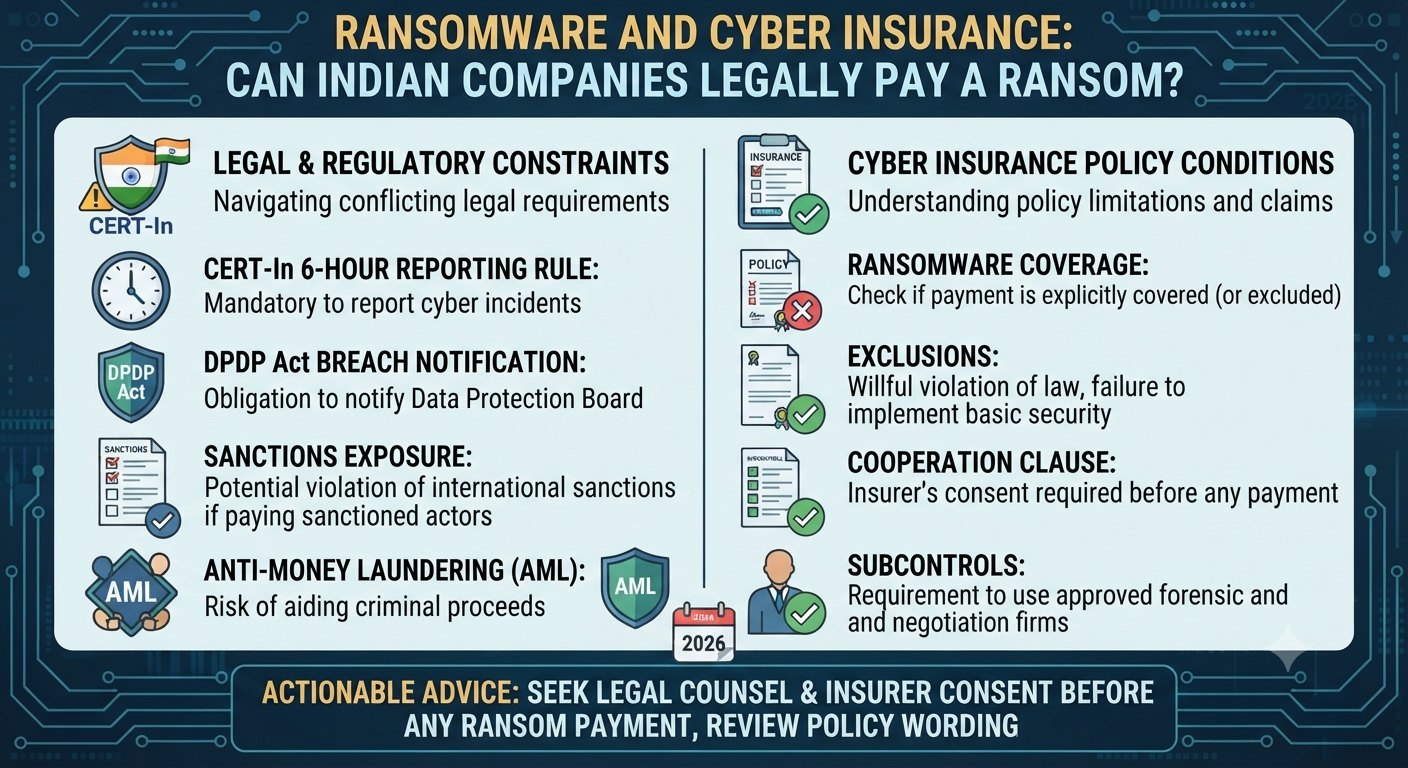
Notify your insurer. Policies set strict notice periods, and failure to notify promptly can put cover at risk. A cyber insurance notice ransomware claim requires should go to the insurer’s designated contact, and the policy may require the insurer’s consent before you hire vendors or pay anything. Check the policy for panel vendors and exclusions. A ransomware attack India what to do list should include insurer contact details and policy numbers. A ransomware first 24 hours checklist should name owners.
Assess personal data and notice duties. The DPDP Act requires notice of a personal data breach to the Data Protection Board and affected data principals as prescribed, and the Rules set content and timing, as reported with an initial intimation without delay and a detailed report within 72 hours. A DPDP breach notice after ransomware depends on whether personal data was compromised, so the forensic work on that question is a priority. Check which DPDP provisions are in force.
The ransom question
Whether to pay is a legal and business decision, not only a technical one. Indian law does not have a general ban on paying a ransom, but payments can raise risks: funding criminals, sanctions exposure if the group is listed abroad, money laundering concerns, tax treatment and reporting duties. Paying also does not guarantee recovery or deletion of stolen data.
Take advice before any negotiation. Consider law enforcement guidance, your insurer’s position and whether you can restore from backups. If a payment is considered, screen the recipient and wallet, document the decision-making and consider notifying authorities. For foreign-linked groups, sanctions rules in the US or UK may affect your banks and partners.
Plan communications. Prepare short statements for customers, employees, partners and the media that are accurate and do not overpromise. Contract notices to customers may be due within hours under security clauses. Keep claims modest until facts are confirmed, and avoid blaming individuals. After 24 hours, move to a structured investigation and recovery plan. Whatever you decide on payment, write down why. This is part of ransomware attack India what to do.
Next steps and quick answers
Prepare now: write a playbook, name roles, keep contact lists and policy numbers, test backups and run exercises. This is general information, not legal advice.
Related reading: ransom payments and cyber insurance in India, the CERT-In six-hour rule for startups, the DPDP compliance checklist for small businesses, ransomware payments and OFAC sanctions, the UK ransomware payment ban and DPDP breach notification vs UK GDPR’s 72 hours.
Quick answers
How soon must I report a ransomware attack to CERT-In?
CERT-In’s 2022 directions require reporting of specified incidents, including ransomware, within six hours of noticing them.
Do I have to tell the Data Protection Board?
If personal data is breached, the DPDP framework requires notice to the Board and affected individuals as prescribed. Check commencement and the Rules.
Should I pay the ransom?
Take legal and insurer advice first. Payment carries legal, sanctions and practical risks and does not guarantee recovery.
Should I pay the ransom?
Take legal and insurer advice first. Payment carries legal and practical risks and does not guarantee recovery.
Final word
Halverton & Co. is an Indian law firm advising founders, startups, technology companies and investors on Indian law, including cyber incident legal response, CERT-In and DPDP compliance, and technology contracts in India. We practise in Jharkhand, Maharashtra and before the Supreme Court of India, and act as fractional legal counsel for technology-driven businesses. Halverton & Co.: Where tech needs law! If you have a question about Indian law, write to us at office@halvertonandco.com, or get in touch.
This article reflects developments reported up to 31 October 2026. It is for general information only, is not legal advice, and does not create an advocate-client relationship. Halverton & Co. is an Indian law firm.
Sources
Related practice area
Technology & AI Law
Contracts, data protection and AI policies for products that handle other people’s data.
View the practice areaComments
No account needed. Comments are reviewed before they appear, so yours will show here once approved. Please do not share confidential details or describe your own legal matter: replies are general discussion, not legal advice, and do not create an advocate-client relationship. For your own situation, write to office@halvertonandco.com.