Key takeaways
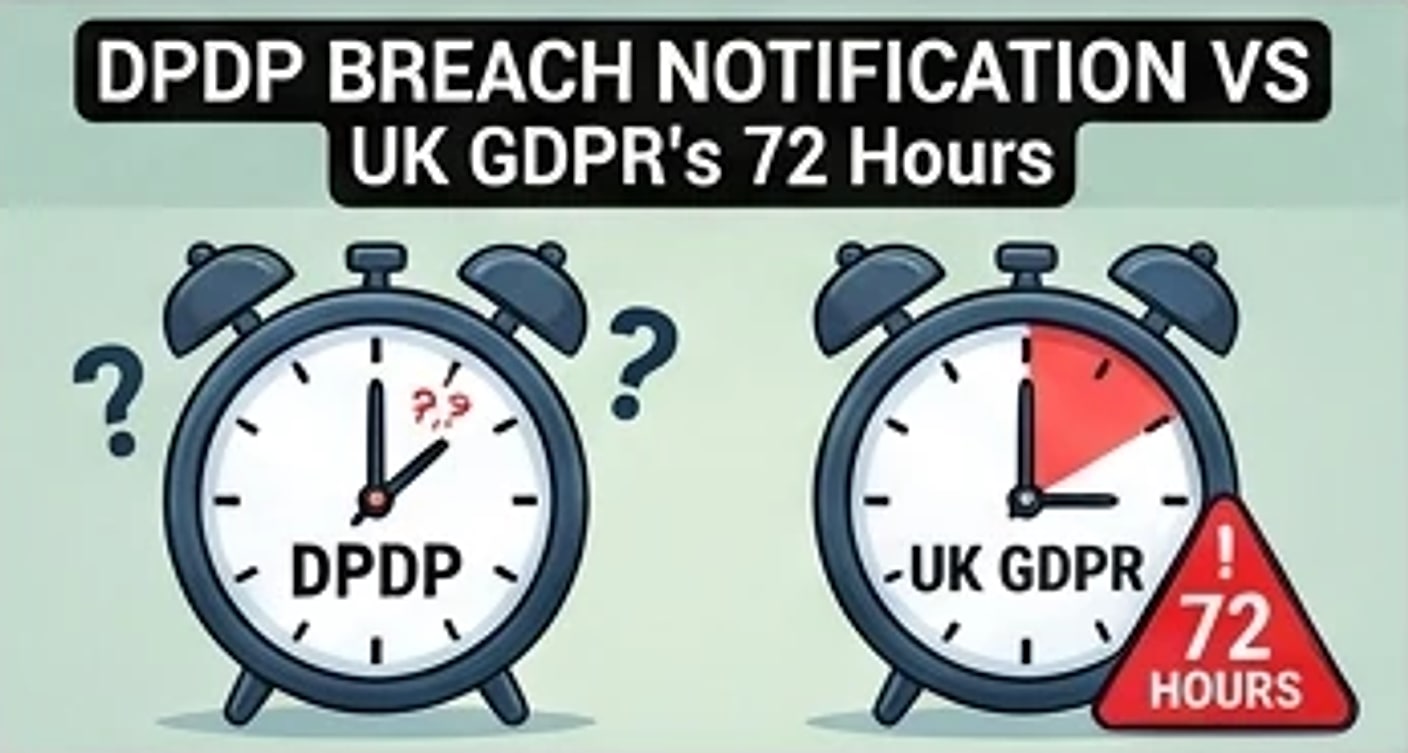
- UK GDPR requires notice to the ICO within 72 hours where a breach is likely to risk individuals, while the DPDP Rules reportedly require notice without delay and a detailed report within 72 hours.
- CERT-In adds a six-hour reporting direction for listed incidents.
- Contracts with Indian vendors should require notice within hours and cooperation.
- Build one playbook with a table of regulators, triggers, deadlines and recipients.
A UK business with an Indian vendor can face two breach clocks at once. UK GDPR asks a controller to tell the ICO within 72 hours of becoming aware of a notifiable personal data breach. India’s DPDP framework asks data fiduciaries to tell the Data Protection Board and each affected person, and CERT-In has its own six-hour incident reporting direction. A DPDP breach notification UK comparison therefore matters for contracts, playbooks and insurance. A DPDP breach notification UK comparison starts with who must tell whom, and when.
This guide compares the UK and Indian rules, explains where they differ, and sets out how UK controllers and their Indian processors can plan one response that satisfies both. It is written by an Indian law firm for UK readers. It is general information, and the Digital Personal Data Protection Rules, 2025 and UK law should be checked directly, with UK advisers confirming UK points.
The UK position: Articles 33 and 34
Article 33 of the UK GDPR requires a controller to notify the Information Commissioner of a personal data breach without undue delay and, where feasible, not later than 72 hours after becoming aware of it, unless the breach is unlikely to result in a risk to individuals’ rights and freedoms. If the notification is late, reasons must be given. The UK GDPR 72 hours ICO breach rule is therefore risk-based: low-risk breaches need not be reported but must be recorded.
Article 34 requires communication to affected individuals without undue delay where the breach is likely to result in a high risk. Processors must notify controllers without undue delay after becoming aware of a breach under Article 33(2). The controller’s clock starts when it becomes aware, and ICO guidance explains when a controller is considered aware, including when a processor tells it.
Failure to notify can lead to fines. The UK GDPR sets a lower tier for infringements of Articles 33 and 34, and regulators also look at security failures that caused the breach. UK law has been updated by the Data (Use and Access) Act 2025, so check the latest ICO guidance for any changes that touch breach reporting.
The Indian position: DPDP Rules and CERT-In
Under the Digital Personal Data Protection Act, 2023, a data fiduciary must give the Data Protection Board and each affected data principal notice of a personal data breach, in the form and manner prescribed. The DPDP Rules Rule 7 breach intimation provisions, as reported, require intimation to affected data principals without delay and notice to the Board without delay, with a detailed report within 72 hours or a longer period the Board allows. Several commentaries describe it this way; check the notified Rules for the exact wording. The DPDP breach notification UK readers ask about turns on Rule 7 and the Board, not on the ICO. A Data Protection Board breach report 72 hours after awareness is how commentators describe the detailed report.
Unlike the UK, the DPDP Act does not use a risk threshold for reporting: the duty applies to any personal data breach, as defined, though the Rules specify content such as the nature, extent, timing and likely impact. Penalties under the Schedule are high. Commentary reports up to ₹250 crore for failure to take reasonable security safeguards and up to ₹200 crore for failure to notify a breach. Commencement of the operative duties is phased, so confirm which provisions are in force.
CERT-In adds another layer. Directions issued in April 2022 under Section 70B of the Information Technology Act require service providers, intermediaries, data centres and bodies corporate to report specified cyber incidents to CERT-In within six hours of noticing them. CERT-In six hour incident reporting applies to listed categories such as data breaches and ransomware attacks and sits alongside the DPDP duties.
Side-by-side differences
The first difference is the trigger. The UK requires notification when a breach is likely to result in risk, and the clock starts on awareness by the controller. India requires notification of personal data breaches to the Board and the individuals, with additional CERT-In duties for cyber incidents. The second difference is the deadline: 72 hours to the ICO in the UK, without delay plus a 72-hour detailed report in India, and six hours for CERT-In.
| Point | UK GDPR | India |
|---|---|---|
| Regulator | ICO | Data Protection Board and CERT-In |
| Trigger | Likely risk to individuals | Personal data breach; listed cyber incidents |
| Deadline | Within 72 hours of awareness | Without delay, detailed report in 72 hours; CERT-In six hours |
| Individuals | If high risk | Each affected person |
| Processor duty | Tell the controller without undue delay | Contract and Rules |
The third difference is the audience. The UK sends the main notice to the ICO and to individuals in high-risk cases. India sends notice to the Board, to every affected data principal and, for cyber incidents, to CERT-In. The fourth is content: both require facts such as nature, consequences and measures taken, but the DPDP Rules prescribe details. The fifth is penalties, which are structured differently. For any DPDP breach notification UK controller with an Indian processor, the contract notice period is the key variable.
A simple table in your playbook helps. List for each jurisdiction the regulator, the trigger, the deadline, the recipients, the content and the responsible person. Include the processor’s duty to inform the controller and the contractual notice period that makes the controller’s deadline achievable. An Indian vendor breach UK controller faces will also raise questions of where the data subject is and which law applies to which data.
One response plan for both
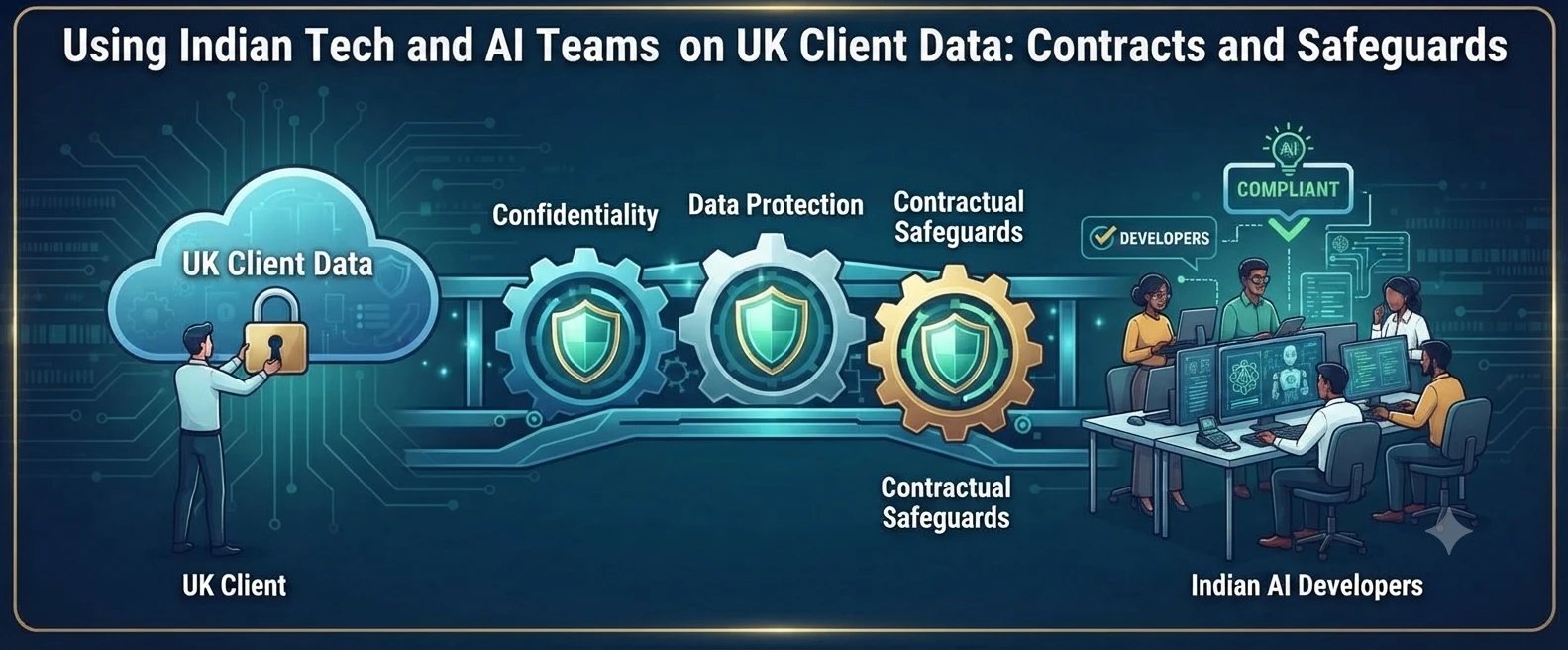
Start with contracts. The data processing agreement with an Indian vendor should require notice of any suspected breach within hours, not days, and should require cooperation, logs and forensic access. Specify who notifies whom: the processor should not notify regulators or individuals without the controller’s instruction unless the law requires it. Where Indian law requires the vendor to report to CERT-In, say so and require a copy. A joint plan for DPDP breach notification UK and Indian rules reduces confusion in the first hours.
Build a decision tree. Within the first hours, assess whether personal data of UK or Indian residents is involved, whether it is a cyber incident under CERT-In’s categories and whether UK risk thresholds are met. Assign a lead who can decide on notifications. Prepare templates for the ICO, the Board, CERT-In, and affected individuals, and keep a log of decisions and times.
Test it. Run a table-top exercise with your Indian vendor, and check that contact lists, escalation paths and time zones work. Make sure insurance policies cover regulatory notification costs in both countries. Review the plan when the DPDP provisions commence or when the ICO updates guidance.
Next steps and quick answers
Review vendor contracts for notice periods, build a joint playbook, train the response team and run a test. This is general information, not legal advice. Halverton & Co. is an Indian law firm and does not advise on English law. Update your DPDP breach notification UK playbook when the remaining DPDP provisions commence.
Related reading: the DPDP Act for UK businesses, the CERT-In six-hour rule for startups, UK GDPR and outsourcing to India: five clauses, offshore data processing in India for UK clients, a ransomware attack in India: the first 24 hours and the UK ransomware payment ban; also UK cookie consent rules in 2026 and the Cyber Security and Resilience Bill; also the UK GDPR representative rule for Indian companies; also an AI usage policy for Indian companies and processor liability under the UK GDPR.
Quick answers
Does the DPDP Act have a 72-hour rule like the UK GDPR?
Commentary on the DPDP Rules says the Board must be told without delay with a detailed report within 72 hours, and individuals must be told without delay. Confirm in the notified Rules.
Do I have to report a breach to CERT-In as well?
CERT-In’s 2022 directions require listed cyber incidents to be reported within six hours. A data breach affecting systems in India may be covered.
What is the main difference from UK GDPR?
The UK uses a risk threshold, while the DPDP framework applies to personal data breaches generally and requires notice to affected individuals.
Does the DPDP Act use a risk threshold for breach reporting?
Commentary says it applies to personal data breaches generally, unlike the UK’s risk-based test. Check the notified Rules.
Final word
Halverton & Co. is an Indian law firm advising UK companies, founders, investors and law firms on Indian law, including Indian data protection, DPDP compliance and cross-border data processing agreements with Indian vendors. We practise in Jharkhand, Maharashtra and before the Supreme Court of India, and work alongside your UK solicitors, who advise on English law. Halverton & Co.: Where tech needs law! If you have a question about Indian law, write to us at office@halvertonandco.com, or get in touch.
This article reflects developments reported up to 31 October 2026. It is for general information only, is not legal advice, and does not create a solicitor-client relationship. Halverton & Co. is an Indian law firm, is not authorised or regulated by the Solicitors Regulation Authority, and does not advise on English law; UK-law points should be confirmed with UK advisers.
Sources
Related practice area
Technology & AI Law
Contracts, data protection and AI policies for products that handle other people’s data.
View the practice areaComments
No account needed. Comments are reviewed before they appear, so yours will show here once approved. Please do not share confidential details or describe your own legal matter: replies are general discussion, not legal advice, and do not create an advocate-client relationship. For your own situation, write to office@halvertonandco.com.