Key takeaways
- The UK government has said it will pursue a targeted ban on ransomware payments by public bodies and regulated infrastructure; it is not law yet.
- Other organisations would face a notification regime before paying, and mandatory reporting is proposed.
- Indian suppliers should expect new contract terms on incident response and payment decisions.
- The best response is resilience: tested backups, segmentation and clear playbooks.
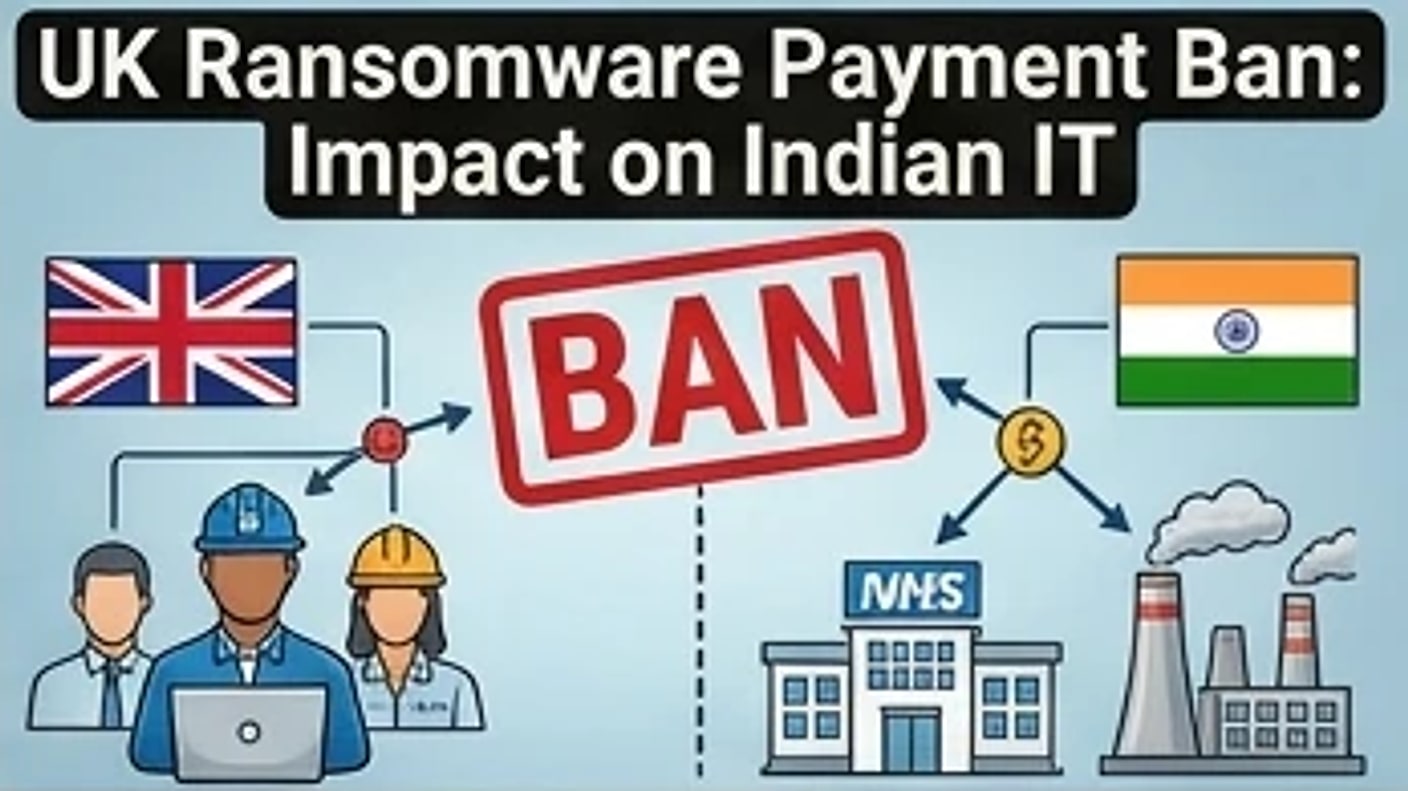
The UK ransomware payment ban is a policy that the government has said it will pursue, not yet a law in force. Reports on the Home Office response describe a targeted ban on ransomware payments by public sector bodies, including local government and the NHS, and by owners and operators of critical national infrastructure that are regulated. For an Indian IT supplier that serves such customers, the direction of travel already affects contracts and incident planning. The UK ransomware payment ban is still a policy direction, and the details may change before any bill is passed.
This guide frames the proposals as what is coming, explains the three main elements reported so far, and sets out what suppliers and their UK customers can do now. It is written by an Indian law firm for UK readers. Check the Home Office and Parliament for the current status before relying on any detail, and take advice from UK counsel on UK law.
What has been proposed
The government consulted on ransomware measures in January 2025 and later confirmed that it would move ahead with three proposals, according to law firm summaries. First, a targeted ban on ransomware payments by public sector bodies and critical national infrastructure owners and operators. Second, a ransomware payment prevention regime that would require other organisations to notify the authorities before making a payment. Third, mandatory incident reporting. Reports describe how the UK ransomware payment ban would work as a targeted measure, not a general prohibition. Mandatory ransomware reporting 72 hours UK proposals were also mentioned.
Reports say that the ban would be targeted and would include national security exemptions, and that business generally would not face an outright ban. A ransomware payment prevention regime UK businesses would follow is described as a notification system, under which the authorities could tell an organisation that a payment would breach sanctions or fund criminals. The mandatory reporting proposal has been described with an initial report within 72 hours, though that detail was still under consideration in sources.
The sources reviewed for this article do not confirm that a bill has been passed. Treat all of this as a proposal. Government statements can change, and the legislative route and timing may differ from what commentators expect. Check the Home Office pages and the parliamentary bill tracker.
Who would be covered
The public sector ban would, according to the summaries, cover all public sector bodies, including local authorities and the NHS, and owners and operators of critical national infrastructure that are regulated or have a competent authority. Public sector ransomware ban councils NHS trusts and other bodies would face is intended to remove the incentive for criminals to target essential services. Under the UK ransomware payment ban as described, the target is the public sector and regulated infrastructure.
Suppliers are not directly named in the reports as being subject to the ban, but they are part of the picture. A supplier that holds a council’s data or runs its systems may be affected if an attack on the supplier forces a decision on payment. Contracts and guidance may extend the policy to suppliers through procurement terms and sector rules.
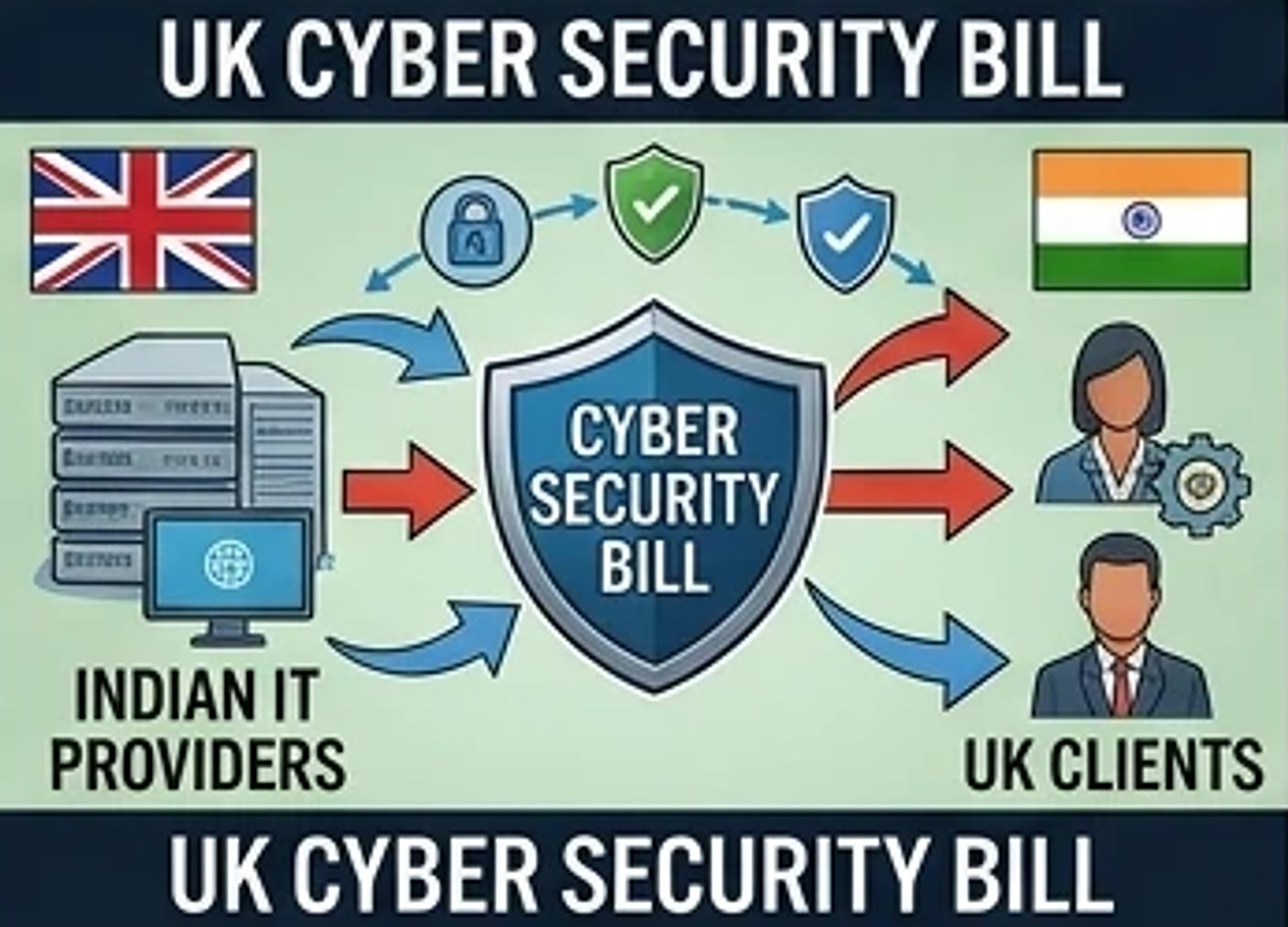
Related legislation may also reach suppliers. The Cyber Security and Resilience Bill, introduced in Parliament in late 2025 according to reports, proposes to bring managed service providers and some other suppliers into the cyber regulatory regime. The Cyber Security and Resilience Bill suppliers and customers should watch is separate from the ransomware proposals but points the same way: more duties for those who operate critical services.
What it means for Indian IT suppliers
An Indian IT supplier to UK councils, health bodies or infrastructure operators should expect questions in tenders and contract renewals. Customers will want to know how the supplier protects systems, how it will respond to an attack and who decides on payment. Many contracts already contain security and incident clauses, but the ban would make it explicit that a public body cannot pay, so a supplier cannot assume the customer will fund a ransom. The UK ransomware payment ban will matter to suppliers mainly through contracts and procurement.
| Proposal | Reported scope | Supplier action |
|---|---|---|
| Targeted payment ban | Public bodies and regulated infrastructure | Plan for no payment |
| Payment notification regime | Other organisations | Know the customer’s process |
| Mandatory reporting | Initial report within about 72 hours, under consideration | Align playbooks |
| Related cyber bill | Managed service providers in scope | Track the bill |
An Indian IT supplier UK public sector contract will increasingly address payment decisions, reporting duties and cooperation with the NCSC and law enforcement. It may require notice within hours, forensic cooperation, backups kept separately and tested restore times. Suppliers should assume that incident response will involve UK authorities, not only the customer.
Dual regimes apply. An attack on an Indian supplier is also subject to Indian rules, including CERT-In’s six-hour incident reporting direction and DPDP breach duties. A supplier that serves UK public bodies should align playbooks so that it can meet UK customer deadlines and Indian regulatory deadlines at the same time. Sanctions screening should be part of any decision.
Preparing now
Review contracts for incident clauses. Check notice periods, payment decision rights, cooperation duties, audit rights, liability caps and insurance. Add a statement that the supplier will not pay a ransom for customer data or systems without the customer’s written consent, and that if the customer is a public body it will comply with applicable payment restrictions.
Strengthen resilience. The best answer to a payment ban is not needing to pay. Maintain offline and immutable backups, test restores, segment networks, use multi-factor authentication, patch quickly and train staff. Document these controls, because customers and regulators will ask for evidence. Consider cyber insurance terms on ransom coverage and exclusions.
Run exercises with UK customers. Practise the first 24 hours, including who contacts the NCSC, who decides on communications and how to handle data protection notices in both countries. Keep legal counsel in the loop in both jurisdictions. Update plans as the UK proposals become law. Plan for the UK ransomware payment ban by improving recovery capability, since a body that cannot pay must be able to restore.
Next steps and quick answers
Track the status of the proposals, review contracts, strengthen backups, align incident plans and brief your UK customers. This is general information, not legal advice, and Halverton & Co. does not advise on English law.
Related reading: ransom payments and cyber insurance in India, the CERT-In six-hour rule for startups, the DPDP Act for UK businesses, a ransomware attack in India: the first 24 hours, ransomware payments and OFAC sanctions and DPDP breach notification vs UK GDPR’s 72 hours; also the Cyber Security and Resilience Bill.
Quick answers
Is there a UK ransomware payment ban in force?
Not according to the sources reviewed for this article. The government has said it will pursue a targeted ban for public sector and critical infrastructure bodies. Check the current status.
Would the ban apply to private businesses?
Reports say no outright ban for private businesses, but a notification regime before payment is proposed.
What should Indian suppliers do now?
Review incident clauses, improve resilience and backups, align Indian and UK reporting duties and be ready to answer customer questions.
Is the UK ransomware ban in force?
Not according to the sources reviewed. Check the Home Office and Parliament for the current status.
Final word
Halverton & Co. is an Indian law firm advising UK companies, founders, investors and law firms on Indian law, including contracts, cyber incident readiness and data protection for Indian technology suppliers serving UK customers. We practise in Jharkhand, Maharashtra and before the Supreme Court of India, and work alongside your UK solicitors, who advise on English law. Halverton & Co.: Where tech needs law! If you have a question about Indian law, write to us at office@halvertonandco.com, or get in touch.
This article reflects developments reported up to 31 October 2026. It is for general information only, is not legal advice, and does not create a solicitor-client relationship. Halverton & Co. is an Indian law firm, is not authorised or regulated by the Solicitors Regulation Authority, and does not advise on English law; UK-law points should be confirmed with UK advisers.
Sources
Related practice area
Technology & AI Law
Contracts, data protection and AI policies for products that handle other people’s data.
View the practice areaComments
No account needed. Comments are reviewed before they appear, so yours will show here once approved. Please do not share confidential details or describe your own legal matter: replies are general discussion, not legal advice, and do not create an advocate-client relationship. For your own situation, write to office@halvertonandco.com.