Key takeaways
- The DPDP Act has no blanket exemption for small businesses; the government has a power to exempt classes, but sources found no notification granting one.
- Notice, consent, security safeguards and breach duties apply to small fiduciaries as to large ones.
- Duties commence in phases, so confirm which provisions are in force for your business.
- A short written policy, a vendor list and a breach playbook cover most of the practical ground.
Does the DPDP Act apply to small businesses? In general, yes. The Digital Personal Data Protection Act, 2023 has no blanket exemption for small firms, so a shop with a customer list, a clinic with patient records or a startup with a mobile app can all be data fiduciaries. What the Act allows is targeted exemption by notification, and that is where small businesses should look. DPDP compliance for small business starts with understanding what applies by default. This guide covers DPDP compliance for small business owners in plain terms.
This guide explains the scope, the exemption power, what duties remain even for small firms, the main steps to take, the penalty risk and the timeline. It is general information, not legal advice. The DPDP Rules, 2025 are being phased in, with the main duties starting on 13 May 2027, so check the latest notifications for exemptions and dates before you rely on them.
Scope: size is not an exemption
The Act applies to the processing of digital personal data within India, and to processing outside India for offering goods or services to people in India. A data fiduciary is any person who decides the purpose and means of processing. There is no turnover or headcount threshold in the Act. A small business that collects names, phone numbers or emails through a form, an app or a payment system is processing personal data.
Practitioners writing about startups and MSMEs make the same point: being small does not by itself take a business outside the Act, and MSME status alone does not mean exemption. The Act applies to digital data, so a business that keeps only paper records may fall outside, but most businesses use phones, spreadsheets and online tools. Treat the question data fiduciary small business India as one of fact: do you decide why and how you process personal data digitally? DPDP compliance for small business is therefore a question of facts.
Personal use and some types of data are outside the Act, such as data processed for purely personal or domestic purposes, and data made publicly available by the person concerned or under a legal obligation. Be careful, as these exceptions are narrow. A business should not assume that a customer list is exempt because the customers are known to it.
Exemption powers and their limits
Section 17(3) of the Act allows the Central Government to notify classes of data fiduciaries, including startups, that are exempt from certain provisions, having regard to the volume and nature of personal data they process. This is the DPDP Act exemption for startups MSME route. It is a power to exempt by notification, not an exemption in the text. Check for any notification and read its conditions, because exemptions are usually partial. A Section 17(3) DPDP exemption is a power for the government to notify classes, not an automatic right.
| Duty | Practical step | Priority |
|---|---|---|
| Notice and consent | Plain-language notice, recorded consent | High |
| Security safeguards | Access control, backups, vendor terms | High |
| Breach response | Detect, assess, notify, record | High |
| Rights requests | Process for access, correction, erasure | Medium |
| Retention | Delete data when the purpose ends | Medium |
The Rules also contain some exemptions for particular classes and purposes, for example in relation to certain professionals and educational institutions for limited purposes, as described by commentators. These do not cover small businesses generally. Do not rely on a summary on social media. Read the Rules and any later notification, or ask an adviser, before you decide that you are exempt.
Even an exempt business should keep basic hygiene. Exemptions can be withdrawn or changed, and the Act’s core principle of security remains important. If a notification exempts you from some duties, such as notice and consent for a class of data, note which duties remain, such as security safeguards and breach reporting, and plan accordingly.
Duties that still apply
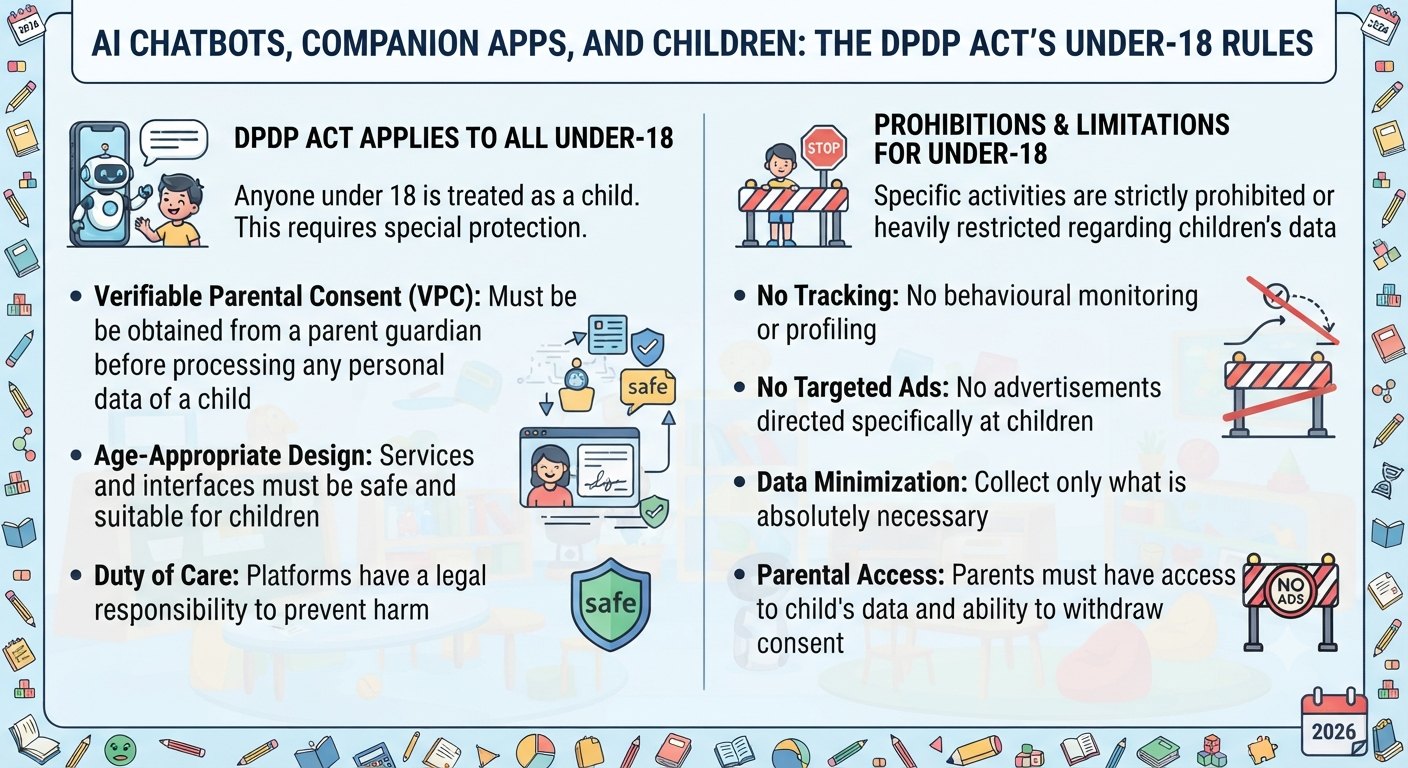
For a small business that is not exempt, the main duties are to process data only with valid consent or another legal ground, to give a clear notice, to keep data accurate, to take reasonable security safeguards, to report breaches, to delete data when the purpose ends and to respond to requests from individuals. Children’s data needs verifiable parental consent, and tracking or targeting children is restricted. DPDP compliance for small business is less about size than about data.
Some duties are tied to size and risk. Significant data fiduciaries, designated by the government on factors such as volume and sensitivity, have extra duties, such as an annual audit and a data protection officer. Most small businesses will not be designated. Even so, the baseline duties of notice, consent, security and breach response apply to everyone in scope.
Penalties can be severe. The schedule to the Act sets penalties up to ₹250 crore for failure to take reasonable security safeguards and up to ₹200 crore for failure to notify a breach, according to commentary, with other amounts for other failures. The DPDP penalties small company risk is proportional in practice, since the Board considers factors such as the nature and gravity of the breach, but the numbers show why basic compliance is worth the effort.
A practical starting checklist
Step one: list the personal data you hold, where it sits and why. Step two: remove what you do not need and set retention periods. Step three: write a simple notice that lists the data, the purposes and how to withdraw consent or complain, and make consent a clear choice. Step four: secure the data with strong passwords, multi-factor authentication, updates, backups and restricted access. This is the core of a small business DPDP checklist. A sensible DPDP compliance for small business plan starts here.
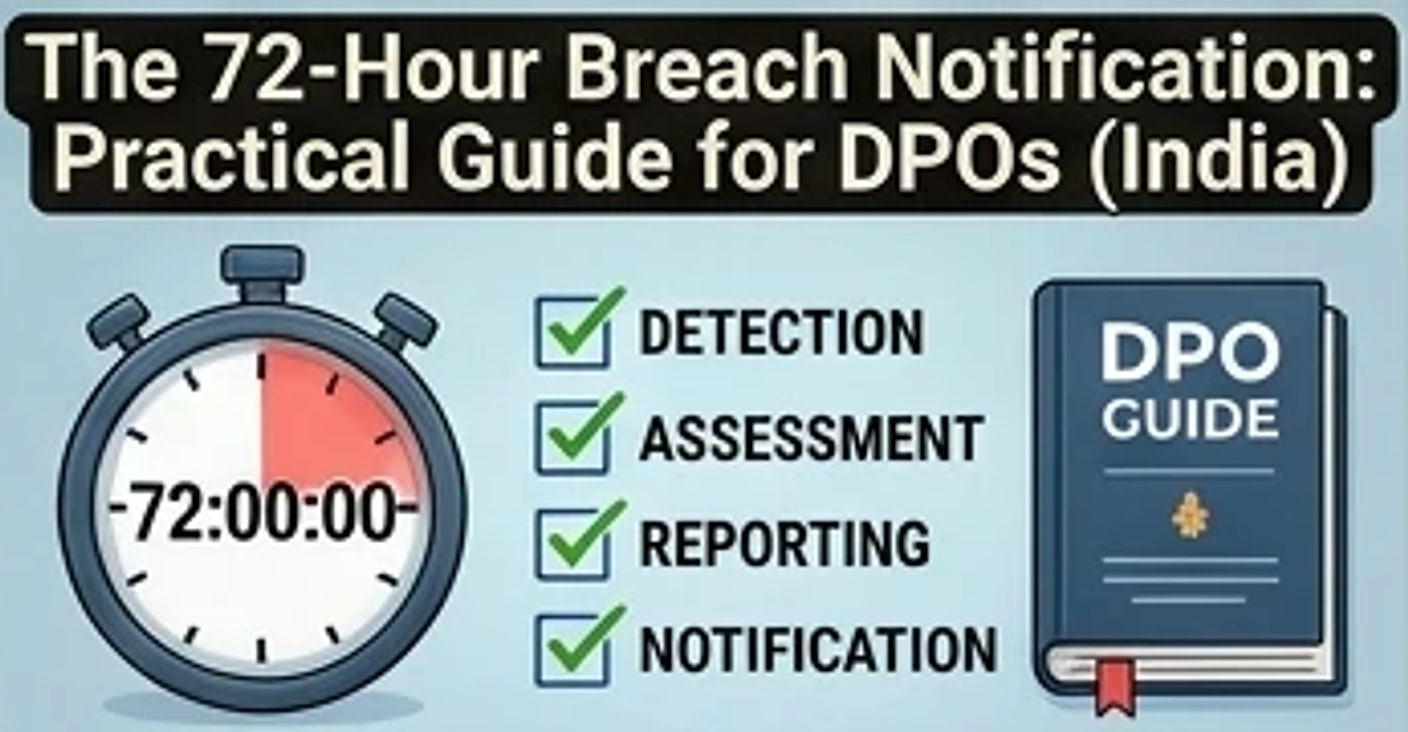
Step five: choose vendors carefully, and sign written terms with email, payment, cloud and marketing providers that require security and deletion. Step six: write a short breach plan with who to call, how to contain the incident and how to inform the Board and individuals as the Rules require. Step seven: name a contact for complaints and requests, and train staff to recognise and forward them.
Use the timeline. The Rules commence in stages, with the main duties starting on 13 May 2027, according to commentary. Plan the work over the next months, starting with the data map and security. Document what you do. A small firm that has a short, accurate file will be in a better position than one that has nothing.
Next steps and quick answers
Decide whether you are a data fiduciary, map your data, fix security and consent, check any exemption notification and set a plan to May 2027. This is general information, not legal advice. Revisit DPDP compliance for small business each quarter.
Related reading: the DPDP compliance checklist for small businesses, consent managers under the DPDP Rules, the CERT-In six-hour rule for startups, the DPDP marketing checklist, CCPA and DPDP side by side and a ransomware attack in India: the first 24 hours; also UAE PDPL compliance for Indian SaaS firms.
Quick answers
Does the DPDP Act apply to small businesses?
Generally yes. There is no blanket small business exemption. The Central Government can exempt classes such as startups from certain provisions by notification under Section 17(3), so check for one before you rely on it.
What duties apply to a small business under the DPDP Act?
Valid consent or another legal ground, a clear notice, reasonable security safeguards, breach reporting, deletion when the purpose ends and responses to requests, plus special rules for children’s data.
When do the main DPDP duties start?
Commentary on the DPDP Rules, 2025 describes the main obligations, including notice and consent, starting on 13 May 2027. Check the Rules for exact dates.
Are startups exempt from the DPDP Act?
The Act allows the government to exempt classes of fiduciaries, including startups, but sources reviewed found no such exemption notified. Check the latest notifications.
Final word
Halverton & Co. is an Indian law firm advising founders, startups, technology companies and investors on Indian law, including data protection compliance for startups and small businesses, privacy policies, vendor contracts and breach response planning. We practise in Jharkhand, Maharashtra and before the Supreme Court of India, and act as fractional legal counsel for technology-driven businesses. Halverton & Co.: Where tech needs law! If you have a question about Indian law, write to us at office@halvertonandco.com, or get in touch.
This article reflects developments reported up to 31 October 2026. It is for general information only, is not legal advice, and does not create an advocate-client relationship. Halverton & Co. is an Indian law firm.
Sources
Related practice area
Technology & AI Law
Contracts, data protection and AI policies for products that handle other people’s data.
View the practice areaComments
No account needed. Comments are reviewed before they appear, so yours will show here once approved. Please do not share confidential details or describe your own legal matter: replies are general discussion, not legal advice, and do not create an advocate-client relationship. For your own situation, write to office@halvertonandco.com.