Key takeaways
- The DPDP Act can apply to a Dubai startup that offers services to people in India.
- The UAE has a federal PDPL and separate DIFC and ADGM regimes, so identify yours first.
- Training on personal data needs a notice and consent or another lawful ground that covers it.
- Keep a data map and records for both regimes.
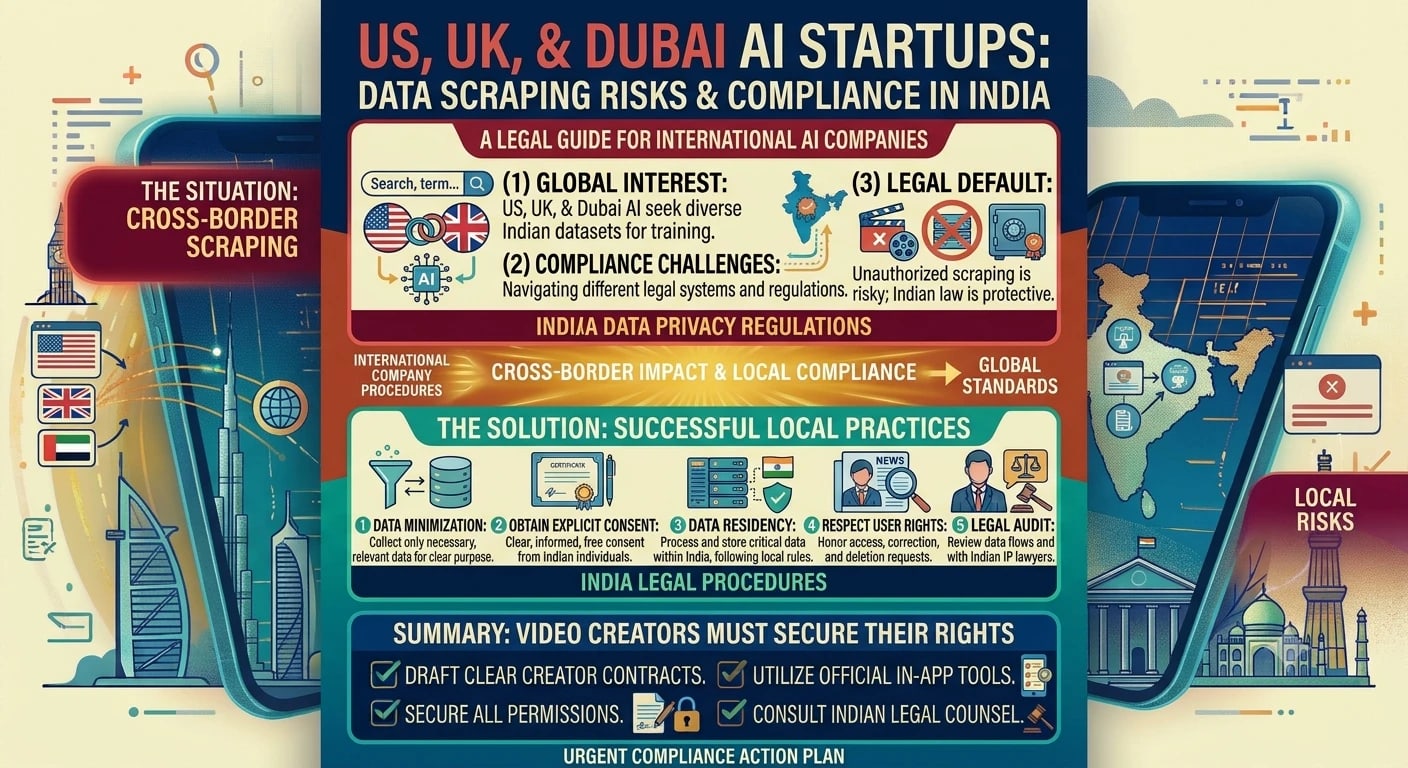
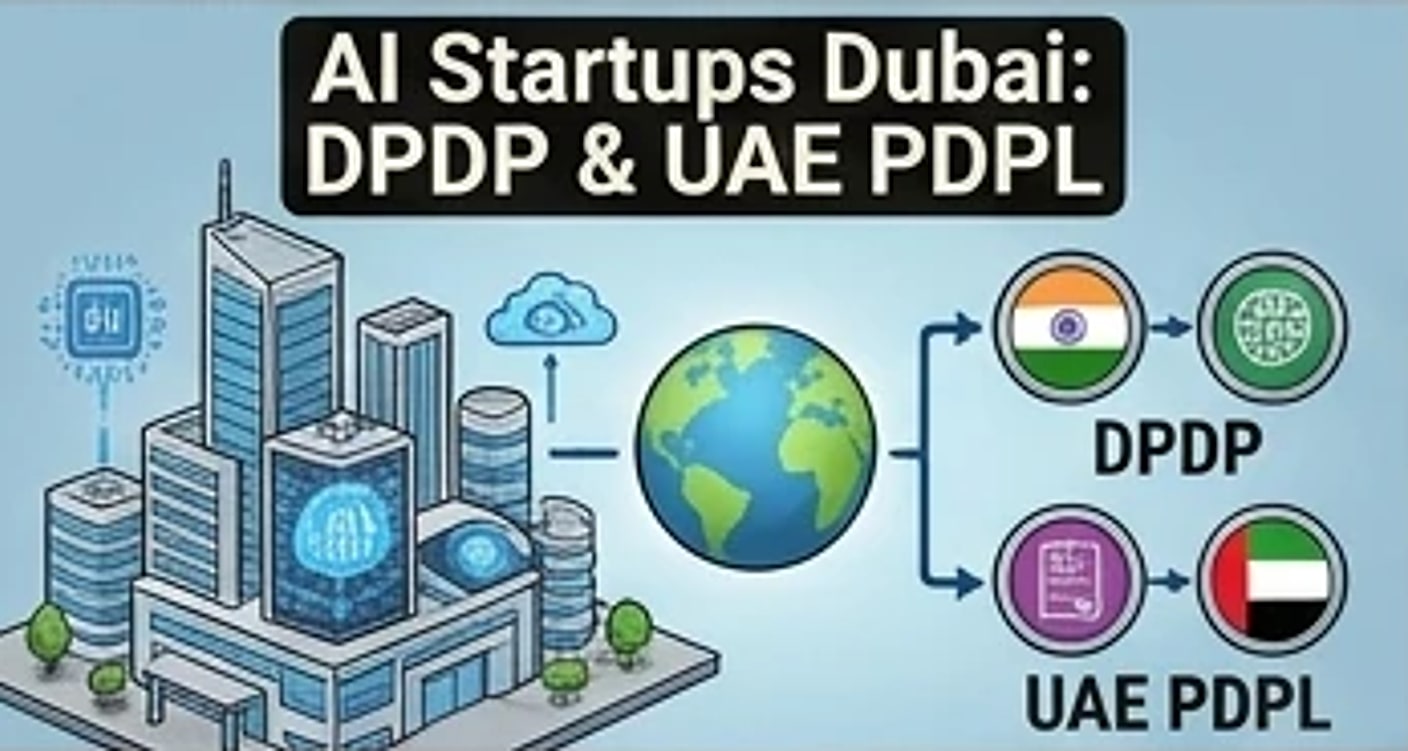
An AI startup in Dubai that uses data about people in India has two sets of rules to think about. The UAE has its own federal personal data law and separate regimes in the financial free zones. India’s Digital Personal Data Protection Act, 2023 can also apply to processing outside India in connection with offering goods or services to people in India. AI startup Dubai data protection planning therefore has to cover both from the start. AI startup Dubai data protection planning also affects how investors view the company.
This guide explains how the two regimes overlap, what they say about consent, notices, cross-border transfers and training of models, and what a founder should put in place. It is general information, not legal advice. The UAE rules have a federal law, executive regulations and free zone laws that differ, so take advice from UAE-licensed counsel for UAE law, and check the DPDP Rules for India.
When each law applies
The DPDP Act applies to processing of digital personal data within India and, through its extraterritorial scope, to processing outside India if it is in connection with offering goods or services to data principals in India. The DPDP Act extraterritorial scope AI companies should note means that a Dubai startup selling an app to Indian users, or profiling them, can fall within the Act even without an office in India.
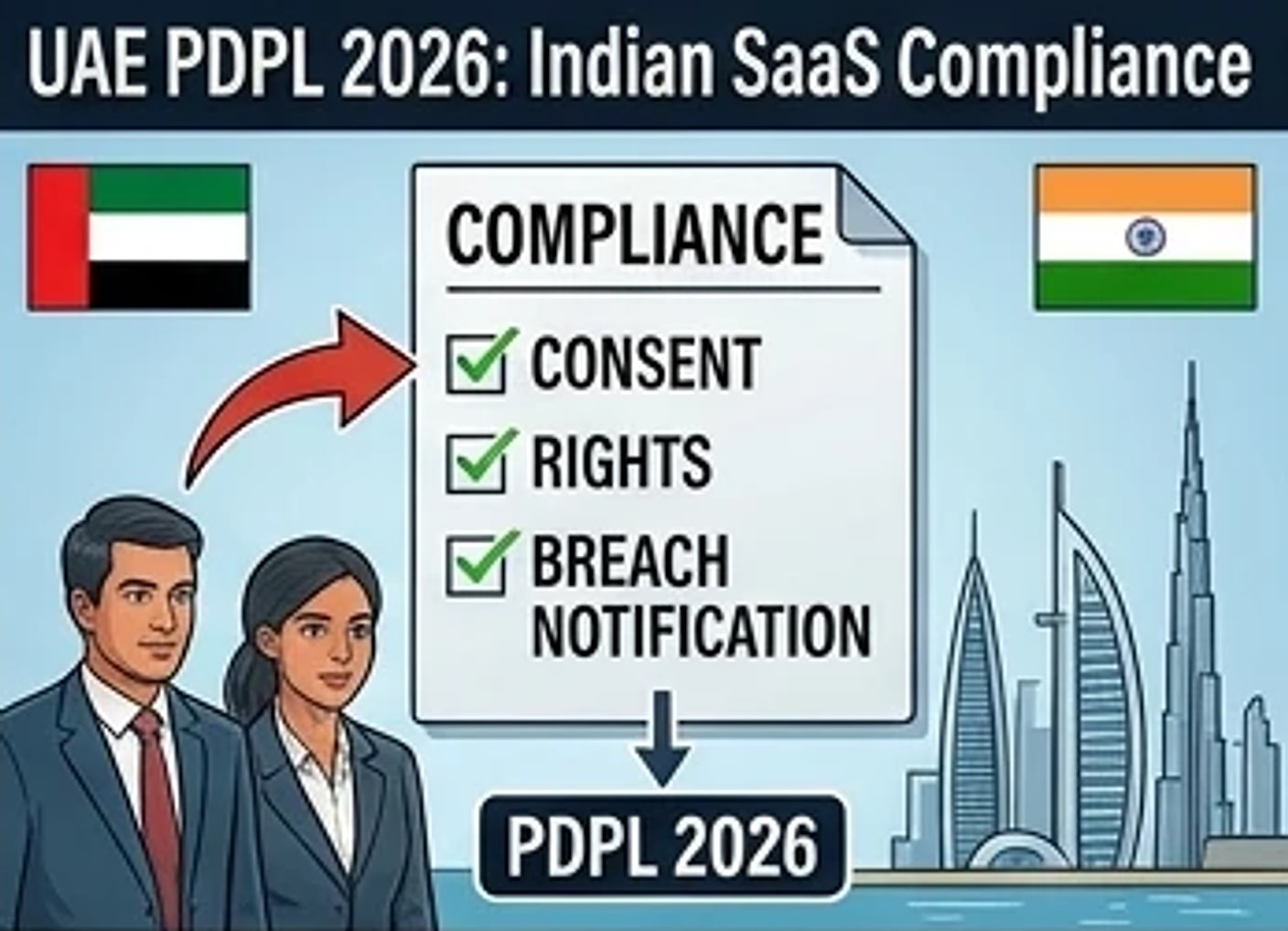
In the UAE, the federal Personal Data Protection Law, Federal Decree-Law No. 45 of 2021, applies to processing by controllers and processors in the UAE and to those outside the UAE that process data of people in the UAE, with exclusions for free zones that have their own data protection laws. Commentary says executive regulations were still awaited for some time, so check whether they have been issued. DIFC and ADGM have their own laws.
The DIFC Data Protection Law, DIFC Law No. 5 of 2020, includes Regulation 10 on autonomous and semi-autonomous systems, which sets obligations for AI systems that process personal data, such as transparency and impact assessments. The DIFC Regulation 10 autonomous systems rules matter if your startup is registered in DIFC. An ADGM entity follows the ADGM regulations. Identify your regime first. For an AI startup Dubai data protection obligations depend on the registration of the entity.
Consent, notice and purpose
Under the DPDP Act, processing generally requires consent or a legitimate use specified in the Act. Consent must be free, specific, informed, unconditional and unambiguous, given by a clear affirmative action, with a notice describing the data, purpose and rights. A consent notice Indian users AI startup apps present should be clear, available in English or the languages in the Constitution on request and easy to withdraw.
The UAE PDPL also centres on consent but permits other lawful bases, and requires transparency, purpose limitation, data minimisation and security. It gives individuals rights such as access and correction. Where both laws apply, comply with the stricter requirement for each point, and keep records of consent that satisfy both.
Purpose limitation is a particular issue for AI. Data collected to provide a service may not be reused to train a model unless the notice and consent cover it. Children’s data attracts extra duties in India, including verifiable parental consent and a ban on tracking and targeted advertising directed at children. Review age gating and onboarding. A clear consent record is the base of AI startup Dubai data protection compliance for Indian users.
Cross-border transfers
Moving Indian users’ data to Dubai and Indian data to cloud services elsewhere involves transfer rules. India’s DPDP Act uses a negative-list approach: transfers are allowed except to countries the government restricts by notification, and sector rules may require localisation. Check the notifications and sectoral rules, such as those for financial data.
| Topic | DPDP Act | UAE law |
|---|---|---|
| Scope | Processing connected to offering services in India | Mainland PDPL, DIFC and ADGM have separate laws |
| Consent | Specific, informed, withdrawable | Consent plus other lawful bases |
| Transfers | Allowed unless a country is restricted | Adequacy or safeguards |
| Children | Parental consent under 18 | Specific rules |
The UAE PDPL has rules on transfers out of the UAE, which allow transfers to countries with adequate protection or under safeguards such as contracts, with exceptions. The UAE PDPL cross-border transfer provisions and the DIFC and ADGM regimes differ in detail, so map each data flow. If your Dubai startup uses Indian engineers or processors, put data processing agreements in place.
Keep a data map. List what personal data you collect, where it is stored, who can access it and where it goes. Review sub-processors, model providers and cloud regions. A clean data map is the base for transfer assessments, security and breach response.
Training AI on Indian data
Training AI on Indian personal data raises specific questions. If the data was collected by your startup from Indian users, the notice and consent must cover training. If you license a dataset, check the supplier’s rights and the original consent. The DPDP Act exempts some processing for research and statistics under conditions in the Rules, but commercial AI development may not fit. Do not assume an exemption.
Publicly available personal data is also treated carefully. The DPDP Act exempts personal data made publicly available by the data principal or by someone under a legal obligation to publish it, but scraped data from other sources is not exempt on that ground. Copyright and terms of service are separate issues, and Indian policy proposals on AI and copyright are developing.
Build safeguards: data minimisation, anonymisation where possible, retention limits, security, access controls and a process to honour deletion and correction. Consider whether you will be a significant data fiduciary under the DPDP Act based on volume and sensitivity, which brings extra duties such as a data protection officer and audits. Document your assessments. Keep AI startup Dubai data protection assessments on file for each model and dataset.
Next steps and quick answers
Identify your regime, map data flows, update notices and consent, check transfer mechanisms, review your training data and keep records. This is general information, not legal advice, and Halverton & Co. does not advise on UAE law. Revisit AI startup Dubai data protection steps when you add a new data source.
Related reading: the DPDP Act and Dubai AI startups, the UAE PDPL and Indian apps, AI chatbots, children and the DPDP Act, consent managers under the DPDP Rules, CCPA and DPDP side by side and DPDP compliance for small businesses; also UAE PDPL compliance for Indian SaaS firms and setting up an AI company in Dubai; also UAE data localisation.
Quick answers
Does the DPDP Act apply to a Dubai AI startup?
It can, if the startup processes digital personal data outside India in connection with offering goods or services to people in India.
Which UAE law applies to my startup?
It depends on whether you are on the mainland, in DIFC or in ADGM. Each has its own regime. Take UAE advice.
Can I train a model on Indian users’ data?
Only if your notice and consent or another lawful ground cover that purpose. Review exemptions carefully.
Which UAE data law applies to my startup?
It depends on whether you are on the mainland, in DIFC or in ADGM. Ask UAE counsel.
Final word
Halverton & Co. is an Indian law firm advising NRIs, founders, investors and businesses in Dubai and across the UAE on Indian law, including DPDP Act compliance and cross-border data governance for AI and technology companies that serve Indian users. We practise in Jharkhand, Maharashtra and before the Supreme Court of India, and work alongside UAE-licensed counsel, who advise on UAE law. Halverton & Co.: Where tech needs law! If you have a question about Indian law, write to us at office@halvertonandco.com, or get in touch.
This article reflects developments reported up to 31 October 2026. It is for general information only, is not legal advice, and does not create an advocate-client relationship. Halverton & Co. is an Indian law firm and does not advise on UAE law; UAE-law points should be confirmed with UAE-licensed counsel.
Sources
Related practice area
Technology & AI Law
Contracts, data protection and AI policies for products that handle other people’s data.
View the practice areaComments
No account needed. Comments are reviewed before they appear, so yours will show here once approved. Please do not share confidential details or describe your own legal matter: replies are general discussion, not legal advice, and do not create an advocate-client relationship. For your own situation, write to office@halvertonandco.com.