
For many Indian crypto and Web3 founders, Dubai is the obvious place to put the holding company. The regulatory framework is clear, banking is more crypto-friendly than in India, there’s no personal income tax, and the city is a three-hour flight from Mumbai. So the structure often looks like this: a Dubai holding company at the top, a development team in India below, and founders who live in either place.
But if any founder is resident in India when they invest, India’s foreign exchange rules apply to every step. This guide explains how a Dubai holding company structure interacts with India’s overseas investment rules, the round-tripping risks, reporting duties and tax, and what happens if you later want to bring the company back to India.
India’s overseas investment framework in brief
Investments by Indian residents in foreign entities are governed by the Foreign Exchange Management (Overseas Investment) Rules, 2022, the accompanying regulations and RBI directions. They distinguish between overseas direct investment (ODI), broadly, investment giving control or significant influence in a foreign operating entity, and overseas portfolio investment.
For resident individuals, the rules are stricter than for Indian companies. Resident individuals can generally make ODI only in foreign operating entities, and the rules restrict individual ODI in foreign entities engaged in financial services activities. Because many crypto businesses, such as exchanges, brokers and custodians, look like financial services, an Indian-resident founder investing directly into a Dubai crypto company should take advice on whether the investment is permitted at all on that route.
Indian companies have more flexibility, with limits linked to their net worth, but they’re subject to the same restrictions on certain activities and structures, and must route investments through an authorised dealer bank and report them.
Round-tripping: the biggest structural risk
The classic Indian founder structure, a Dubai holding company that owns an Indian subsidiary, is exactly the kind of structure India’s rules scrutinise. “Round-tripping” refers to money leaving India and coming back as foreign investment through an offshore entity, often for tax or regulatory advantage. India’s overseas investment rules restrict structures in which an Indian resident’s foreign investment results in investment back into India through multiple layers of subsidiaries.
The detail matters. The rules focus on the number of layers and on bona fide business purpose, and resident individuals face additional limits when they control a foreign entity that itself has step-down subsidiaries. A Dubai holding company with an Indian subsidiary, set up by Indian-resident founders, may or may not be permitted depending on how it’s structured, how many layers are involved, and how the founders invested.
The safest approach is usually for the Indian-resident founders to take advice before incorporating, and to fund their Dubai holding company shares through bank channels with the correct reporting from the first dirham. Founders who set up Dubai structures informally, for example by paying for shares from personal funds without bank reporting, or by having a friend hold shares, create problems that surface later, often at a funding round or an exit. Getting the structure right at the start is far easier than regularising it later.
Reporting, tax and personal compliance
Every ODI by an Indian resident must go through an authorised dealer bank and be reported in the prescribed form, with annual performance reports for the foreign entity in later years. Late reporting attracts late submission fees, and continuing non-compliance can restrict further overseas investment. Disinvestments and restructurings also need reporting.
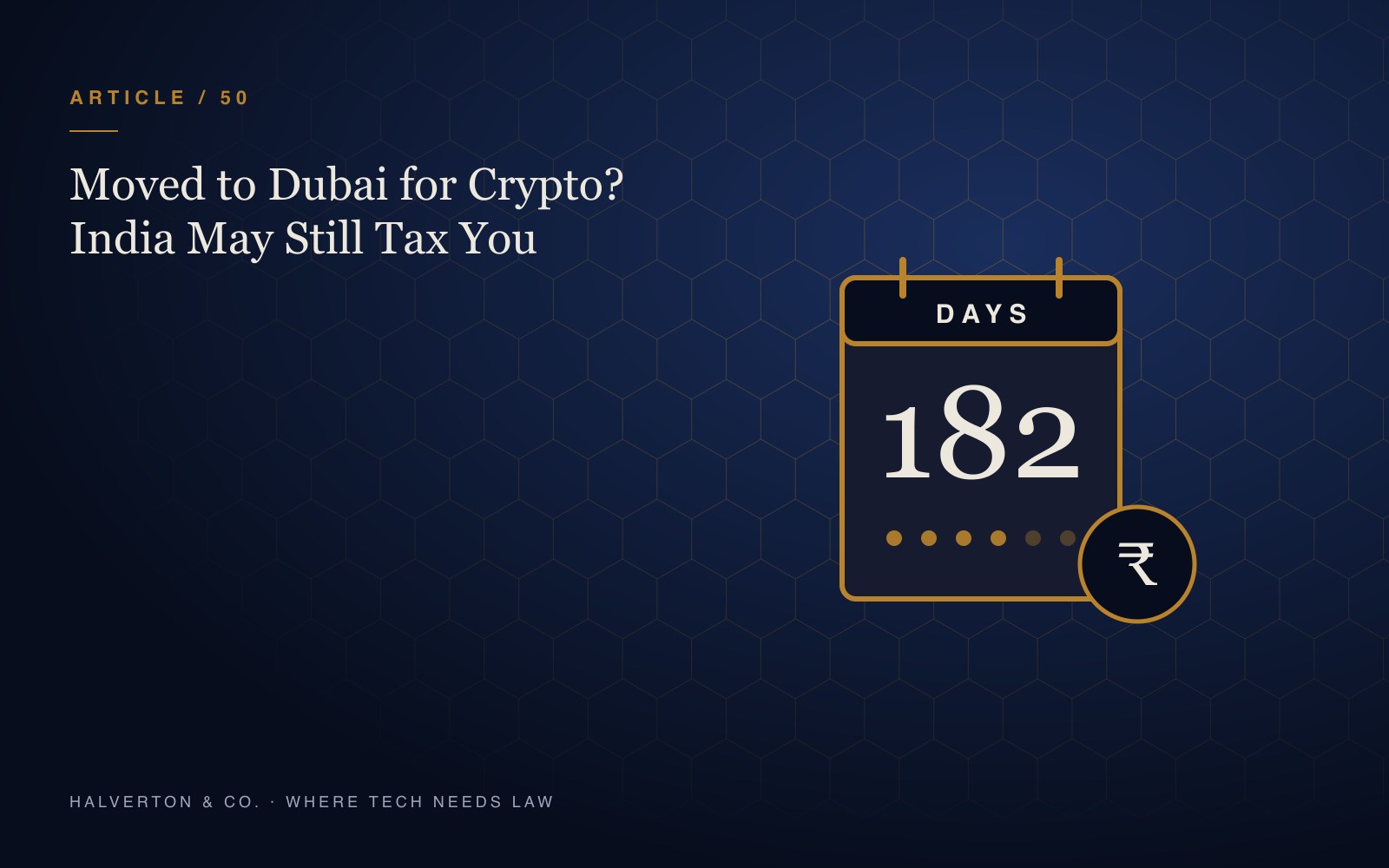
Tax follows the founders. Indian-resident founders are taxed in India on their worldwide income, including dividends from the Dubai holding company and gains on selling its shares, and must disclose foreign shareholdings in Schedule FA of their Indian return. Undisclosed foreign assets can attract India’s Black Money Act. Founders who move to Dubai should check their Indian residential status carefully, because the deemed resident rule and the 120-day rule can keep them resident in India.
The Indian subsidiary has its own obligations: it receives foreign direct investment from the Dubai holding company, which must be priced at fair value and reported to the RBI, and its transactions with the Dubai parent, such as development services, are subject to Indian transfer pricing rules.
| Issue | Indian rule | Practical step |
|---|---|---|
| Founder investment | Overseas Investment Rules, 2022: resident individuals can generally make ODI only in foreign operating entities, with limits on financial services activities | Take advice on whether direct investment is permitted at all on that route |
| Round-tripping | Structures that bring Indian money back into India through layers of foreign subsidiaries are restricted | Settle the number of layers and the business purpose before incorporating |
| Funding and reporting | Authorised dealer bank channel, prescribed form and annual performance reports | Fund the shares through bank channels, with correct reporting from the first dirham |
| Tax | Worldwide income is taxable for residents; foreign shareholdings go in Schedule FA; Black Money Act exposure if undisclosed | Check residential status, including the deemed resident and 120-day rules |
| Indian subsidiary | FDI priced at fair value and reported to the RBI; transfer pricing on dealings with the Dubai parent | Use an arm’s-length services agreement |
| Crypto activity | FIU-IND registration if Indian users are served; 30% tax on virtual digital asset gains | Keep the Indian entity to a development or support role |
Crypto-specific issues for a Dubai holding company
Crypto adds layers of complexity. If the Dubai holding company holds treasury tokens, or the founders receive tokens, Indian-resident founders face Indian tax on tokens received and on gains when sold, at 30% under India’s virtual digital asset regime. Tokens held abroad are foreign assets for Schedule FA purposes.
If the group serves users in India, the Indian anti-money laundering regime applies: a Dubai platform serving Indian users must register with FIU-IND. And the Indian subsidiary must stay within its role, typically software development or support services, rather than operating crypto services for Indian users without registration.
Free zone choice matters too. Dubai has several free zones popular with Web3 founders, each with its own licensing categories, and the right one depends on whether the Dubai holding company will simply hold shares and IP, or run regulated virtual asset activities requiring VARA approval. In Dubai, the holding company or operating entity may need licensing from VARA or another UAE regulator, depending on its activities. Indian founders should coordinate UAE licensing with the Indian side, so that the group’s structure satisfies both.
Reverse flips and remedies
Some founders later want to move the holding company back to India, for example ahead of an Indian IPO. A reverse flip from Dubai to India raises the same issues as a reverse flip from Singapore or Delaware: Indian corporate approvals, FEMA compliance, tax on the transaction in both countries, and migration of ESOPs and IP. Since 2024, a foreign holding company can merge into its Indian wholly owned subsidiary through a fast-track procedure, subject to RBI approval. If past FEMA filings are missing or incorrect, they can often be regularised through late submission fees or compounding with the RBI, and doing so before a transaction or funding round is far easier than during one. For Indian founders, a Dubai holding company can work well, provided it’s built on India’s rules from day one.
Related reading: Indian residents investing in crypto through Dubai, Dubai vs GIFT City for crypto and Web3 businesses, paying Indian developers from a Dubai Web3 company, the UAE’s September 2026 deadline, reverse flipping from the US to India, founders’ agreements in India and setting up an Indian subsidiary for a US company.
Quick answers
Can an Indian founder set up a Dubai holding company?
Yes, but Indian residents must follow India’s overseas investment rules, including restrictions on certain activities and on round-tripping structures, and report the investment.
What is round-tripping?
Money leaving India and returning as foreign investment through an offshore entity. India restricts certain such structures, especially those with multiple layers.
Do Indian founders pay Indian tax on a Dubai company’s dividends?
If they’re resident in India, yes, and they must disclose foreign shareholdings in Schedule FA of their Indian return.
Can an Indian-resident individual invest directly in a Dubai crypto company?
It depends. Resident individuals can generally make overseas direct investment only in foreign operating entities, and individual investment in financial services entities is restricted, so take advice on whether the route is permitted at all.
Can a Dubai holding company be brought back to India?
Yes. A reverse flip raises Indian corporate approvals, FEMA compliance, tax in both countries and migration of ESOPs and IP. Since 2024, a foreign holding company can merge into its Indian wholly owned subsidiary through a fast-track procedure, subject to RBI approval.
Final word
Halverton & Co. is an Indian law firm advising Indian founders, investors, NRIs and crypto businesses in Dubai and across the UAE on Indian law, including overseas investment structuring, FEMA compliance and regularisation, reverse flips and founder tax for Dubai holding companies. We practise in Jharkhand, Maharashtra and before the Supreme Court of India, and work alongside UAE-licensed counsel, who advise on UAE law. Halverton & Co.: Where tech needs law! If you have a question about Indian law, write to us at office@halvertonandco.com, or get in touch.
This article reflects developments reported up to early October 2026. It is for general information only, is not legal advice, and does not create an advocate-client relationship. Halverton & Co. is an Indian law firm and does not advise on UAE law; UAE-law points should be confirmed with UAE-licensed counsel.
Related practice area
Crypto, Web3 & Digital Assets
Advice for virtual digital asset businesses on registration, reporting and structure.
View the practice area