Ask an Indian crypto trader which coin they use most and many will say USDT, not Bitcoin. Dollar-pegged stablecoins have become the plumbing of crypto markets and, increasingly, a way for freelancers, exporters and traders to move value across borders. That’s exactly what worries the Reserve Bank of India.
This guide explains how stablecoins in India are treated today, why the RBI sees them as a threat to monetary sovereignty, what the proposed rupee-backed ARC token is, the tax and FEMA risks of using stablecoins, and the remedies available to users.
How stablecoins in India are treated today
India has no dedicated stablecoin law. Stablecoins aren’t legal tender and aren’t an RBI-authorised payment instrument. For tax purposes, the Finance Act, 2025 expanded the definition of virtual digital assets to explicitly include crypto-assets, including stablecoins, from 1 April 2026.
That has an important practical consequence. A gain on selling USDT, even a small one caused by exchange-rate movements against the rupee, is taxed at 30%, and transfers attract 1% TDS. Losses can’t be set off. A stablecoin may be designed to be stable, but for Indian tax purposes it’s treated like any other crypto asset. See our guide to crypto tax in India.
Platforms dealing in stablecoins for Indian users are virtual digital asset service providers that must register with FIU-IND under the PMLA, and since April 2026 they must report users’ transactions to the tax department under Section 509 of the Income-tax Act, 2025. Our guide to FIU-IND registration covers the registration process.
Why the RBI sees stablecoins as a sovereignty threat
The RBI’s objection is fundamentally about control of money. It has warned that privately issued stablecoins pegged to foreign currencies pose a direct risk to India’s monetary sovereignty. An RBI Deputy Governor said in October 2025 that stablecoins risk “policy sovereignty”. If large volumes of savings and payments move into dollar tokens, the RBI’s ability to manage the rupee, capital flows and interest rates weakens.
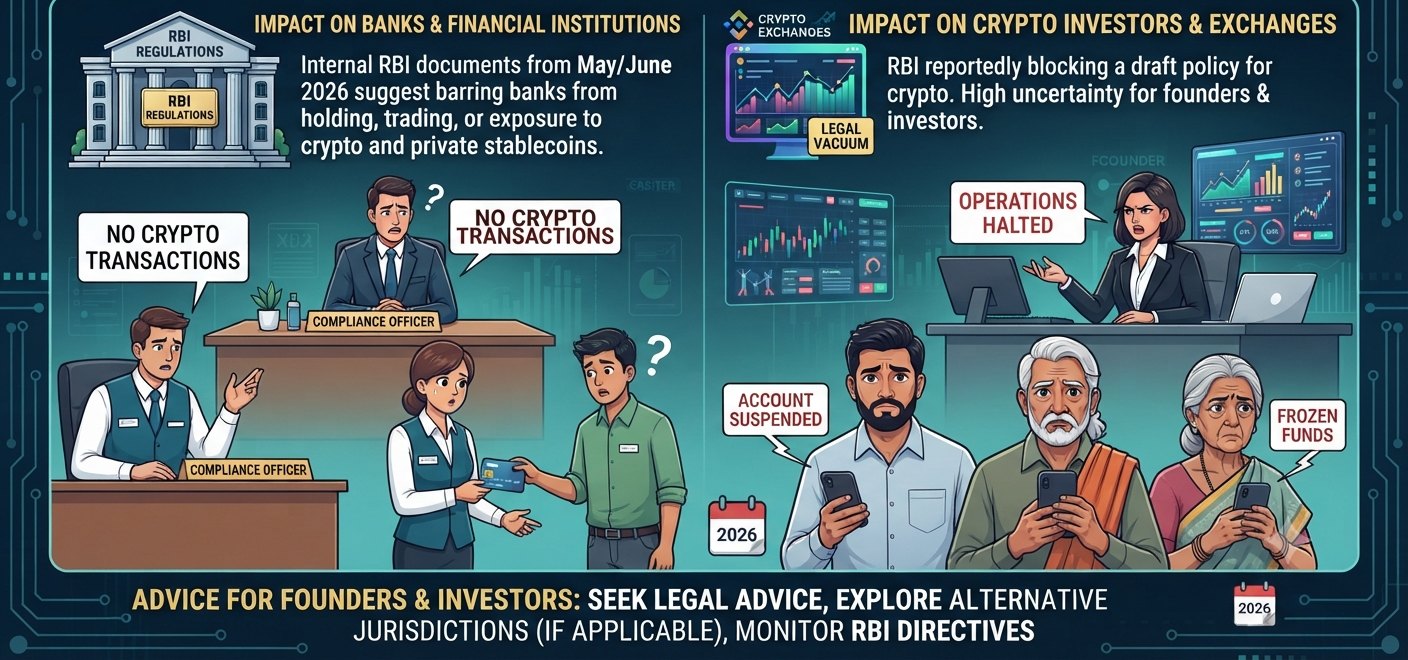
The RBI’s internal documents from May and June 2026, reported by Reuters, suggest barring banks and financial institutions from any exposure to privately issued stablecoins, and indicate that the RBI opposes both foreign-currency and rupee-pegged stablecoin models because of contagion risk. We cover that debate in our guide to the RBI’s push towards a crypto ban.
Governor Sanjay Malhotra has argued that India’s payment systems, such as UPI, NEFT and RTGS, reduce the need for stablecoins, and that India doesn’t need to act simply to catch up with the United States, where the GENIUS Act on stablecoins was passed. The Finance Ministry, by contrast, was reported in late 2025 to be preparing to make a case for stablecoins in the Economic Survey, so the two institutions are not aligned.
The rupee-backed ARC token
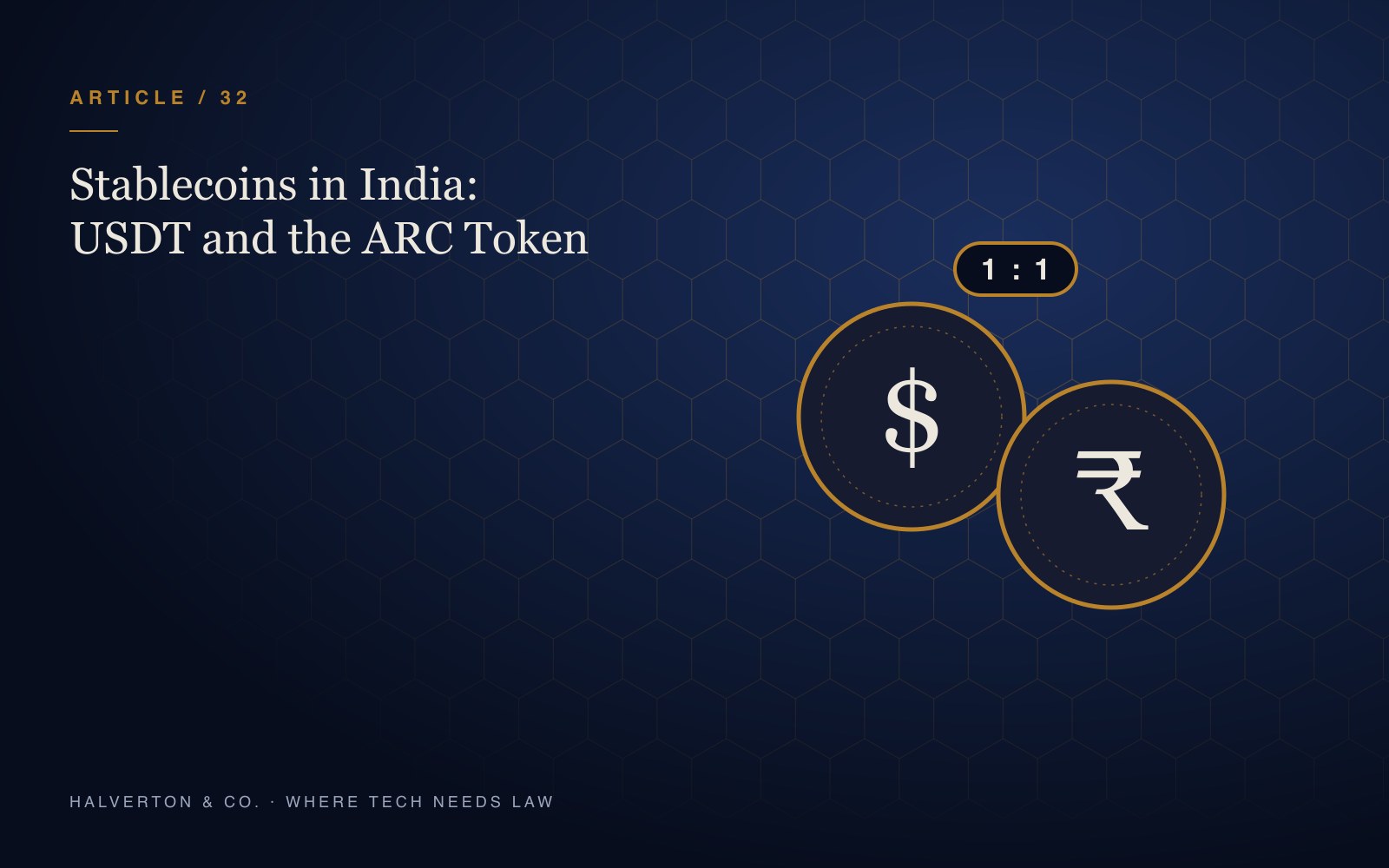
In November 2025, reports emerged of a rupee-backed alternative. The Asset Reserve Certificate (ARC), a fully collateralised digital asset developed by Polygon and Bengaluru-based fintech Anq, was reported to be targeting a launch in the first quarter of 2026. Each ARC token would trade 1:1 with the rupee and be minted only when issuers acquire cash or cash equivalents such as fixed deposits, government securities or cash balances.
The design reflects Indian regulatory concerns. ARC was described as a two-tier system complementing the RBI’s CBDC, with only corporate accounts permitted to mint new tokens, not individuals. Swaps would be restricted to whitelisted addresses using Uniswap v4 hooks, reinforcing controlled access and regulatory compliance.
A word of caution: although the launch was widely reported as planned for early 2026, we haven’t found confirmation that ARC has actually launched, and the RBI’s 2026 documents reportedly oppose even rupee-pegged stablecoins. Treat ARC as a proposal until there’s an official announcement.
| USDT and similar | ARC (proposed) | |
|---|---|---|
| Pegged to | US dollar | Indian rupee, 1:1 |
| Backing | Reserves held by a private issuer | Cash, fixed deposits or government securities |
| Who can mint | The issuer | Corporate accounts only, as reported |
| Indian status | Taxed as a virtual digital asset; not legal tender | Proposal; no confirmed launch |
Using stablecoins: tax, FEMA and legal risks
Many Indians use USDT for more than trading. Freelancers accept payment in stablecoins, importers settle invoices, and some people send money abroad through crypto. Those uses carry legal risks. Cross-border payments for goods and services are governed by FEMA, which requires transactions to go through authorised channels. Using stablecoins to settle foreign trade or to move money abroad outside the Liberalised Remittance Scheme can contravene FEMA, with penalties of up to three times the amount involved.
Tax is the second risk. Every conversion from USDT to rupees, or from one crypto to another, is a taxable transfer, and P2P buyers have TDS obligations that many traders ignore. With exchange reporting under Section 509 and the tax department’s NUDGE campaigns, undisclosed stablecoin activity is increasingly visible; see our guide to the crypto nudge email.
Freelancers paid by foreign clients in stablecoins should be particularly careful, because the income is taxable as professional income and the conversion into rupees is a separate taxable transfer. Getting advice once, and setting up a compliant process, is far cheaper than fixing years of errors later. For individuals, the practical rule is simple: if you hold stablecoins in India, report them in your tax return, keep the records, and don’t treat them as a bank account. They don’t carry deposit insurance, and the platforms holding them aren’t banks.
Businesses face an additional question: whether to accept stablecoins at all. An Indian company that invoices foreign clients in USDT, or holds stablecoins on its balance sheet, takes on tax, FEMA, accounting and banking risks that most boards haven’t considered. For most Indian businesses, the safer route today is to receive foreign payments through authorised banking channels and treat any stablecoin exposure as an investment decision, not a payments shortcut. A company also needs the right instruments if it raises money in crypto; see our guide to SAFE and convertible notes.
Third, bank account risk. P2P stablecoin sales are a common route by which fraud proceeds reach innocent traders, leading to bank account freezes by cyber police. Trading only with KYC-verified counterparties on FIU-registered platforms reduces, but doesn’t remove, that risk. See our guides to frozen bank accounts and whether a bank can close your account for trading crypto.
Remedies, the outlook and quick answers
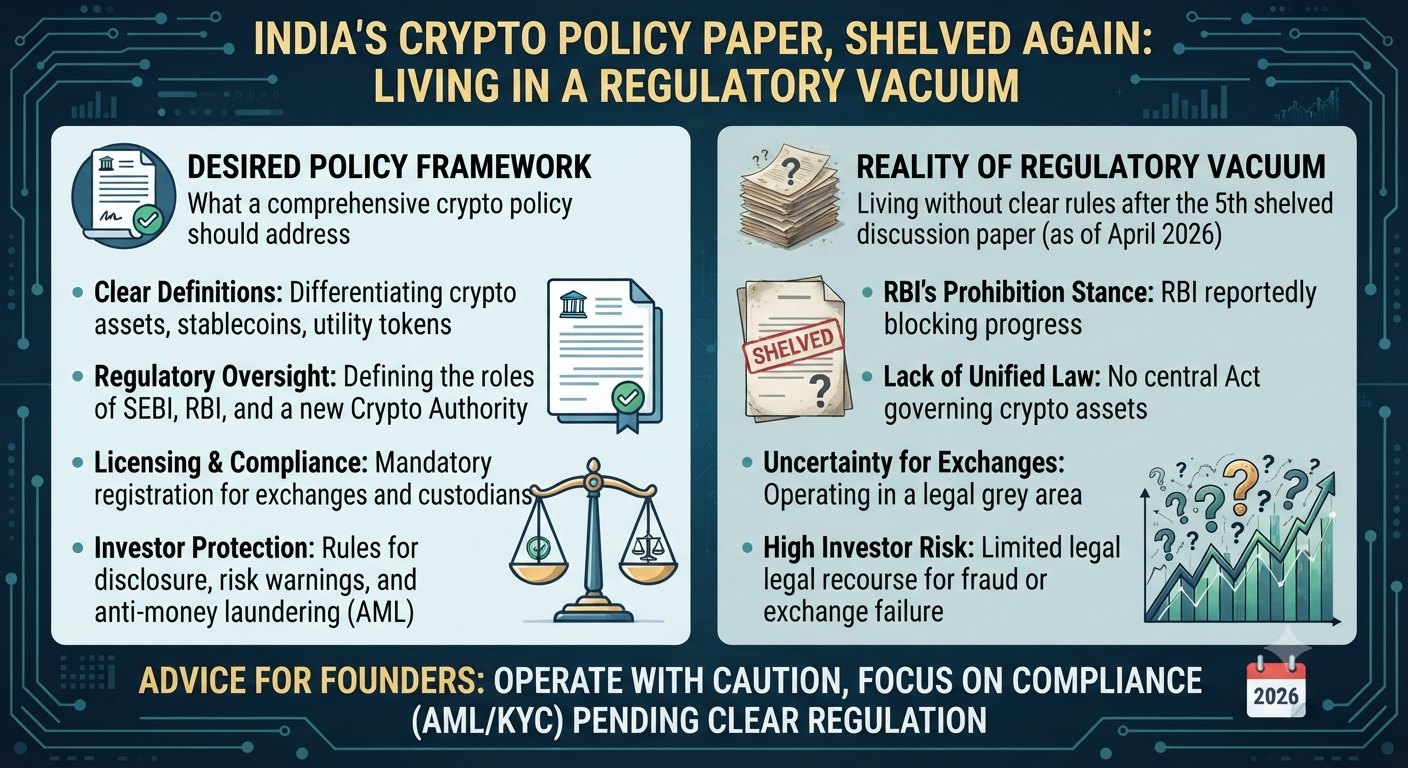
If you’re affected by stablecoin-related problems, the remedies depend on the problem: tax notices can be answered and appealed, FEMA contraventions can often be compounded with the RBI, wrongful bank freezes can be challenged before the Magistrate or the High Court, and losses from platform failures can be pursued under contract and property law. The outlook for stablecoins in India is uncertain. The RBI is pushing towards restriction, the Finance Ministry has shown more openness, and global developments such as the US GENIUS Act are adding pressure; our guide to India’s shelved crypto policy paper explains why no framework has arrived. For now, the safest course is to treat stablecoins as taxable crypto assets, avoid using them for cross-border payments outside FEMA channels, and keep careful records.
Quick answers
Are stablecoins legal in India?
Holding and trading them isn’t banned, but they aren’t legal tender or an authorised payment instrument, and gains are taxed as virtual digital assets.
Is USDT taxed in India?
Yes. Gains on transferring USDT are taxed at 30% with 1% TDS, like other crypto assets.
Has India launched a rupee stablecoin?
The ARC token was reported to be targeting an early 2026 launch, but we haven’t found confirmation that it has gone live.
Related reading: crypto tax in India vs the US; also the UAE’s September 2026 DeFi deadline and paying Indian developers from a Dubai Web3 company; also sending USDT from Dubai to India.
Final word
At Halverton & Co., we advise founders, technology companies, investors and individuals on stablecoin structuring, FEMA compliance, crypto tax and payment disputes. We practise in Jharkhand, Maharashtra and before the Supreme Court of India, and act as fractional legal counsel for technology-driven businesses that need senior legal support without a full in-house legal team. Halverton & Co. is built on a simple idea: Where tech needs law! If this issue affects you or your business, write to us at office@halvertonandco.com, or get in touch, and we’ll help you work out where you stand.
This article reflects the law and developments reported up to early October 2026. It is for general information only and is not legal advice. Please take advice on your specific facts before acting.
Related practice area
Crypto, Web3 & Digital Assets
Advice for virtual digital asset businesses on registration, reporting and structure.
View the practice area