
Key takeaways
- The 1% TDS on virtual digital assets formerly under Section 194S is reported to appear under Section 393(1) of the Income-tax Act, 2025.
- The credit should show in Form 26AS and the annual information statement, and you claim it in the return.
- Mismatches between the platform’s filing and your records are a common cause of notices.
- Confirm the current section numbers and forms on the official portal before filing.
A 1% TDS on crypto is deducted when you transfer a virtual digital asset, usually by the exchange, and it is not an extra tax. It is an advance that you claim as credit against your tax liability. With the Income-tax Act, 2025 in force from 1 April 2026, the old Section 194S that most articles still cite has been re-enacted under a new section number. Knowing how to claim credit for 1% TDS on crypto avoids paying the same tax twice. The rule on 1% TDS on crypto is simple, but claiming it takes care.
This guide explains the new section reference, how the deduction works, where the credit appears, how to claim it in your return, what to do when it does not match and the records to keep. It is general information. Section numbers and rates should be checked against the Income-tax Act, 2025 and the CBDT’s table of equivalent sections, because most online sources predate the change.
From Section 194S to Section 393(1)
Section 194S of the Income-tax Act, 1961 required a person paying a resident for the transfer of a virtual digital asset to deduct tax at 1% of the consideration, subject to thresholds. The Income-tax Act, 2025 re-enacted the TDS provisions in a consolidated section on payments to residents. A tax blog reports that the old rule is now covered by Section 393(1) in a table, at the entry for transfers of virtual digital assets, from 1 April 2026. The Section 393(1) TDS virtual digital assets reference is the one to use in new forms and notices. The 1% TDS on crypto provision keeps its logic under the new numbering, and TDS on crypto old section 194S references still appear in tools.
This matters because many articles and tools still cite Section 194S. For a return covering the year to 31 March 2026, the 1961 Act still governs, and for later years the 2025 Act applies. Your tax statements may show the new section from April 2026. Do not worry if the section number differs between documents, but check the period and use the right reference when you correspond with the department.
A caution on sources: the section mapping comes from a single practitioner source, so check the Act’s text or an official table for the 1% rate under the new section. The 1961 rate is well established, and commentators expect continuity. Verify against the Income-tax Act, 2025 and the CBDT table before you rely on the new numbering in a filing or a contract.
How the deduction works
Under the old rule, the person responsible for paying consideration for a transfer of a virtual digital asset to a resident had to deduct 1% at the time of credit or payment, whichever was earlier. A threshold applied: lower for most individuals and higher for certain specified persons, so small transfers could escape deduction. On an Indian exchange, the exchange deducts and deposits the tax and reports it against your permanent account number.
| Step | What to check | Where |
|---|---|---|
| Find the deduction | Platform statement and TDS certificate | Exchange account |
| Match to the tax statement | Form 26AS and the annual tax statement | Income tax portal |
| Claim in the return | TDS credit in the tax-paid section | ITR filing |
| Resolve mismatches | Ask the platform to correct returns | Deductor |
| Keep records | Trade history and certificates | Your files |
In a peer-to-peer trade, the buyer may be the person responsible for deduction, and where consideration is in kind or in another asset, the rules have special treatment through CBDT clarifications. Exchanges usually handle this by deducting from proceeds or by rules for crypto-to-crypto trades. Check how your platform treats each type of trade, and keep its statements.
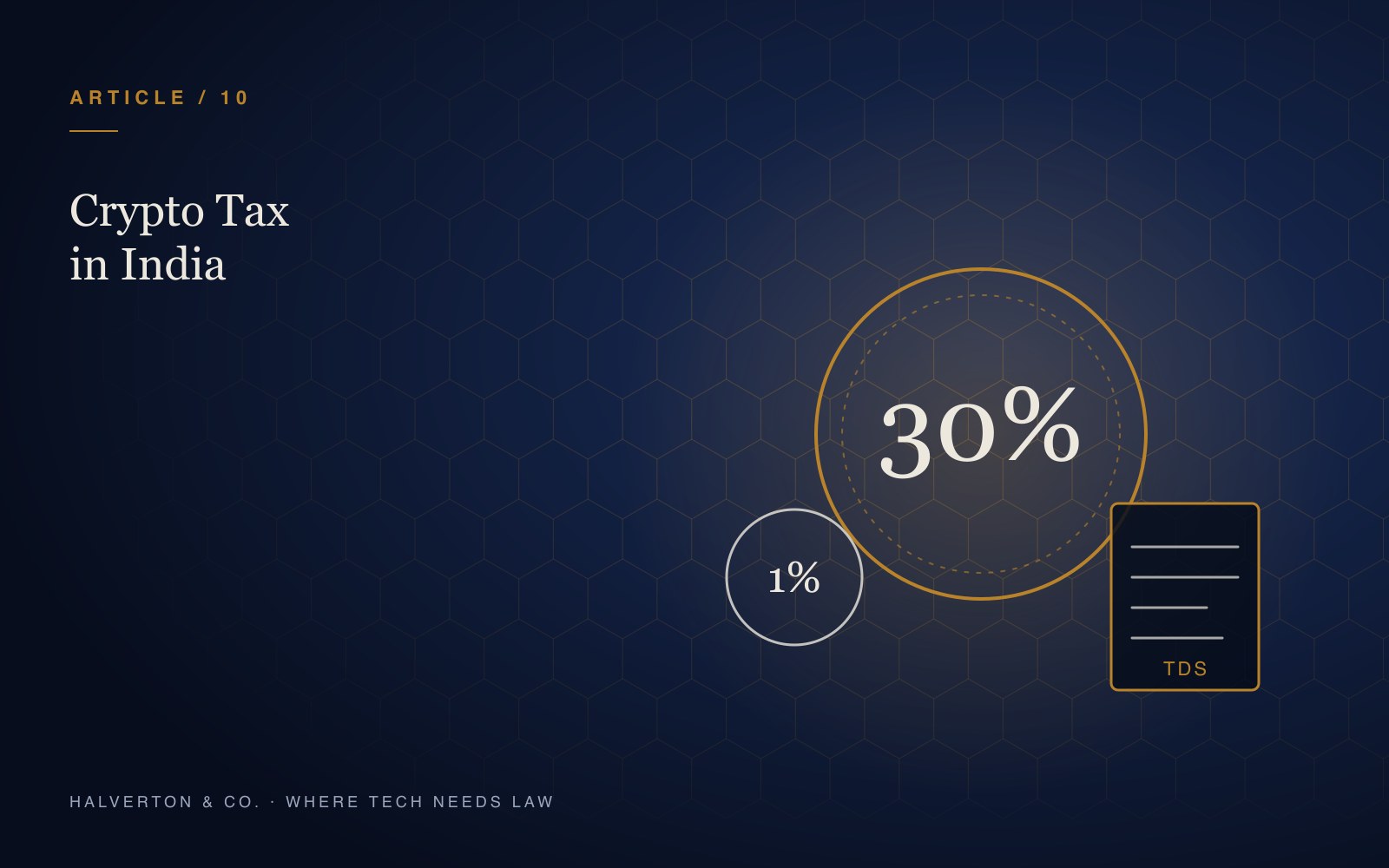
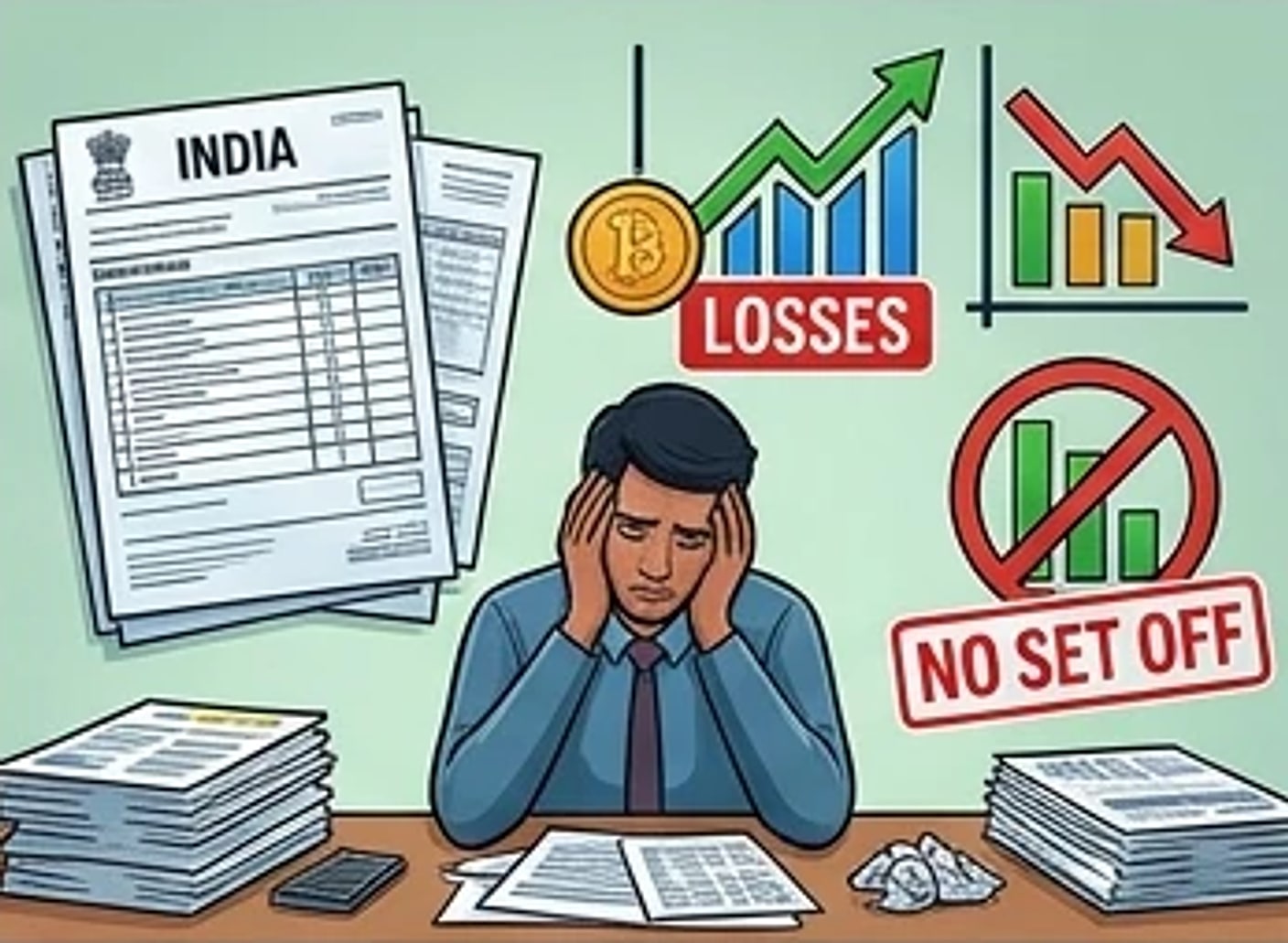
TDS is not the final tax. Gains on virtual digital assets are taxed at a flat 30% with no deduction other than cost and no set-off of losses, and the TDS is credited against that liability. If your total tax is lower than the TDS, you can claim a refund. If it is higher, you pay the difference as tax payable.
Finding and claiming the credit
First find the credit. The TDS deducted appears in your annual tax statement and in the Annual Information Statement on the Income Tax portal, listed by deductor. A Form 26AS AIS crypto TDS check should be your first step each year. Download both statements after the deadline for deductors to file returns, and compare them with your exchange reports. To claim TDS credit crypto ITR filers should reconcile first, using the Form 26AS AIS crypto TDS mismatch check described below.
Then claim it in your return. In the return form, TDS credit is claimed in the schedule for tax deducted at source, using the deductor’s tax deduction account number, the amount and the year of deduction. Report the gains from virtual digital assets in the schedule for virtual digital assets, and match the TDS to the income to which it relates. If you do this correctly, the system will credit the TDS against your tax and compute any refund.
Claim in the right year. Credit is generally claimed in the year the income is assessable, even if the TDS appears in your statement in a different quarter, so use the statement to confirm. If TDS was deducted but the corresponding income is not offered in the same year, a mismatch notice may arise. Keep a working file with trades, TDS and your return entries.
Mismatches and missing TDS
Mismatches are common. The most frequent cases are TDS shown in the statement but not reflected in your return, TDS deducted but not deposited by the deductor, and different permanent account numbers. If TDS appears in your records but not in the department’s, ask the exchange to correct its statement and to file a revised return. You can also raise a grievance on the portal. The 1% TDS on crypto credit can be delayed if the deductor fails to file.
If the exchange did not deposit the TDS it deducted, the department’s rules generally protect the deductee if the tax was deducted, but credit depends on what appears in the statement. This is a practical problem, and the TDS credit when exchange did not deposit scenario can lead to a notice. Keep the exchange’s TDS certificate and ask for a corrected statement. Take advice if the amount is large.
Where TDS was not deducted at all, for example on a transfer on a foreign platform, the tax is still payable. You must report the gain and pay tax on your own. Do not assume that no TDS means no tax. The reporting rules for crypto-asset service providers and the guidance issued by the CBDT in 2026 mean that more data is available to the department.
Next steps and quick answers
After each year ends, download your tax statement and AIS, reconcile with exchange statements, claim TDS in the return, report gains in the right schedule and keep documents for several years. If a mismatch appears, fix it before filing. This is general information, not tax advice. Make 1% TDS on crypto reconciliation part of every filing season.
Related reading: crypto tax in India: 30% and 1% TDS, what Budget 2026 changed for crypto tax, the Income-tax Act, 2025 for startups, what to do about a crypto nudge email, crypto tax in India and the US and Web3 regulations in India; also why crypto losses cannot be set off in India.
Quick answers
How do I claim credit for TDS on crypto in my return?
Check the TDS in your annual tax statement and AIS, then claim it in the TDS schedule of your return with the deductor’s details, and report the gains in the schedule for virtual digital assets. The system credits it against your tax.
What happened to Section 194S?
A tax blog reports that the TDS provision for virtual digital assets is now in Section 393(1) of the Income-tax Act, 2025 from 1 April 2026. Check the Act and the CBDT table to confirm.
What if TDS was deducted but does not show in my statement?
Ask the exchange to correct or file a revised statement and keep its certificate. You can also raise a grievance on the portal and take advice if the amount is large.
Is TDS on crypto the final tax?
No. It is an advance credit against your tax, which is a flat 30% on gains from virtual digital assets for the relevant taxpayers.
Final word
Halverton & Co. is an Indian law firm advising founders, startups, technology companies and investors on Indian law, including virtual digital asset tax and compliance, tax notices and credit mismatch resolution for crypto investors and exchanges. We practise in Jharkhand, Maharashtra and before the Supreme Court of India, and act as fractional legal counsel for technology-driven businesses. Halverton & Co.: Where tech needs law! If you have a question about Indian law, write to us at office@halvertonandco.com, or get in touch.
This article reflects developments reported up to 31 October 2026. It is for general information only, is not legal advice, and does not create an advocate-client relationship. Halverton & Co. is an Indian law firm.
Sources
Related practice area
Crypto, Web3 & Digital Assets
Advice for virtual digital asset businesses on registration, reporting and structure.
View the practice areaComments
No account needed. Comments are reviewed before they appear, so yours will show here once approved. Please do not share confidential details or describe your own legal matter: replies are general discussion, not legal advice, and do not create an advocate-client relationship. For your own situation, write to office@halvertonandco.com.