
If you’ve opened a tax article about startups recently and seen “Section 80-IAC”, “assessment year” and “Section 192(1C)”, you’ve been reading the old law. From 1 April 2026, India’s income tax is governed by the Income-tax Act, 2025, and almost every section a founder knows has a new number.
The substance of startup taxation hasn’t changed much, but the language has, and getting it wrong in a return, a board resolution or an investor’s due diligence report looks careless. This guide explains what the Income-tax Act 2025 means for startups: where the startup tax holiday now sits, the new “tax year” concept, the ESOP deferral, who actually qualifies, and the remedies when the tax department disagrees.
The new Act in one paragraph
The Income-tax Act, 2025 came into force on 1 April 2026 and replaced the Income-tax Act, 1961. It is largely a rewrite rather than a policy change: the government’s stated goal was to simplify the language and structure of tax law. One visible change is the terminology. The new Act replaces “previous year” and “assessment year” with a single concept, the “tax year”. Tax year 2026-27 is the first year governed by the new Act.
There’s an important transitional point for founders. Returns filed for FY 2025-26 (assessment year 2026-27), including the July 2026 filing season, still use the old Section 80-IAC numbering, because the new references apply from tax year 2026-27 onward. For about a year, startups will be working with both Acts at once: the old Act for past years and the new Act for the current year.
Section 140: the startup tax holiday under the Income-tax Act 2025
The startup tax holiday that everyone still calls “80-IAC” now lives in Section 140 of the Income-tax Act, 2025, according to most recent commentary. The benefit is unchanged: an eligible startup can claim a 100% deduction of profits from its eligible business for any three consecutive years out of its first ten years from incorporation. A small number of sources map the old provision to a different section number, so cite the section from the Act’s own text in any formal document.
The eligibility conditions remain strict. The startup must be a private limited company or an LLP, recognised by DPIIT, incorporated on or after 1 April 2016 and before 1 April 2030 (the Finance Act, 2025 extended the deadline from 31 March 2025), with annual turnover not exceeding ₹100 crore in the year for which the deduction is claimed. Most importantly, it must hold a certificate from the Inter-Ministerial Board.
| Condition | Requirement |
|---|---|
| Entity type | Private limited company or LLP |
| Incorporation window | On or after 1 April 2016 and before 1 April 2030 |
| Turnover | Not more than ₹100 crore in the year of claim |
| Recognition | DPIIT recognition plus an Inter-Ministerial Board certificate |
| Benefit | 100% deduction of eligible profits for any three consecutive years out of the first ten |
That last condition is where most startups fall out. DPIIT recognition and the Section 140 tax holiday are two different tests: only about 3,700 of roughly 1.97 lakh recognised startups hold the certificate, which is under 2%. Founders who assume that DPIIT recognition gives them a tax holiday are often unpleasantly surprised when their first profitable year arrives.
ESOP deferral, angel tax and other startup provisions
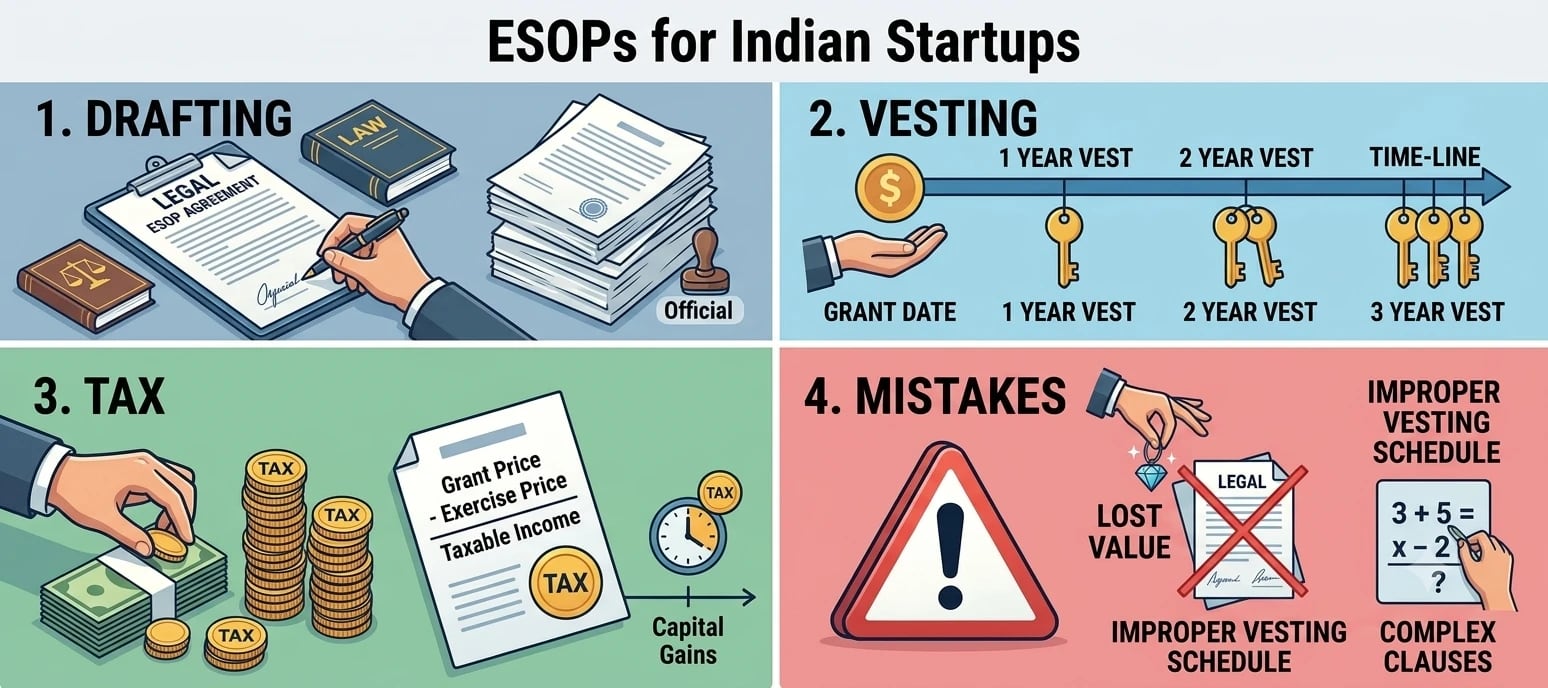
The ESOP tax deferral for employees of eligible startups has also moved. Formerly in Section 192(1C) of the old Act, it now sits in Section 392(3) read with Section 289(3) of the Income-tax Act, 2025, and it still postpones tax on ESOP perquisites until the earliest of the end of the deferral window, sale of the shares, or the employee leaving the company. The new Act sets the window at 60 months, up from 48 months under the 1961 Act. Like the tax holiday, the deferral applies only to startups holding the Inter-Ministerial Board certificate. Our guides to ESOPs for Indian startups and to RSUs, SARs and phantom stock explain how these instruments are designed and taxed.
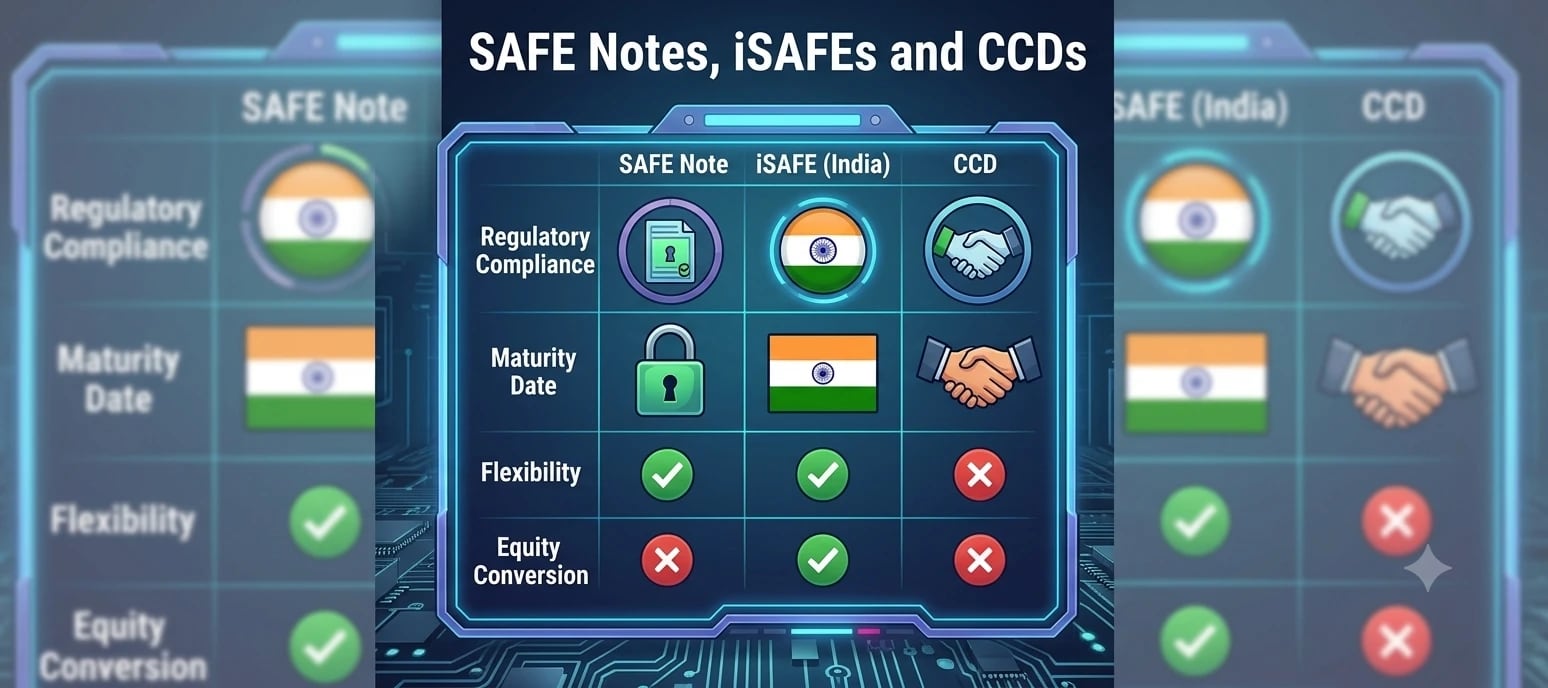
Angel tax remains abolished. The levy on share premium above fair value was removed for all investor categories, including domestic angel investors, and it hasn’t returned under the new Act. FEMA pricing rules for foreign investors and the Companies Act valuation requirements still apply, so valuations remain essential, particularly for SAFE and convertible note rounds.
Because the Income-tax Act, 2025 is a renumbering exercise more than a policy change, most startups won’t pay more or less tax because of it. The risk lies in the paperwork. Founders should also re-check the rules on carrying forward losses after a change in shareholding, deductions for startup expenses, TDS on payments to vendors and contractors, and the treatment of ESOP buybacks. In each case, the substance is largely similar but the section references in contracts, board resolutions and policies should be updated to the new Act. Payroll is affected too, because the wage rules under the new labour codes change how salary components are structured and how TDS on salary is computed.
A practical transition checklist for startups
Start by updating your documents. Investor reports, ESOP plans, board resolutions, finance policies and vendor contracts that refer to sections of the 1961 Act should refer to the Income-tax Act, 2025 for periods from 1 April 2026, ideally with a mapping clause that covers both. Founder and investor agreements are good places to start; see our guide to founders’ agreements in India.
Next, decide whether to apply for the Section 140 certificate. If your startup is approaching profitability within its first ten years, applying to the Inter-Ministerial Board well in advance is essential, because the certificate isn’t automatic and the application requires a clear explanation of the innovation in your business. Planning the three-year holiday window around your projected profits can save significant tax.
Also review your accounting and compliance software. Many tools still generate forms, challans and reports with references to the 1961 Act, and mismatches between the Income-tax Act, 2025 references in your returns and the old references in supporting documents can create avoidable queries. Ask your software providers and chartered accountant to confirm that they’ve updated their systems for tax year 2026-27. Finally, brief your employees and finance team. ESOP holders want to know whether they qualify for deferral, finance teams need to apply the right TDS sections, and your chartered accountant needs clean records for both the old and new Acts during the transition. If the company is winding down, the closure steps are covered in our guide to shutting down a startup legally, and the proposed relief for small companies is explained in our note on the Corporate Laws Amendment Bill 2026.
Tax notices, remedies and quick answers
If the Inter-Ministerial Board rejects an application, startups can address the shortcomings and reapply, and a well-prepared application explaining the innovation and scalability of the business has a far better chance. If the tax department disallows a Section 140 deduction, questions ESOP valuations or raises a demand, respond within the time allowed, seek a stay of demand where needed, and appeal to the Commissioner (Appeals) and then the Income Tax Appellate Tribunal. Transitional confusion between the two Acts is fertile ground for errors on both sides, so check every notice for the correct Act and section before responding.
Related reading: Indian tax on crypto after moving to Dubai; also paid in crypto in Dubai: Indian tax for professionals; also DPIIT startup recognition in 2026; also India’s deep tech startup category; also what Budget 2026 changed for crypto tax.
Quick answers
What is Section 140 of the Income-tax Act, 2025?
It is the new home of the startup tax holiday formerly in Section 80-IAC: a 100% deduction of profits for three consecutive years out of the first ten.
Does DPIIT recognition give my startup a tax holiday?
No. You also need a certificate from the Inter-Ministerial Board, which only a small fraction of recognised startups hold.
What is a “tax year”?
It is the new Act’s single term for the year in which income is earned and taxed, replacing “previous year” and “assessment year”.
Final word
At Halverton & Co., we work with founders, startups and technology-driven businesses on startup taxation, the Section 140 certificate, ESOP tax and tax disputes. We practise in Jharkhand, Maharashtra and before the Supreme Court of India, and act as fractional legal counsel for companies that need senior legal support without a full in-house legal team. Halverton & Co. is built on a simple idea: Where tech needs law! If this issue affects your business, write to us at office@halvertonandco.com, or get in touch, and we’ll help you work out where you stand.
This article reflects the law and developments reported up to early October 2026. It is for general information only and is not legal advice. Please take advice on your specific facts before acting.
Related practice area
Startups & Venture
From incorporation to term sheet. The documents a company needs to be fundable.
View the practice areaComments
No account needed. Comments are reviewed before they appear, so yours will show here once approved. Please do not share confidential details or describe your own legal matter: replies are general discussion, not legal advice, and do not create an advocate-client relationship. For your own situation, write to office@halvertonandco.com.