A few years ago, an AI-generated product shot or a cloned voice in an advert was a novelty. Today it’s routine. Brands, ad agencies, influencers and small businesses use AI to create images, videos, voiceovers and avatars every day, often without thinking about disclosure.
Since February 2026, India has had rules on exactly this. The IT (Intermediary Guidelines and Digital Media Ethics Code) Amendment Rules, 2026 introduce India’s first regulation of synthetic media. This guide explains what counts as AI-generated content under the rules, what the labelling and declaration requirements are, what they mean for brands, agencies and creators, and the risks and remedies when things go wrong.
The IT Rules 2026 and what counts as synthetic content
The amendment rules were notified by MeitY on 10 February 2026 and came into force on 20 February 2026. They introduce a new legal category, “synthetically generated information” (SGI), defined as audio, visual or audio-visual information that is artificially or algorithmically created, generated, modified or altered using a computer resource in a way that makes it appear real, authentic or true.
Two limits are important. First, text is excluded: an AI-written article or chatbot reply is not synthetically generated information, because the definition covers only audio and visual material. Second, routine AI-assisted edits such as colour correction, noise reduction, transcription and formatting are expressly excluded. So the AI-generated content labelling rules target content that could pass for real: deepfakes, AI-generated or altered images and videos, voice clones and realistic avatars. Our guide to deepfakes and personality rights covers the harm side of the same problem.
The rules apply directly to intermediaries, meaning the platforms that host or enable content. But because platforms must pass obligations on to their users, brands, agencies and creators feel the effect immediately.
Label, metadata and declaration requirements
Synthetically generated information must carry a prominent label and permanent provenance metadata that cannot be stripped out. Intermediaries that provide tools allowing users to create or modify AI-generated content must ensure a clear and noticeable label on visual content stating that it is AI-generated.
The final rules are less rigid than the draft. The October 2025 draft would have required watermarks covering at least 10% of the surface area of visual content, or a disclaimer during the first 10% of audio content, but this 10% requirement was dropped in the final rules. The label must still be prominent, but platforms have more flexibility in how they display it.
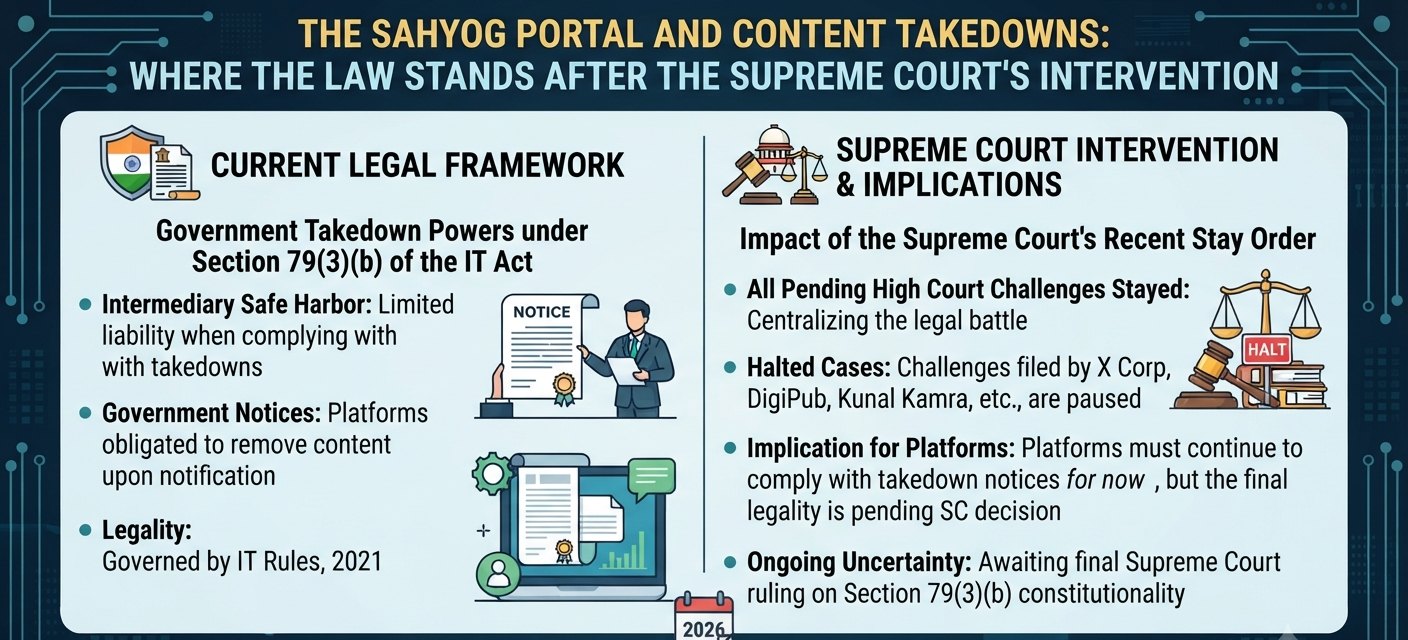
Significant social media intermediaries (platforms with more than five million registered users in India) carry heavier duties. Before content goes live, they must ask users to declare whether it is synthetically generated, and deploy technical measures, including automated tools, to verify the accuracy of those declarations. Where a declaration or verification confirms that content is synthetic, the platform must display a clear label. Platforms can also remove unlawful synthetic content without losing safe harbour under Section 79(2) of the IT Act. Government takedown notices run on a separate track; see our guide to the Sahyog portal and content takedowns.
| Who | Obligation |
|---|---|
| Intermediaries offering AI creation tools | Ensure a prominent label and permanent provenance metadata on synthetic visual content |
| Significant social media intermediaries | Ask users to declare synthetic content, verify declarations with technical measures, and label confirmed content |
| Brands, agencies and creators | Declare honestly, keep metadata intact and keep records of tools, prompts and consents |
What the rules mean for brands, agencies and creators
The scale of the change is easy to underestimate. Almost every social platform, video app and marketplace used for marketing in India is an intermediary, so the AI-generated content rules reach nearly every campaign that uses synthetic images, video or voice. Most brands and agencies aren’t intermediaries, so the rules don’t impose labelling duties on them directly. In practice, though, every major platform now asks users to declare whether content is AI-generated, and verifies those declarations. A false declaration breaches the platform’s terms and can lead to content removal or account suspension, and the amended rules expressly allow intermediaries to suspend or terminate violating accounts.
Other laws apply too. A realistic AI-generated product demo that exaggerates what the product does can be a misleading advertisement under the Consumer Protection Act, 2019, and manipulative interface design is separately regulated; see our guide to dark patterns. Using a real person’s face or voice without consent can violate their personality rights, which Indian High Courts have been protecting aggressively. And AI-generated content that copies a third party’s copyrighted work can infringe copyright, whatever its label; see AI-generated content and copyright and the DPIIT’s AI copyright working paper.
For influencers and creators, honest disclosure of AI-generated content is also good business. Audiences increasingly react badly to undisclosed AI, and brands are writing AI disclosure obligations into influencer contracts. Brand assets deserve protection too; see our guides to trade mark registration for startups and brand names, domains and social handles.
An AI content compliance workflow
A practical AI-generated content labelling workflow for brands and agencies has four stages. First, at the brief stage, decide whether AI will create realistic people, voices or scenes, and whether that is necessary. Second, during production, keep records of the tools used, prompts, source assets and any consent from people whose likeness or voice appears. Third, before publishing, label synthetic content honestly on every platform, make the correct declaration in the upload flow, and keep the provenance metadata intact rather than stripping it out during editing. Fourth, after publishing, monitor for complaints and respond quickly.
Small businesses using AI-generated content for everyday marketing should keep things simple. If an AI-generated image shows a realistic person or scene, label it as AI-generated when you post it, answer the platform’s declaration honestly, and don’t use AI to show your product doing something it can’t do. If you hire a freelancer or agency to create AI-generated content for you, ask them to confirm in writing which assets are AI-generated and that they have the rights to everything they deliver. Those few habits cover most of the legal risk.
Contracts tie it together. Agency agreements should say who is responsible for AI disclosures and declarations, who warrants that AI outputs don’t infringe third-party rights, and who bears the cost if content is taken down. Influencer contracts should require disclosure and prohibit unapproved AI alterations of the brand’s products or of real people. Inside your own team, set rules for what staff may upload to AI tools; see AI tools at work and confidentiality.
Risks, remedies and quick answers
If your content is wrongly labelled or removed, use the platform’s grievance process first. Under the amended rules, general user grievances must be resolved within seven days, down from 15. You can then appeal to the Grievance Appellate Committee and, in serious cases, approach the High Court. If someone else uses AI to imitate your brand, products or people, report the content to the platform, seek takedown under the IT Rules, and consider trademark, passing off, copyright or personality rights claims, with urgent injunctions where the harm is spreading quickly.
Quick answers
Do I have to label AI-generated content in India?
Platforms must label synthetically generated audio and visual content, and large platforms must ask you to declare it. Making a false declaration can get your content removed or your account suspended.
Is AI-written text covered by the labelling rules?
No. The definition covers only audio, visual and audio-visual content that appears real.
Does the label have to cover 10% of the image?
No. That requirement was in the October 2025 draft but was dropped from the final rules.
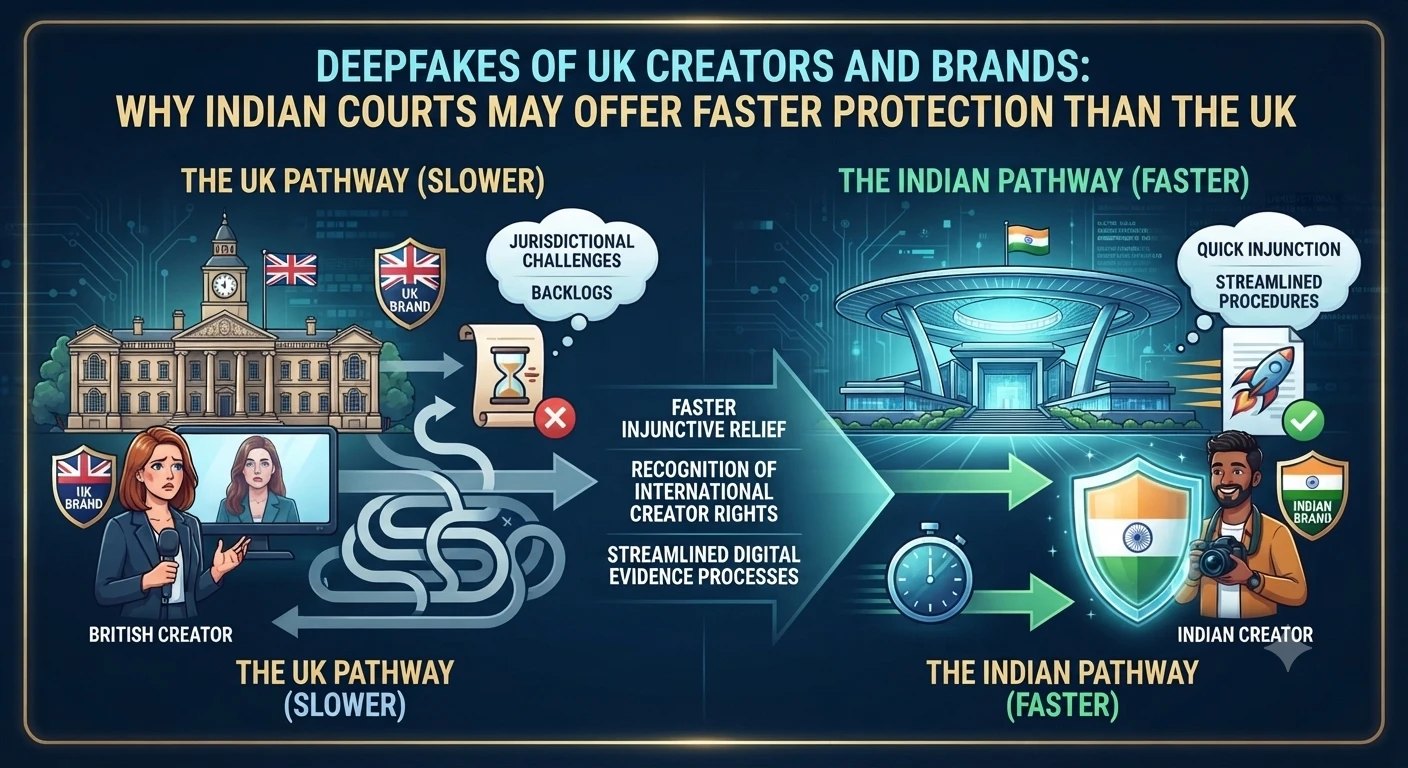
Related reading: deepfakes of UK creators and brands: Indian courts vs UK law; also MeitY’s October 2026 AI labelling advisory, whether an AI product is an AI intermediary under Section 79 and the draft IT Rules change on binding MeitY advisories; also ads inside AI answers and Indian advertising law and Grok, deepfakes and platform liability for US companies in India; also AI watermarks and trade mark infringement.
Final word
At Halverton & Co., we work with founders, startups and technology-driven businesses on AI content compliance, advertising law, personality rights and IT Rules disputes. We practise in Jharkhand, Maharashtra and before the Supreme Court of India, and act as fractional legal counsel for companies that need senior legal support without a full in-house legal team. Halverton & Co. is built on a simple idea: Where tech needs law! If this issue affects your business, write to us at office@halvertonandco.com, or get in touch, and we’ll help you work out where you stand.
This article reflects the law and developments reported up to early October 2026. It is for general information only and is not legal advice. Please take advice on your specific facts before acting.
Related practice area
Technology & AI Law
Contracts, data protection and AI policies for products that handle other people’s data.
View the practice areaComments
No account needed. Comments are reviewed before they appear, so yours will show here once approved. Please do not share confidential details or describe your own legal matter: replies are general discussion, not legal advice, and do not create an advocate-client relationship. For your own situation, write to office@halvertonandco.com.