Key takeaways
- Section 2(d)(vi) of the Copyright Act treats the person who causes a computer-generated work to be created as its author, but originality is still required.
- Purely AI-generated music is unlikely to attract protection on its own; a composer’s creative direction and editing may.
- Composition, lyrics and sound recording are separate rights with separate analyses.
- Check tool terms, document your process and test outputs for similarity.
Can AI-made music be copyrighted in India? The short answer is that a song generated by AI with no human creative input is unlikely to attract protection on its own, but a composer’s creative direction and editing of AI outputs may. The AI music copyright India question turns on a special provision of the Copyright Act, 1957 for computer-generated works, which says the author is the person who causes the work to be created. How courts will apply it to modern generative music tools is not yet settled.
This guide explains the legal tests, the separate rights in the composition and the sound recording, what the AI RAGHAV episode and the government’s working paper suggest, how platform terms for tools like Suno and Udio affect ownership, and a practical plan for musicians and labels. It is general information, not legal advice. The law on AI authorship is developing in India and abroad.
What Indian law says about Computer-Generated works
The Copyright Act protects original literary, dramatic, musical and artistic works. Section 2(d)(vi) provides that, for a literary, dramatic, musical or artistic work which is computer-generated, the author is the person who causes the work to be created. This is an unusual provision, borrowed from older UK law, and it was written for computer-generated output in the 1990s, not for modern generative models that learn from vast data. Section 2(d)(vi) computer-generated works language is the only direct hook in the Act.
On a plain reading, a person who sets up and prompts an AI tool might be the person who causes a song to be created. But originality is still required under Section 13, and courts look for skill, labour and judgment, or a modicum of creativity. A generic prompt that leaves most choices to the tool may not show enough human input. The more the human selects, arranges, edits and composes, the stronger the claim. The AI music copyright India answer therefore starts with human input.
That is why commentary says that purely AI-generated music does not attract protection on its own, while creative direction may. The practical test in India is the same as elsewhere: show real human authorship. Section 2(d)(vi) gives a possible route to ownership for the person who causes the work, but it has not been tested for generative AI songs, so do not rely on it without records and advice. The AI generated song copyright India position is open.
Composition, lyrics and sound recording
A song has layers. The musical composition is a musical work, the lyrics are a literary work and the recording is a sound recording. Each has its own author or owner. With AI music, ask separately who authored the melody, who wrote the lyrics, and who produced the recording. A human lyricist who writes the words may own the lyrics even if the melody and recording came from a tool. Each layer needs its own AI music copyright India analysis.
| Layer | Possible author or owner | AI issue |
|---|---|---|
| Melody | Composer, if human creative choices are shown | Prompt-only output is weak |
| Lyrics | Lyricist, if human-written | AI lyrics raise the same issue |
| Sound recording | Producer who takes initiative and responsibility | Untested for generative AI |
| Tool output | Tool terms may give a licence or ownership | Keep the terms in force on the date |
Sound recordings are treated differently. Under the Act, the producer of a sound recording is the person who takes the initiative and responsibility for making it, and the producer can own copyright in the recording. A label or musician that commissions an AI-assisted recording, supervises the process and takes responsibility for it may therefore have a claim in the recording, even where the composition’s authorship is uncertain. This reading has not been tested and should be treated with caution.
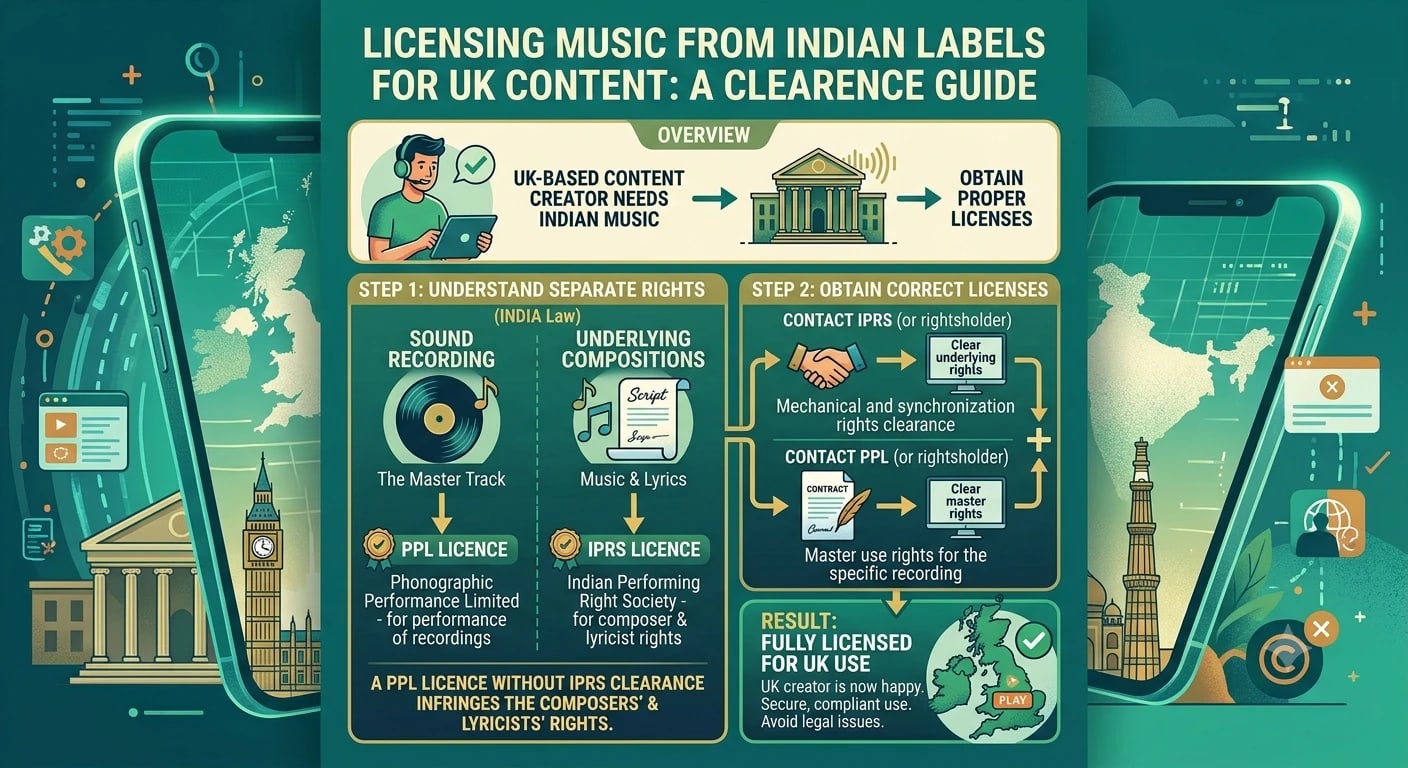
Rights in the output also depend on who made the training data and whether the tool’s output copies existing songs. If an AI tool reproduces a melody or lyric from a protected song, using it can infringe someone else’s copyright, and the composer’s rights administered by IPRS may be involved. Check output for similarity with existing works. Do not assume that an AI song is safe to release because it is new.
Where Indian practice and policy stand
In 2020 the Indian Copyright Office reportedly registered a work listing an AI tool, RAGHAV, as co-author with a human, and later issued a notice proposing to withdraw the registration. The episode, as reported, shows that the Office was uncertain about AI authorship. The AI RAGHAV co-author copyright episode is often cited, but its status should be checked, because accounts differ. Policy signals shape AI music copyright India expectations.
The government has begun to look at the policy question. A working paper by the Department for Promotion of Industry and Internal Trade on generative AI and copyright has considered how training data and outputs should be treated, including a proposed licensing model. It does not change the law, and the court proceedings in ANI v. OpenAI concern training on news content, not music authorship. India has no statute that answers the question directly.
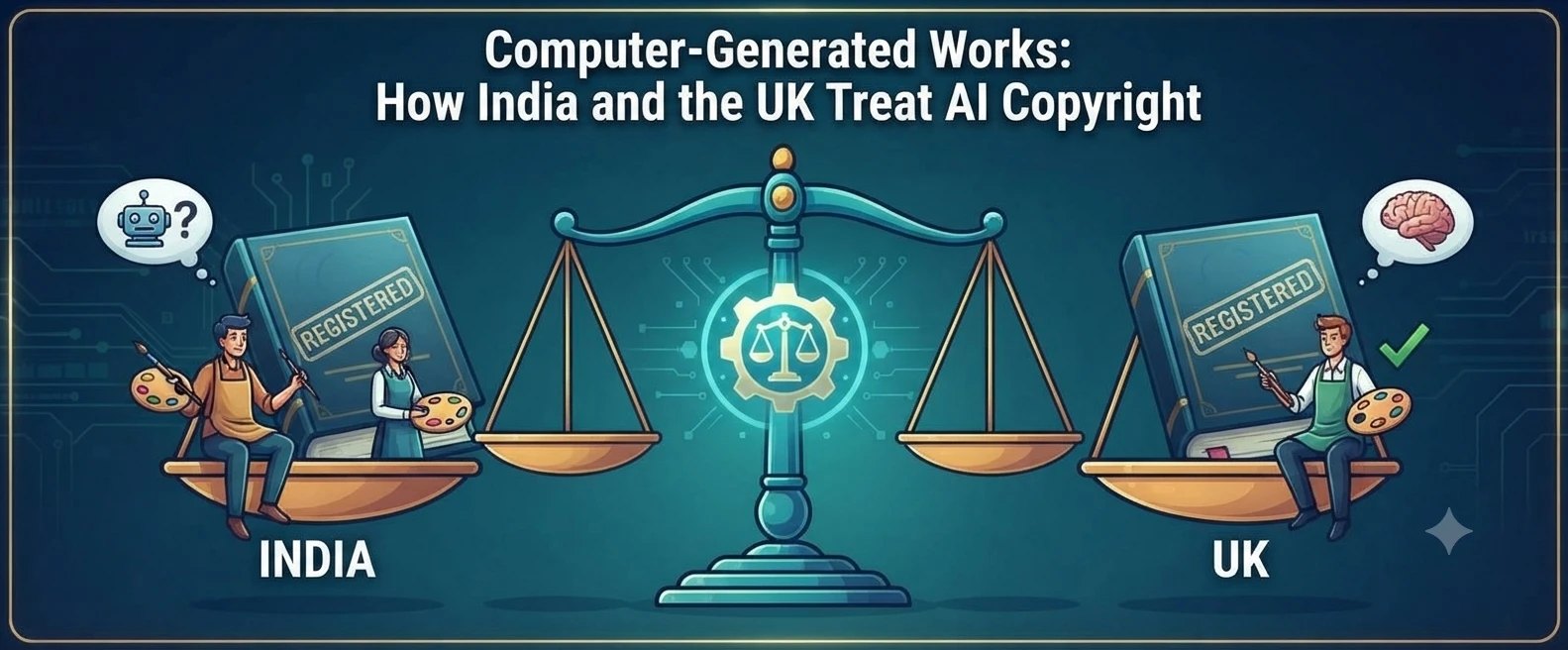
Outside India, courts and offices are moving to require human authorship, as in the US decision in Thaler v. Perlmutter, where the Supreme Court declined review in March 2026. UK law has its own computer-generated works rule. Indian courts may look at these developments, but they will decide under the Indian Act. Musicians working across borders should expect different rules in each country and plan for the strictest.
Tool terms and a practical plan
Check the terms of the AI music tool you use. Tools such as Suno and Udio have terms that decide who owns the output, whether it can be used commercially and under which plan. Some give paid users ownership or a broad licence, while free plans may restrict commercial use. Terms can change, and the Suno Udio copyright India question depends on both the tool’s terms and the law. Keep a copy of the terms in force on the date you generated each track. Tool terms are the contract side of AI music copyright India.
Build human authorship into your workflow. Write your own lyrics or melody, record live instruments or vocals, edit and arrange outputs, mix and master, and document the process with project files, drafts and notes. Where you can, register with IPRS and a label for the human-authored parts. For copyright registration AI music India applicants should disclose AI use accurately, because misstatement can cause problems later.
Use contracts. If you work with a producer, a singer or a lyricist, sign agreements that say who owns what, including AI-generated elements. Add warranties about originality and non-infringement. If you plan to sell the music to a label, advertiser or film producer, expect them to ask about AI use and to require indemnities. Treat AI as a tool and keep a clear human story about how the song was made.
Next steps and quick answers
Before you release an AI-assisted track, record who did what, check the tool’s terms, test for similarity to existing songs and decide what you will claim. Take legal advice before you register or sign a distribution deal. This is general information, not legal advice. Review your AI music copyright India position before each release.
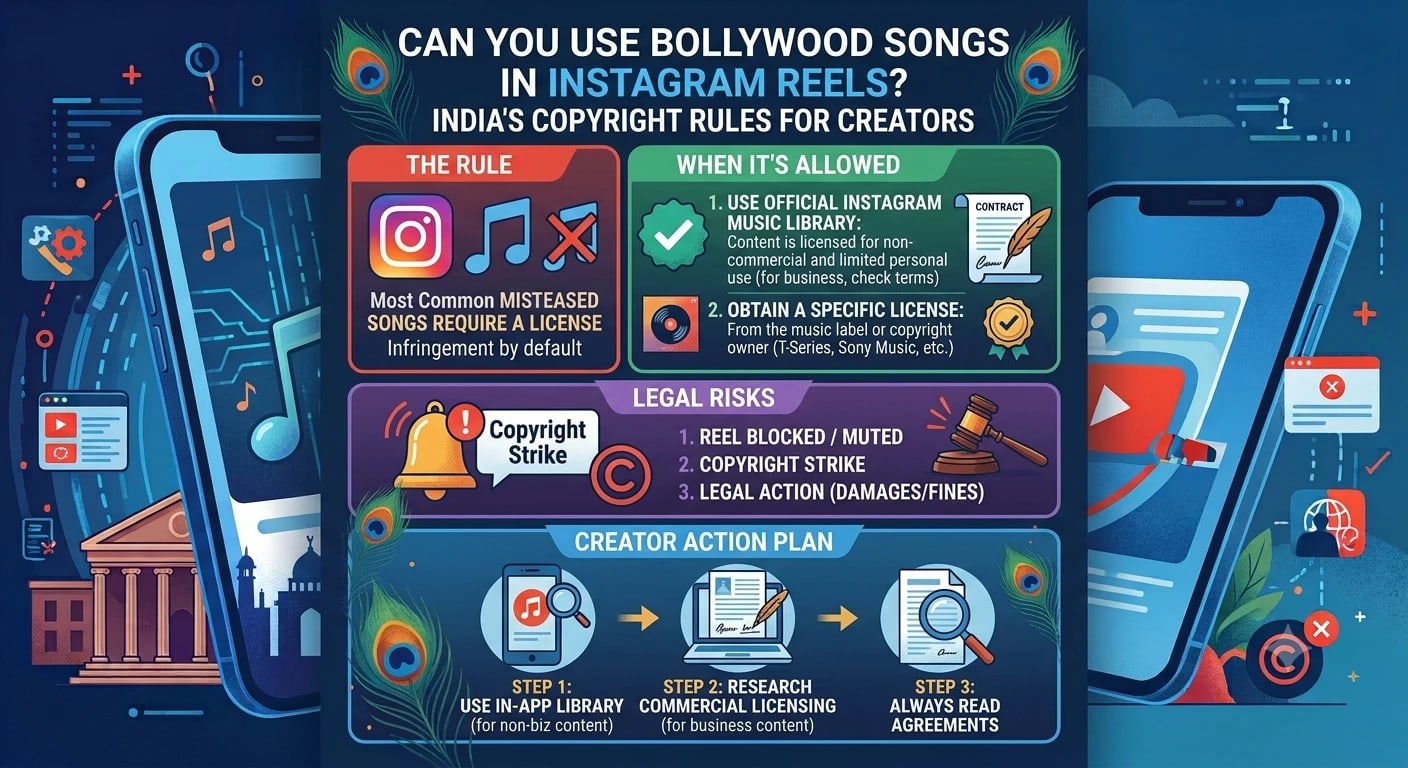
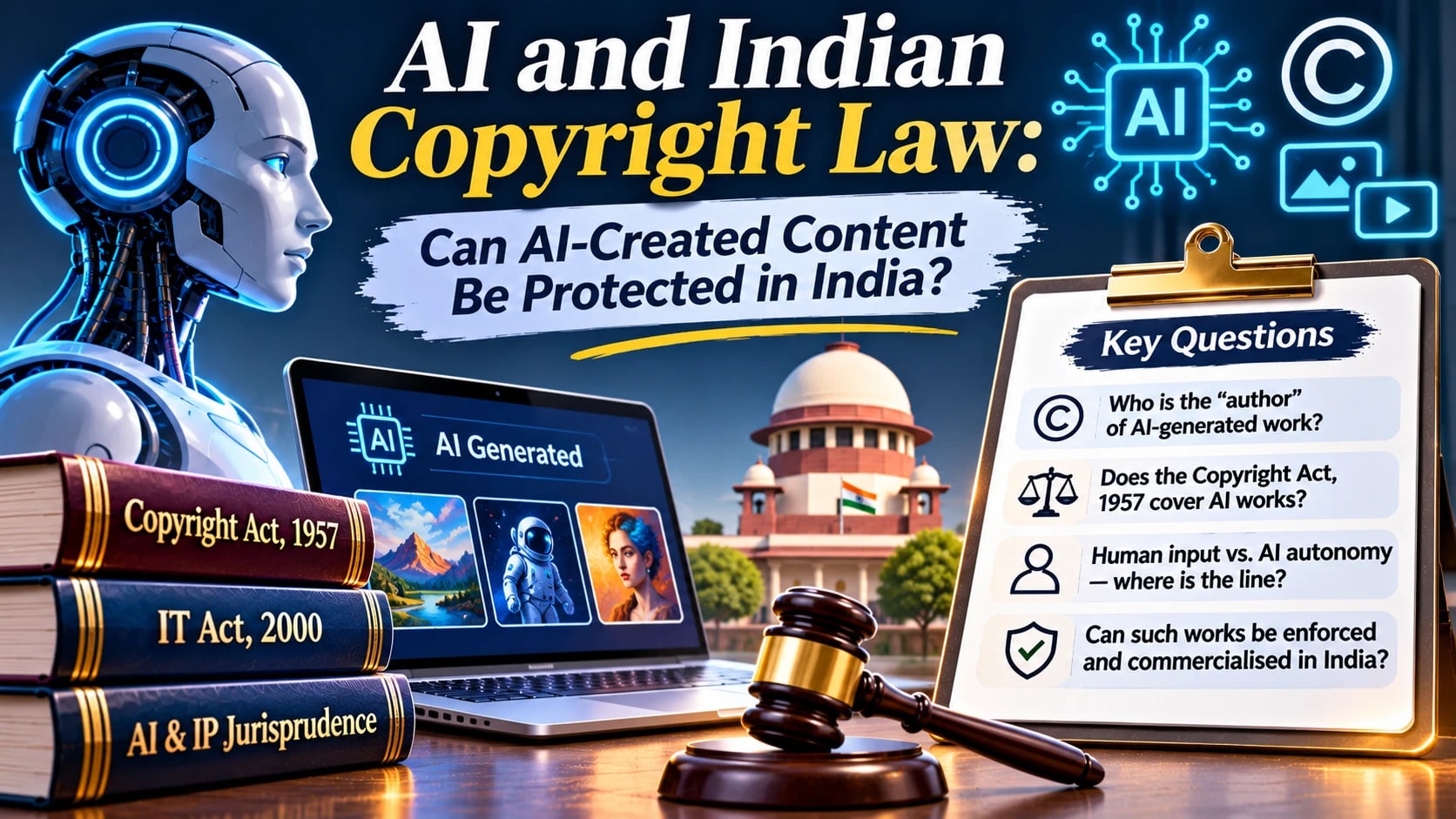
Related reading: can AI art be copyrighted after Thaler, AI-generated content and copyright in India, computer-generated works in India and the UK, AI music lawsuits and generative AI startups, licensing Indian music for UK content, using Bollywood songs in Instagram reels and trade marking an AI-generated logo; also AI art copyright in the UAE.
Quick answers
Can AI-made music be copyrighted in India?
Not on its own if no human creative input shows. A person who causes a computer-generated work to be created may be the author under Section 2(d)(vi), but originality is still required, and courts have not decided how this applies to generative AI music.
Who owns a song made with Suno or Udio in India?
It depends on the tool’s terms and on the human contribution. The terms may give you a licence or ownership of outputs, but Indian copyright needs original human authorship, so add your own creative work and keep records.
Can I register an AI-assisted song with the Indian Copyright Office?
You can apply for the parts you authored and should disclose AI use accurately. The Office’s approach to AI authorship is uncertain, as the RAGHAV episode shows, so take advice before you file.
Does Section 2(d)(vi) make me the author of an AI song?
It says the author of a computer-generated work is the person who causes it to be created, but originality is still required and courts have not applied it to generative AI music. Do not rely on it without records and advice.
Can I release an AI song commercially?
Check the tool’s terms, test for similarity to existing songs and add human authorship. Labels and distributors may ask about AI use.
Final word
Halverton & Co. is an Indian law firm advising founders, startups, technology companies and investors on Indian law, including AI and copyright law, music and media licensing, and contracts for creators and labels. We practise in Jharkhand, Maharashtra and before the Supreme Court of India, and act as fractional legal counsel for technology-driven businesses. Halverton & Co.: Where tech needs law! If you have a question about Indian law, write to us at office@halvertonandco.com, or get in touch.
This article reflects developments reported up to 31 October 2026. It is for general information only, is not legal advice, and does not create an advocate-client relationship. Halverton & Co. is an Indian law firm.
Sources
Related practice area
Intellectual Property
Trade marks, copyright, patents and designs. Searched, filed, licensed and enforced under Indian law.
View the practice areaComments
No account needed. Comments are reviewed before they appear, so yours will show here once approved. Please do not share confidential details or describe your own legal matter: replies are general discussion, not legal advice, and do not create an advocate-client relationship. For your own situation, write to office@halvertonandco.com.