Key takeaways
- High-volume standard agreements such as NDAs, vendor and SaaS contracts, DPAs and statements of work suit outsourced review.
- A clause-by-clause playbook with fallbacks and escalation points keeps outsourced review consistent.
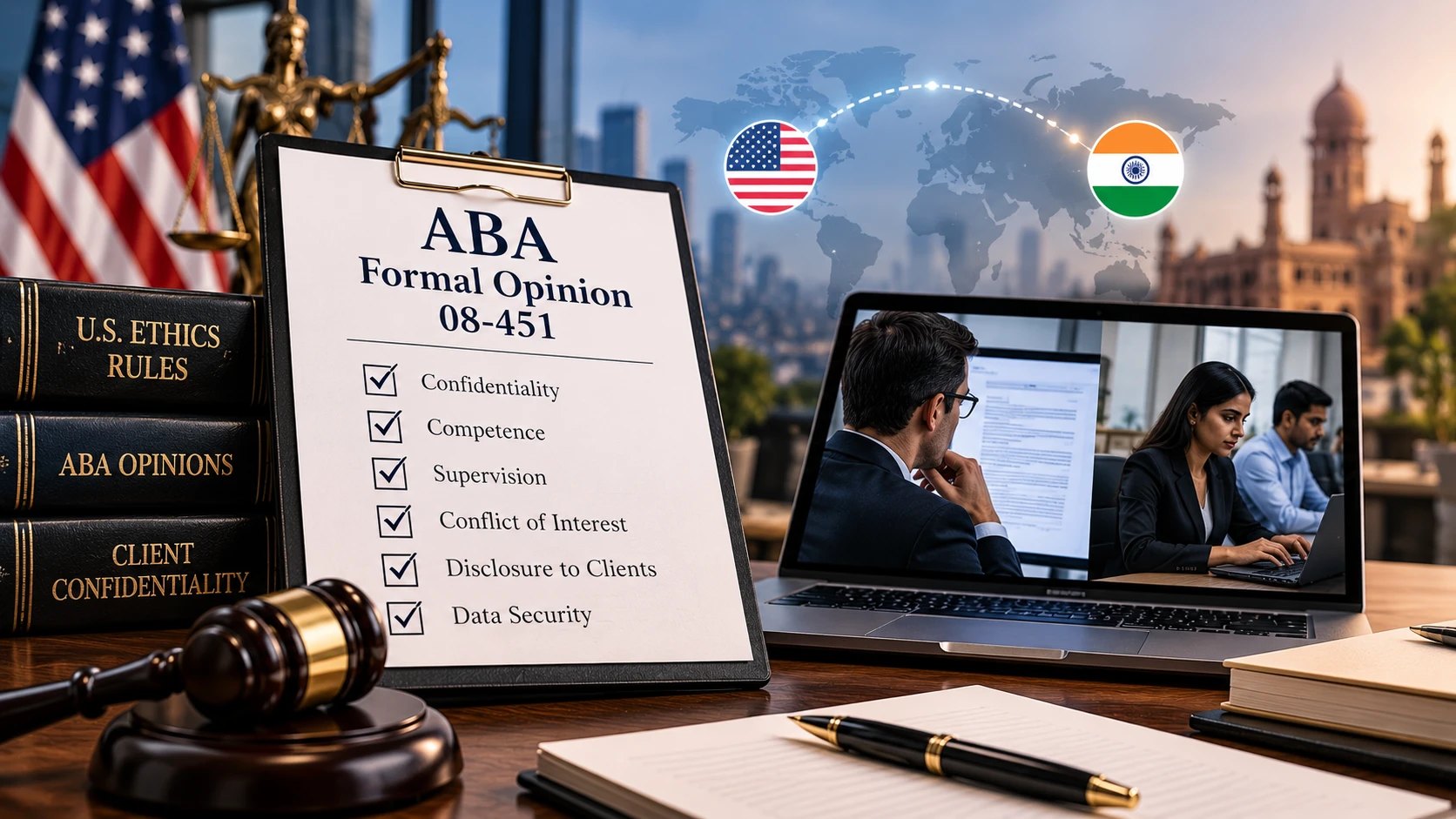
- Under ABA Formal Opinion 08-451, outsourcing requires supervision by a US-licensed attorney, confidentiality and conflict checks.
- Start with one contract type and a simple playbook, then expand.
Ask any general counsel at a growing company what keeps the legal team busy and you’ll hear the same answer: contracts. NDAs, vendor agreements, customer paper, data processing addendums, renewals. Most are routine. All of them have to be read. And the volume grows faster than the legal budget.
Contract review outsourcing is one practical way for startups and in-house teams to keep up without hiring. This guide explains what kinds of contract work can be outsourced, why a playbook is essential, how to stay on the right side of unauthorized practice rules, and how to protect confidentiality. For the ethics framework, see our ABA 08-451 compliance checklist.
Why in-house teams outsource contract review
In-house legal teams are measured on speed. Sales wants customer contracts turned around in a day. Procurement wants vendor agreements signed this week. The legal team wants to focus on the contracts that actually carry risk, but it can’t find them in the pile without reading everything.
Contract review outsourcing addresses the volume problem. A trained offshore team can do the first pass on routine agreements, mark up against your positions, summarize the deviations, and send the attorney a short note on what needs a decision. The in-house lawyer spends five minutes on a contract instead of forty.
The arithmetic is easy to see. If a routine vendor agreement takes an in-house lawyer 45 minutes to review from scratch, and an outsourced first pass cuts that to ten minutes of attorney review, the time saved across hundreds of contracts a year is substantial, and it’s time the lawyer can spend on the deals that matter. For startups without a general counsel, outsourced support can work alongside outside counsel: the support team handles first drafts and abstraction, and the outside lawyer reviews and advises.
What contract work can be outsourced
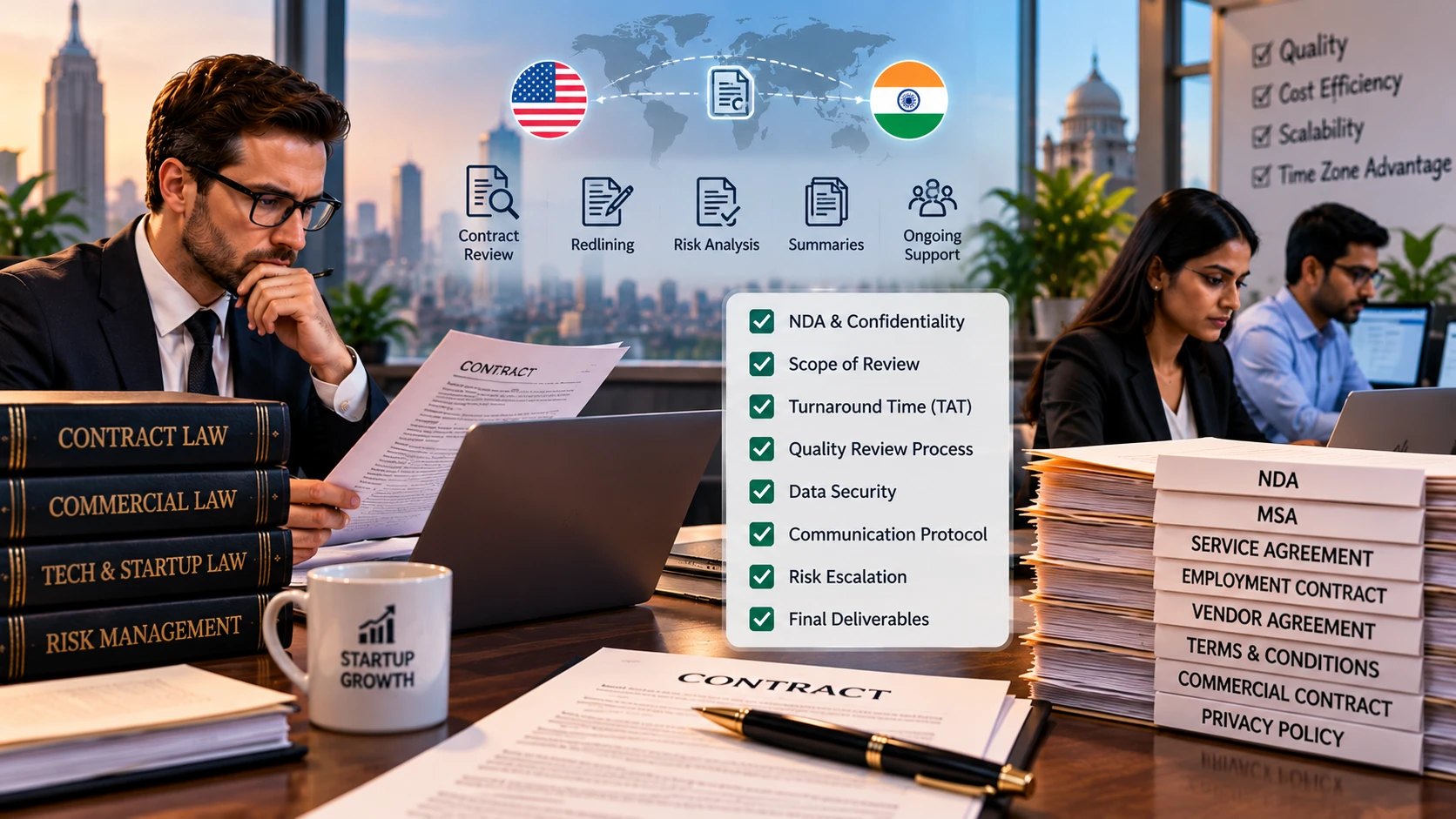
The best candidates for contract review outsourcing are high-volume, standardized agreements: NDAs, vendor and SaaS subscription agreements, statements of work, data processing addendums, reseller and referral agreements, and standard customer contracts on your own paper. First-pass review, issue lists and redlines against a playbook are all well suited to an offshore team.
Many teams also use contract review outsourcing for third-party paper, where the counterparty’s draft must be compared against the company’s standard positions clause by clause. Contract abstraction and management is another strong fit: extracting key terms (renewal dates, notice periods, liability caps, assignment clauses, governing law) into a contract database, running audits of legacy contracts before a financing or acquisition, and tracking obligations and renewal deadlines. Due diligence reviews during M&A or fundraising follow the same model at larger scale.
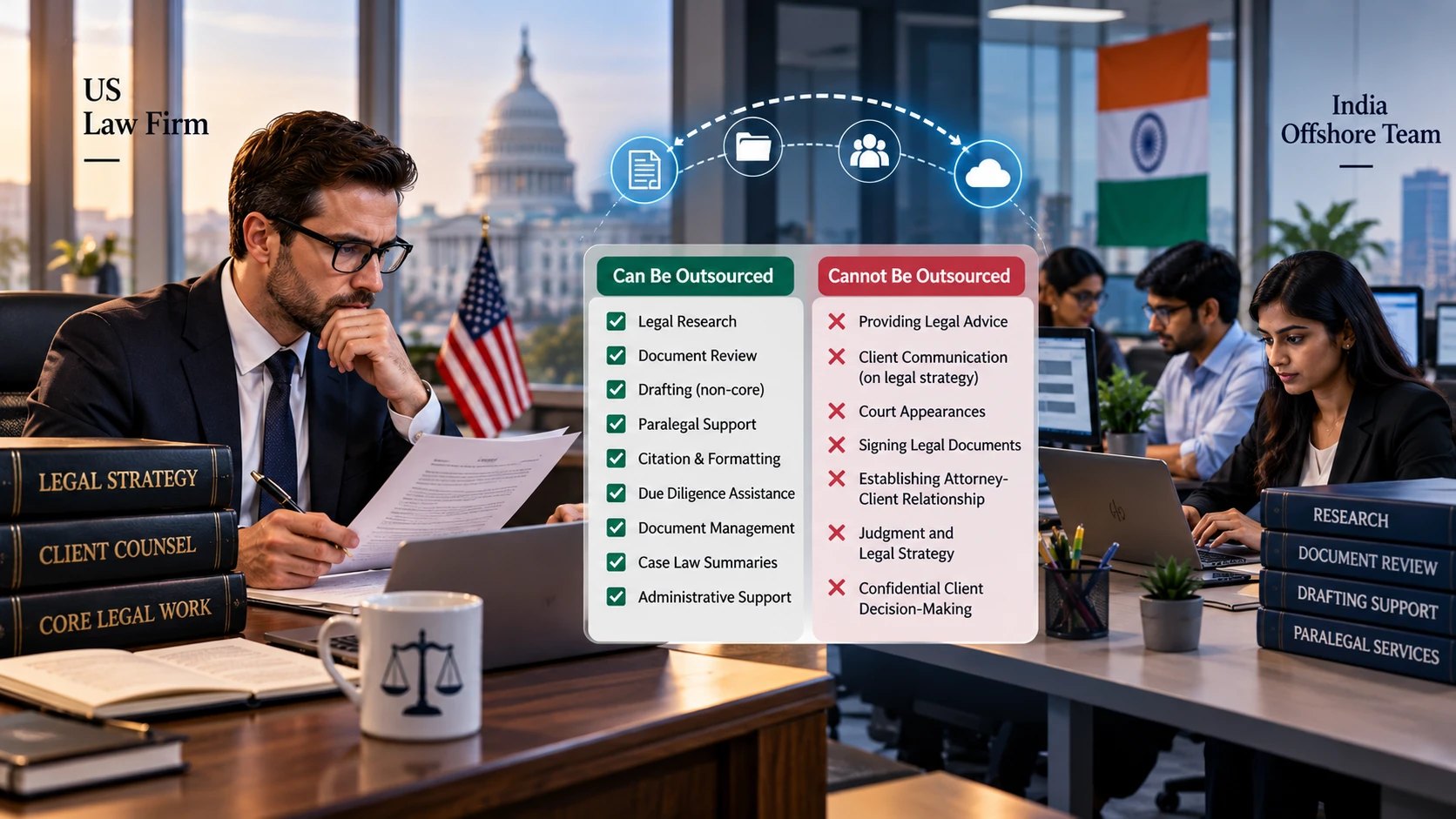
Contract review outsourcing can also cover the lifecycle around review: preparing execution versions, checking signature blocks and authority, filing signed copies, and updating the contract database so that renewal and termination dates are never missed. Some contracts should stay in-house or with outside counsel from the start: bet-the-company deals, heavily negotiated strategic agreements, anything involving litigation or regulatory exposure, and contracts where the business relationship itself needs a lawyer’s judgment.
| Good candidates for outsourcing | Keep in-house or with outside counsel |
|---|---|
| NDAs, vendor and SaaS agreements, SOWs, DPAs | Bet-the-company and strategic deals |
| First-pass review and redlines against a playbook | Anything involving litigation or regulatory exposure |
| Contract abstraction and renewal tracking | Contracts where the relationship needs a lawyer’s judgment |
| Due diligence on M&A or financing | Final negotiation and sign-off |
The playbook: how contract review outsourcing stays consistent
The secret of successful contract review outsourcing is a playbook. A playbook sets out, clause by clause, your preferred position, acceptable fallbacks, and the points that must be escalated to an attorney. For example: liability caps below 12 months’ fees need sign-off, unlimited indemnities are never accepted, and governing law outside specified states needs review.
With a playbook, the offshore reviewer isn’t making legal judgments. They’re applying your judgments to the contract and flagging anything outside them. That keeps the work consistent across reviewers, makes quality easy to check, and keeps the decision-making where it belongs.
A good playbook also records the reasons behind each position, so that reviewers understand why a clause matters and can spot variations that the playbook didn’t anticipate. Many in-house teams build their first playbook from the redlines they’ve already negotiated, then refine it with each new contract. Playbooks improve with use. Each escalation is an opportunity to add a rule, so the share of contracts that need attorney time falls over time.
Supervision, unauthorized practice and confidentiality
Contract review is legal work, so the usual rules apply. Under ABA Formal Opinion 08-451, lawyers may outsource legal and nonlegal services, including to foreign contractors, provided supervision, confidentiality and conflict checks are maintained. Foreign contractors must not be held out as licensed US lawyers and must work under the direct supervision of a US-licensed attorney. See our guide to offshore paralegal services for the line between support and practice.
For in-house teams, that means the outsourced team reports to an in-house attorney who reviews escalations and owns the final position. The outsourced team shouldn’t negotiate directly with counterparties as the company’s lawyer or give legal advice to business teams. Its role is to prepare, flag and summarize.
It also helps to define turnaround times by contract type: NDAs within one business day, vendor agreements within two or three, and anything escalated to an attorney flagged immediately. Confidentiality needs equal care. Contracts often contain customers’ commercial terms, personal data and trade secrets. Use a written services agreement with confidentiality and data security obligations, give the offshore team access only through secure systems, avoid local downloads, and check that your customer contracts allow subcontracted review where required. Where contracts include Indian personal data, see our guide to India’s DPDP Act for US SaaS companies.
Getting started, remedies and quick answers
Contract review outsourcing works best as a partnership. Share feedback on every escalation, keep the playbook current, and treat the outsourced team as an extension of your legal operations function rather than a black box. Start with one contract type, usually NDAs or vendor agreements, and a simple playbook. Track turnaround time, escalation rate and accuracy over a month or two, then expand. Agree service levels and escalation rules in writing.
If a reviewer misses a problem, the remedy is the supervising attorney’s review, which should always happen before signature, plus a playbook update so the same issue is caught next time. Contracts that have already been signed with an unfavorable term can sometimes be renegotiated at renewal, which is another reason good contract abstraction and renewal tracking pay off. Contracts with developers and contractors in India raise IP questions of their own; see our guides to IP assignment in India and hiring contractors in India.
Quick answers
Is contract review outsourcing allowed for US companies?
Yes. In-house lawyers and law firms can outsource support work, provided a US-licensed attorney supervises, confidentiality is protected and the outsourced team isn’t held out as the company’s lawyers.
What contracts are best to outsource?
High-volume, standardized agreements such as NDAs, vendor and SaaS agreements, DPAs and statements of work, plus contract abstraction and due diligence.
Do we need a playbook?
Yes. A playbook lets outsourced reviewers apply your positions consistently and escalate anything outside them.
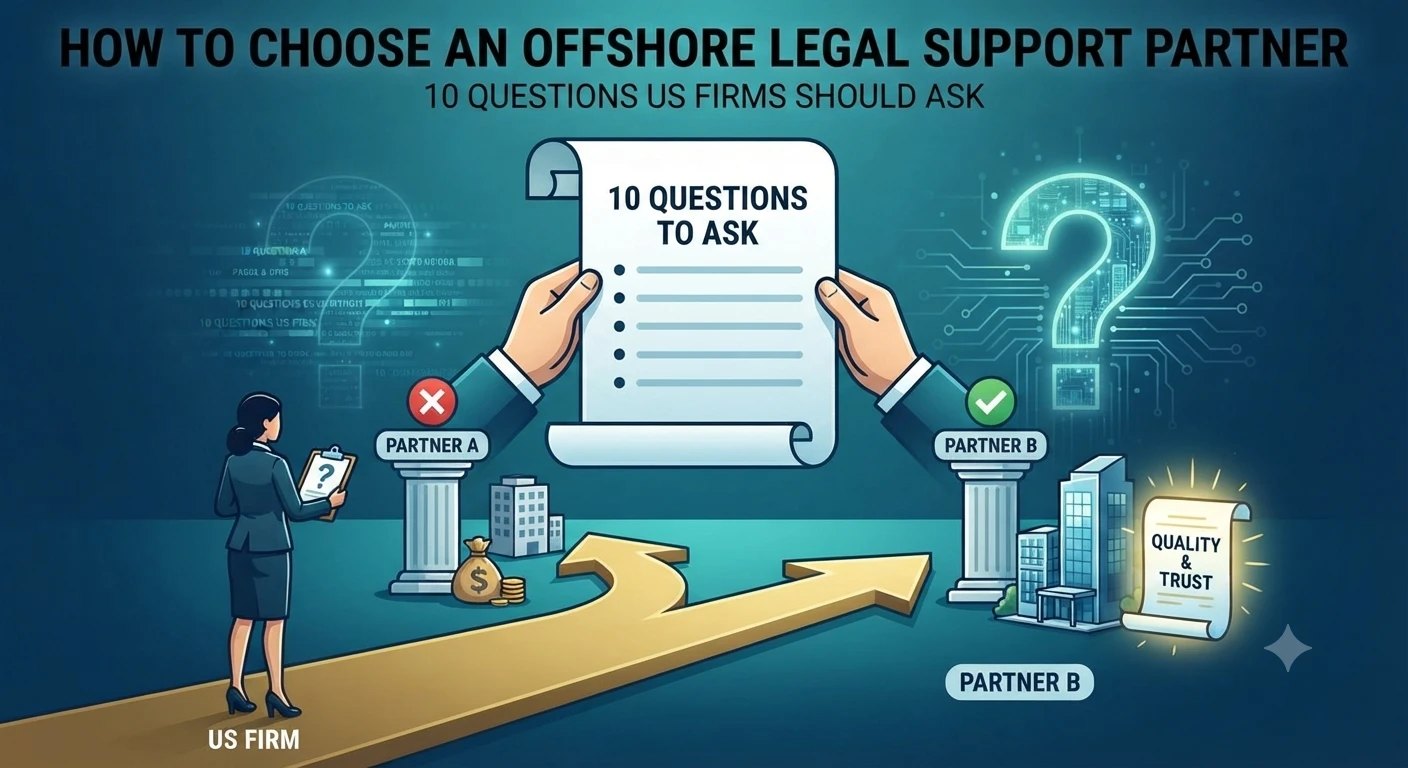
Related reading: choosing an offshore legal support partner; also outsourced legal research costs for US law firms.
Final word
Halverton & Co. is an Indian law firm. We do not provide US legal advice or represent clients before US courts or the USPTO, and nothing in this article is an offer of services. If you have a question about the Indian side of an offshore arrangement, such as Indian law, contracts or data protection, you can write to us at office@halvertonandco.com, or get in touch. Halverton & Co.: Where tech needs law!
This article reflects developments reported up to early October 2026. It is for general information only, is not legal advice, and does not create an attorney-client relationship. Halverton & Co. is an Indian law firm and does not advise on US law.
Related practice area
Startups & Venture
From incorporation to term sheet. The documents a company needs to be fundable.
View the practice areaComments
No account needed. Comments are reviewed before they appear, so yours will show here once approved. Please do not share confidential details or describe your own legal matter: replies are general discussion, not legal advice, and do not create an advocate-client relationship. For your own situation, write to office@halvertonandco.com.