Key takeaways
- An Indian trade mark registration gives statutory infringement rights, criminal remedies and faster marketplace takedowns.
- Indian courts, particularly the Delhi High Court’s IP Division, grant urgent injunctions and appoint local commissioners to seize stock.
- Applying a false trade mark and selling counterfeit goods are offences under Sections 103 and 104, with imprisonment of six months to three years.
- Under the IT Rules as amended in February 2026, platforms must resolve general user grievances within seven days.
For UK brands, counterfeits are a constant drain on revenue and reputation. Fake versions of British fashion, cosmetics, spare parts, electronics and consumer goods turn up on marketplaces worldwide, and some of them are manufactured or sold in India, a vast market with significant manufacturing capacity and booming e-commerce.
Stopping counterfeit goods at the source, in India, is often far more effective than chasing individual listings around the world. This guide explains the legal tools available to UK brands in India: marketplace and online takedowns, civil court remedies including urgent injunctions and raids, criminal action, customs, and a practical enforcement strategy. UK-side enforcement is a matter for UK advisers.
The foundation: register your rights in India
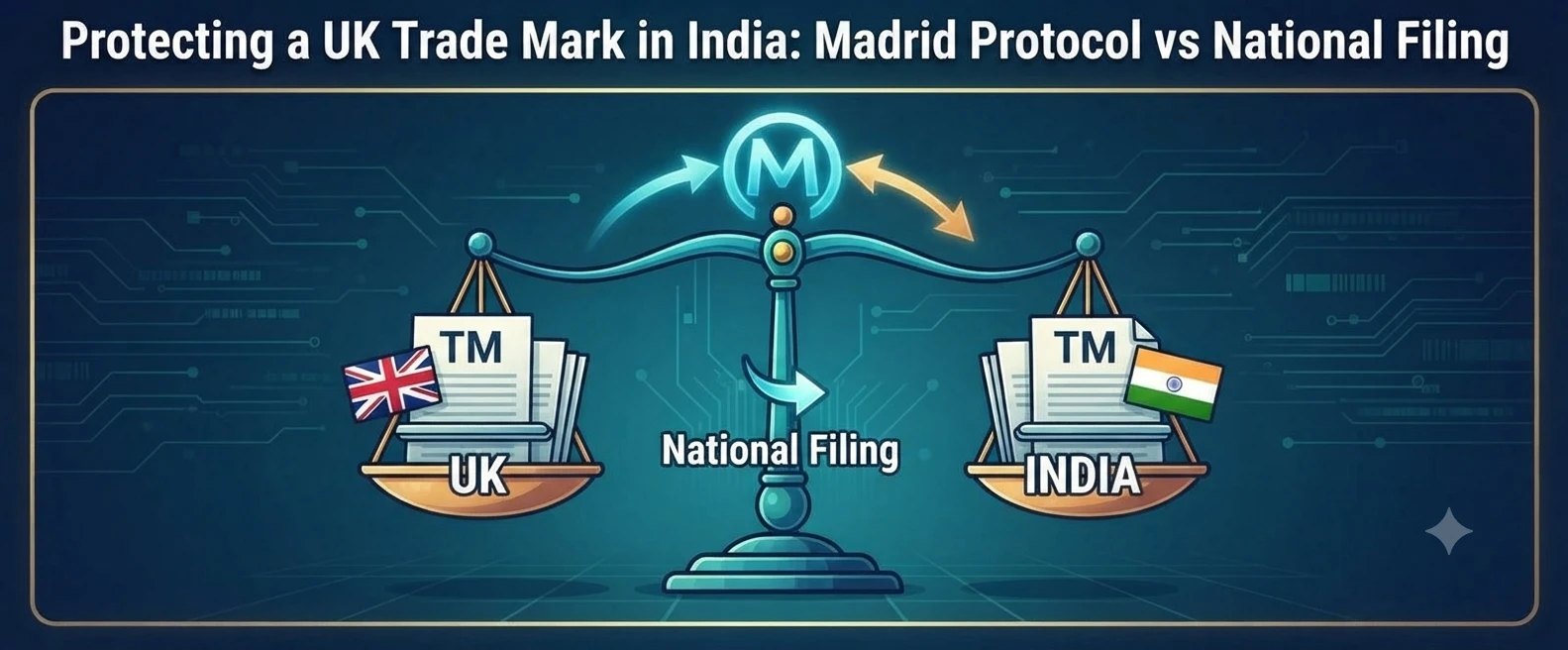
Effective action against counterfeit goods in India starts with Indian registrations. A registered trade mark gives you a statutory infringement action under the Trade Marks Act, 1999, access to criminal remedies, and much faster results with online platforms. Without registration, you’ll have to rely on passing off, which requires proof of goodwill in India and is slower to establish. See our guide to protecting a UK trade mark in India.
Register your word marks and logos in the relevant classes, and consider registering designs for distinctive product shapes and copyright evidence for packaging and artwork. Indian copyright doesn’t require registration, but registration certificates are useful evidence in enforcement.
Many UK brands also use their Indian registrations defensively with distributors, licensing manufacturers only under written agreements that control quality, require destruction of rejected goods and prohibit overruns, which are a common source of “genuine-looking” counterfeit goods. Keep your evidence ready: certificates, proof of use and reputation in India, product authentication guides that explain how to distinguish genuine products from fakes, and test purchase records. Indian courts and police act faster when the brand owner arrives organised.
Online takedowns and marketplace enforcement
Most counterfeit goods in India are now sold online, through marketplaces, social media and messaging apps. Under India’s IT Rules, intermediaries must act on lawful complaints, and the February 2026 amendments shortened the deadline for resolving general user grievances from 15 days to seven. Platforms that ignore valid notices risk losing their safe harbour protection under Section 79 of the IT Act; see our guide to the Sahyog portal and content takedowns for how intermediary liability works.
Social media and messaging apps need attention too: counterfeit goods are increasingly sold through Instagram shops, WhatsApp catalogues and Telegram channels, which require platform-specific reporting and, for persistent sellers, court orders directed at the platforms. Major Indian marketplaces also run their own brand protection and IP complaint programmes, which work best when the brand owner has Indian registrations and a dedicated enforcement contact. Systematic monitoring, with regular notices and records of repeat offenders, builds the evidence base for court action against larger sellers.
Fake websites and domain names imitating your brand can be tackled through the .IN Domain Name Dispute Resolution Policy for .in domains, and through court orders against domain registrars. The Delhi High Court’s 2025 judgment in Dabur India v. Ashok Kumar granted a “dynamic+” injunction covering future variations of infringing domains and imposed significant obligations on domain registrars; link to the judgment itself before citing it.
Civil court remedies: injunctions, raids and damages
Indian civil courts, particularly the Delhi High Court’s IP Division, are known for granting strong relief against counterfeit goods. A brand owner can sue for trade mark infringement and passing off and seek an urgent ex parte interim injunction, often granted at the first hearing where counterfeiting is clear. Courts can also appoint local commissioners to visit premises, seize counterfeit stock and record evidence, which works like an Anton Piller order.
“John Doe” or “Ashok Kumar” orders allow relief against unknown defendants, which is useful where counterfeit goods are sold by many anonymous sellers, and dynamic injunctions can extend relief to new websites and listings. Courts can also direct platforms and registrars to disclose the identities of sellers.
At trial, the court can grant a permanent injunction, damages or an account of profits, delivery up and destruction of counterfeit goods, and costs. Indian courts have increasingly awarded meaningful damages and costs in counterfeiting cases, especially where defendants don’t appear. A UK brand can sue in the place where it carries on business in India, or where the infringement occurs.
Criminal remedies and customs
Counterfeiting is also a crime in India. Applying a false trade mark and selling goods bearing a false trade mark are offences under Sections 103 and 104 of the Trade Marks Act, punishable with imprisonment of six months to three years and a fine of ₹50,000 to ₹2 lakh. Police can search and seize counterfeit goods, after obtaining the Registrar’s opinion on the trade mark, which can be particularly effective against warehouses and manufacturers. Confirm the current penalty text before you quote it.
Evidence gathered by private investigators, such as test purchases, photographs and supply chain information, is often decisive, so instruct reputable investigators who understand how Indian courts treat such evidence. Choosing between civil and criminal routes depends on the target. Large, organised counterfeiters with warehouses and supply networks are often best tackled with coordinated civil seizures and police action, while smaller online sellers may respond to takedowns and warning letters. Criminal action works best when combined with civil proceedings and backed by careful investigation: identifying manufacturers, supply chains and storage locations through investigators and test purchases. It’s a strong deterrent, but it requires coordination with local police and a willingness to follow cases through.
On imports into India, rights holders can record their trade marks with Indian Customs under the Intellectual Property Rights (Imported Goods) Enforcement Rules, 2007, allowing Customs to detain suspected counterfeit imports. For counterfeit goods arriving in the UK, UK brands can work with UK border authorities; that’s a matter for UK advisers.
| Tool | What it does |
|---|---|
| Platform and marketplace takedowns | Remove listings quickly; works best with Indian registrations |
| Domain and website action | .IN dispute policy; court orders against registrars, including dynamic injunctions |
| Civil suit | Urgent ex parte injunctions, local commissioners, John Doe orders, damages |
| Criminal complaint | Offences under Sections 103 and 104; police search and seizure |
| Customs recordal | Detention of suspected counterfeit imports under the 2007 Rules |
An enforcement strategy for UK brands, and quick answers
Budget for persistence: counterfeiters often reappear under new names, so ongoing monitoring and repeat action are usually needed. The most effective strategy against counterfeit goods combines layers: register your rights in India, monitor marketplaces and social media, send regular takedowns, investigate the biggest sellers and manufacturers, and then bring civil and, where appropriate, criminal action against the sources. Publicised enforcement actions also deter others. Keep careful records, because a history of takedowns and repeat infringement strengthens your position in court.
Under the UK-India trade deal, cooperation on IP enforcement is part of the broader relationship, but practical results still depend on brand owners using India’s legal tools actively; see our UK-India trade deal checklist. If someone has registered your brand rather than copied it, see what to do when someone registers your brand in India.
Quick answers
Can UK brands sue counterfeiters in India?
Yes. UK brands can bring civil actions for trade mark infringement and passing off in India, and seek urgent injunctions and seizures.
Is counterfeiting a crime in India?
Yes. Applying a false trade mark and selling goods bearing one are offences punishable with imprisonment of six months to three years and fines.
Do we need an Indian trade mark registration?
It’s strongly recommended. Registration gives statutory infringement rights, criminal remedies and faster platform takedowns.
Related reading: deepfakes of UK creators and brands: Indian courts vs UK law; also opening a UK university campus in India; also recovering a .in domain: an INDRP guide for UK brands; also defending a UK brand against a trade mark opposition in India, protecting UK food and drink names in India and licensing a UK brand to Indian franchisees; also selling on Amazon India from the UK.
Final word
Halverton & Co. is an Indian law firm that advises on Indian law, including anti-counterfeiting programmes, online takedowns, injunctions, raids and criminal complaints in India. We practise in Jharkhand, Maharashtra and before the Supreme Court of India, and we work alongside your UK solicitors, who advise on English law. Halverton & Co.: Where tech needs law! If you have a question about Indian law, write to us at office@halvertonandco.com, or get in touch.
This article reflects developments reported up to early October 2026. It is for general information only, is not legal advice, and does not create a solicitor-client relationship. Halverton & Co. is an Indian law firm, is not authorised or regulated by the Solicitors Regulation Authority, and does not advise on English law or UK tax.
Related practice area
Intellectual Property
Trade marks, copyright, patents and designs. Searched, filed, licensed and enforced under Indian law.
View the practice areaComments
No account needed. Comments are reviewed before they appear, so yours will show here once approved. Please do not share confidential details or describe your own legal matter: replies are general discussion, not legal advice, and do not create an advocate-client relationship. For your own situation, write to office@halvertonandco.com.