
For a UK IP practice, few things are as quietly damaging as a lapsed registration. A client’s trade mark expires because a renewal slipped through the cracks, or a confusingly similar application goes unopposed because nobody was watching. Both are avoidable, and both depend on careful, repetitive work that is hard to staff in-house.
This guide explains the UK rules on trade mark renewals and restoration after the April 2026 fee changes, how trade mark watching works, what an offshore team can handle, and the safeguards that keep portfolios safe. For the supervision framework, see our guide to what the SRA expects from UK law firms.
The UK trade mark renewal rules in 2026
UK trade mark registrations last ten years and can be renewed indefinitely. You can renew in the six months before the registration expires, and up to six months after expiry as a “late renewal”. The IPO sends a renewal reminder about six months before expiry, but relying on official reminders alone isn’t a safe practice for a professional firm.
Fees rose on 1 April 2026, the first increase for trade marks since 1998. The fee for renewing a registration at the ten-year mark rose from £200 to £245, the fee for each additional class from £50 to £60, and the late renewal fee from £50 to £60. Clients with large portfolios will notice the difference, and accurate fee estimates are part of good renewal management. Check the UK Intellectual Property Office’s current fee schedule before you quote.
If a mark isn’t renewed in time, the IPO removes it from the register. Restoration is possible within six months of removal using Form TM13, with a statement fully explaining why the mark wasn’t renewed in time. Restoration isn’t automatic, so the best strategy is never to need it.
| Item | Rule |
|---|---|
| Term of registration | Ten years, renewable indefinitely |
| Renewal window | Six months before expiry |
| Late renewal | Up to six months after expiry, with a late fee |
| Fees from 1 April 2026 | £245 renewal; £60 each additional class; £60 late renewal |
| Restoration | Within six months of removal, on Form TM13, with an explanation |
Why trade mark watching matters
Renewals protect what a client already has. Trade mark watching protects it from erosion. A watching service monitors newly published applications at the UKIPO and, where relevant, other offices, and flags marks that are identical or similar to a client’s mark for similar goods or services. The client and attorney can then decide whether to oppose.
Opposition windows are short. A UK application is published for opposition, and the period for filing a notice of threatened opposition or an opposition is measured in months, not years; check the exact period on GOV.UK. Missing the window often means the only remaining option is a more expensive invalidity action, whose official starting fee also rose in April 2026.
For brand owners with interests in several markets, watching should extend beyond the UK. Many UK clients now sell into India, the EU and the US, and a coordinated watch across those registers, reported in one place, is more useful than separate services; see our guides to registering a US trademark in India and trademark squatting in India. Good watching is a mix of technology and judgement. Software finds candidate marks, but someone needs to filter out false positives, compare goods and services, and write a short, useful report so the attorney can advise quickly.
What an offshore team can handle
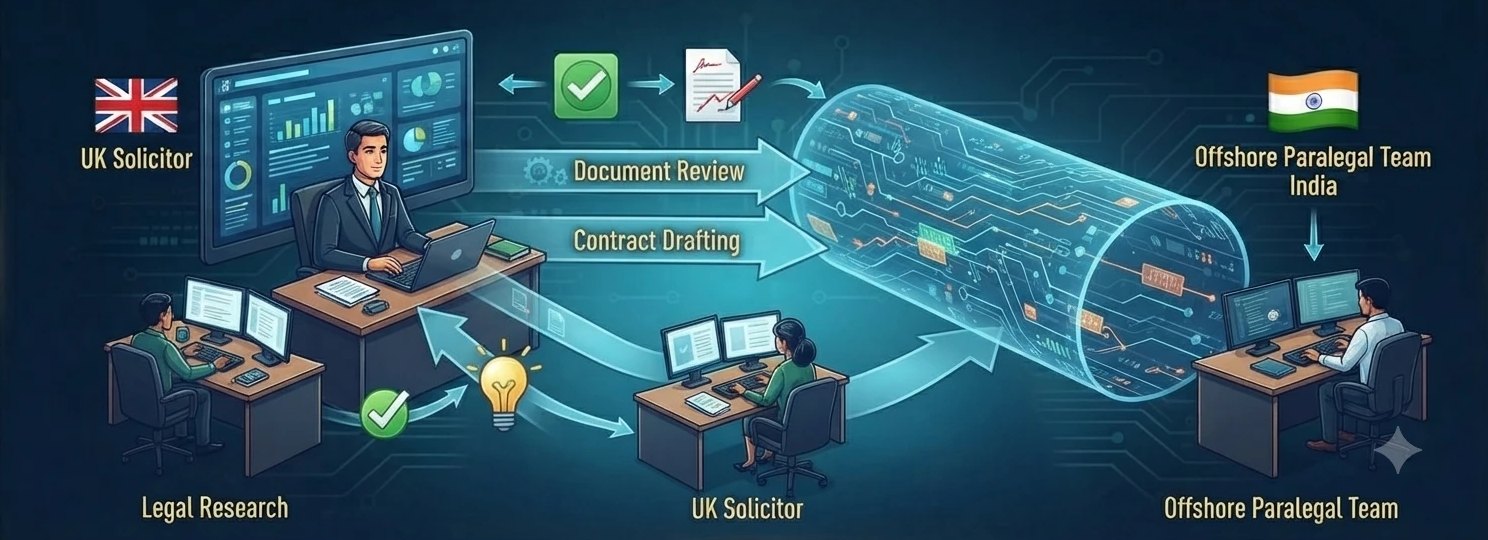
Volume is what makes outsourcing worthwhile: a firm managing hundreds or thousands of marks has a steady flow of renewal dates, watch hits and register changes that a dedicated team can handle consistently. Trade mark renewals and watching suit offshore support well. An offshore team can maintain the renewal docket, reconcile it against the UKIPO register, prepare renewal reminder letters and fee estimates for client approval, and prepare renewal filings for an attorney to check and submit. For international portfolios, the same team can track renewals at the EUIPO, WIPO and national offices, including India; see our guide to trademark registration for startups in India.
For watching, the team can run searches, review hits, compare marks and specifications, and prepare a filtered watch report highlighting the conflicts that matter. The attorney then decides whether to recommend opposition and advises the client.
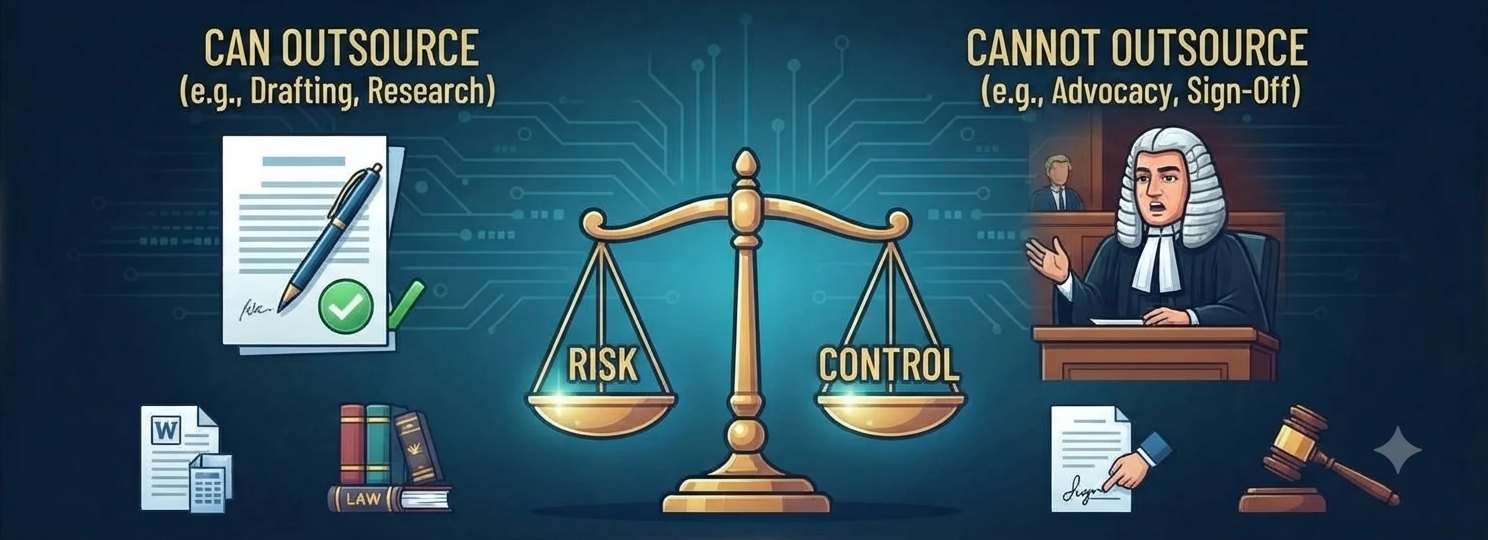
There are limits. Proceedings before the UKIPO require an address for service in the UK, Gibraltar or the Channel Islands, and the attorney of record should be a UK professional. The offshore team prepares; the UK attorney decides, signs and files. That keeps the arrangement compliant and keeps responsibility where clients expect it; see our guide to reserved legal activities.
Safeguards that prevent lapses
The core safeguard is double-checking. Every renewal date should be calculated or confirmed by one person and checked by another, and the docket should be reconciled against the official register regularly, at least quarterly, to catch errors such as assignments, mergers or address changes that cause reminders to go astray. The same discipline applies to US deadlines; see our guide to trademark docketing outsourcing and USPTO deadlines.
Client communication is part of good practice for trade mark renewals. Clients often forget why a mark was registered or whether it is still used, so renewal reminders should ask whether the mark is in use, whether the specification still fits the business, and whether new classes or territories are needed. A renewal is a natural moment for a portfolio review. Clear escalation rules come next. Renewals within three months of the deadline without client instructions should be escalated to the responsible attorney, and marks entering the late renewal period should trigger an urgent alert. Keep client instructions in writing, especially decisions to let a mark lapse.
Fee changes are another reason to plan ahead. Because trade mark renewals can be filed up to six months before expiry, firms managing large portfolios can schedule renewals efficiently and give clients accurate cost estimates well in advance. Finally, keep control of the system. The docket and records should sit in your firm’s own systems, with the offshore team working inside them, so you always have a complete picture whatever happens to the outsourcing arrangement. Data protection and confidentiality terms should be in a written agreement, with a UK GDPR transfer mechanism in place; see our guide to UK GDPR transfers to India.
Getting started, remedies and quick answers
Begin with a portfolio audit. An offshore team can reconcile your docket against the UKIPO and other registers, identify discrepancies and upcoming deadlines, and give you a clean baseline. Then move renewals and watching across in stages, running them in parallel with your existing process for a period.
If a renewal is missed despite safeguards, check immediately whether late renewal is still available, and if the mark has been removed, whether it can be restored within six months on Form TM13, with a full explanation. For trade mark renewals, prevention is far cheaper than cure. Confirm the current restoration fee and the address-for-service rules on GOV.UK before you act.
Quick answers
How much does it cost to renew a UK trade mark in 2026?
From 1 April 2026, £245 for the first class and £60 for each additional class, with a £60 late renewal fee.
When can a UK trade mark be renewed?
In the six months before expiry, or up to six months after expiry as a late renewal.
Can an expired UK trade mark be restored?
Within six months of removal from the register, using Form TM13 with an explanation of why it wasn’t renewed in time.
Related reading: protecting a UK trade mark in India and trade mark squatting in India.
Final word
Halverton & Co. is an Indian law firm. We do not advise on English law, act in UK proceedings or carry out reserved legal activities, and nothing in this article is an offer of services. If you have a question about the Indian side of an offshore arrangement, such as Indian law, contracts or data protection, you can write to us at office@halvertonandco.com, or get in touch. Halverton & Co.: Where tech needs law!
This article reflects developments reported up to early October 2026. It is for general information only, is not legal advice, and does not create a solicitor-client relationship. Halverton & Co. is an Indian law firm, is not authorised or regulated by the Solicitors Regulation Authority, and does not advise on English law.
Related practice area
Intellectual Property
Trade marks, copyright, patents and designs. Searched, filed, licensed and enforced under Indian law.
View the practice area