Key takeaways
- VARA published version 2.1 of its Exchange Services Rulebook on 31 March 2026, adding a framework for crypto derivatives.
- Reports say retail leverage is capped at 5:1 with a 20% initial margin and that firms must run suitability checks.
- Advisers say LRS cannot be used for margin trading or margin calls overseas, and crypto is not a recognised LRS investment class.
- An NRI using UAE money is in a different position from a resident Indian using LRS.
Crypto leverage trading Dubai has a legal basis now, and that is new. On 31 March 2026 VARA published version 2.1 of its Exchange Services Rulebook, which adds a framework for crypto derivatives: futures, perpetuals, options and similar products. Before that, firms ran on pilots and individual conditions.
For an Indian trader the headline is less exciting than it sounds. A rule that lets a Dubai exchange offer leverage does not change what Indian foreign exchange law lets you send abroad to fund it. This piece covers both halves: what VARA now allows, and the LRS problem for Indian residents that most guides skip. Crypto leverage trading Dubai is licensed, supervised and capped, which makes it quite different from an offshore app.
What VARA changed in 2026
Until this year, derivatives in Dubai were handled through case-by-case approvals. OKX, for one, ran a pilot from mid 2025 that let eligible retail clients trade futures, options and perpetuals under conditions set by VARA. Version 2.1 of the rulebook turns that kind of arrangement into a general framework for licensed exchange operators. Most coverage of crypto leverage trading Dubai stops at the headline and skips the Indian side.
The VARA derivatives rulebook covers client suitability, leverage and margin controls, segregation of client assets, and governance and disclosure. Reports describe powers for VARA to adjust margin requirements or suspend trading in a product. Read the primary text before you rely on any detail: most of what’s online is commentary.
One more point. The framework applies to firms that hold the right VARA licence. An offshore platform that simply says it is “based in Dubai” is not covered. Check the register and the permitted activities before you open an account, and keep a screenshot. Before you open any account for crypto leverage trading Dubai firms offer, find the VARA licence and the products it covers.
Leverage, margin and suitability
Retail access is limited. Press coverage of the rulebook says retail leverage is capped at 5:1 with an initial margin of 20%, while professional and institutional clients may be offered more under separate conditions. That VARA retail leverage limit 5:1 figure comes from secondary reports, so confirm it in the rulebook text. Under the VARA derivatives rulebook, retail access comes with a retail leverage limit VARA 5:1, according to press coverage.
Before you trade, expect a suitability assessment. The exchange asks about experience, income and risk appetite and may decline to onboard you for derivatives. This isn’t a formality. A person who says “I’ve never traded” should not expect a perpetual futures account.
There are also the ordinary derivatives risks. Positions can be liquidated automatically when margin falls short. Funding rates on perpetuals can turn a small trade expensive. And because the rulebook lets VARA change margin or halt trading, an exit may not be available when you want it. Fast moves can liquidate a position, and that is true for perpetual futures Dubai licensed exchange operators list as much as anywhere.
The Indian LRS problem
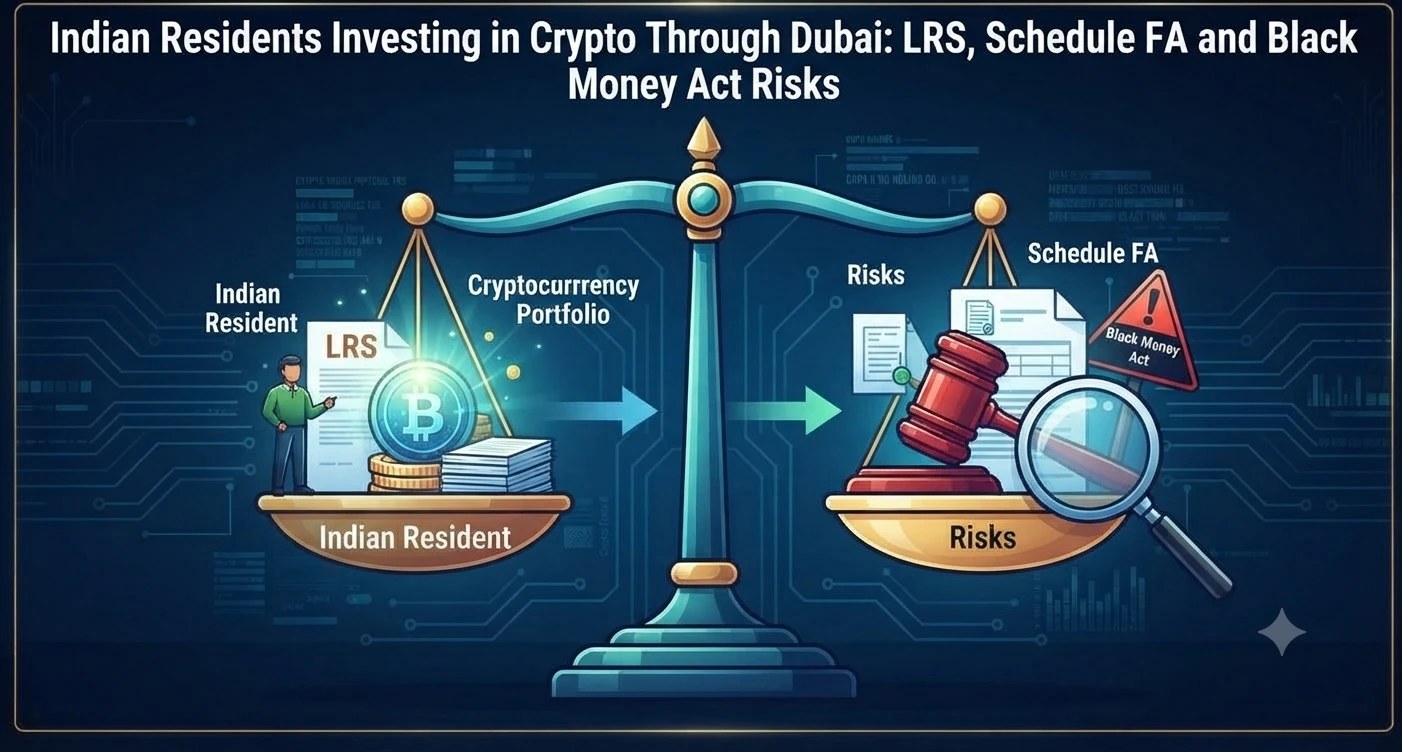
Here is the part few articles mention. If you are a resident Indian, you can send up to the annual limit abroad under the Liberalised Remittance Scheme, but not for everything. The prohibited list includes margin trading and margin calls on overseas exchanges. Commentary on the RBI’s position says LRS can’t be used for margin trading, and the RBI has not recognised crypto as an approved investment class under the scheme. The headline is that crypto leverage trading Dubai offers doesn’t change what India lets residents remit.
In plain terms, a resident Indian who wires money to a Dubai exchange under LRS to post margin on a perpetual contract is on the wrong side of the rules. LRS margin trading prohibited is the position most advisers take. One online forum mentions a draft change that would loosen overseas trading limits, but a forum post isn’t law. Confirm anything new with a FEMA adviser.
The point holds even if the exchange is fully licensed. VARA’s approval means the platform can legally serve customers in Dubai. It says nothing about whether your remittance from India is permitted. Different regulators, different questions. Crypto leverage trading Dubai platforms offer will not fix this: the remittance rule sits with Indian regulators.
Who this is realistically for
An NRI living in Dubai on a UAE salary, funding the account from UAE money, is in a different position from a resident Indian. UAE rules allow licensed trading. India’s LRS limit doesn’t apply to money that never left India. Even so, Indian tax rules on income from virtual digital assets and on derivatives remain unclear, and the NRI should keep records. A salaried NRI doing crypto leverage trading Dubai exchanges allow, using UAE money, is in a better position than a resident Indian.
| Question | Dubai (VARA) | India (FEMA and LRS) |
|---|---|---|
| Can a licensed firm offer derivatives? | Yes, under the 2026 rulebook | Not relevant to the remittance |
| Retail leverage | Reported cap of 5:1 with 20% initial margin | Not applicable |
| Funding the account | KYC and suitability checks | LRS cannot be used for margin trading |
| NRI using UAE money | Allowed through licensed firms | LRS limit does not apply to money never remitted |
For an Indian resident, the Indian resident crypto derivatives Dubai question comes down to source of funds. Funds that left India under LRS for a permitted purpose are one thing. Using them for margin is another. Older money already abroad is also a separate matter, with its own reporting questions.
Hold on before chasing leverage on a headline. The practical advice is dull: check the licence, read the suitability questions honestly, use only money that is clearly yours and lawfully offshore, and keep every statement. If a platform promises to “handle” the FEMA issue for you, walk away. Keep every statement, because crypto leverage trading Dubai activity still has to be explained to tax authorities.
Questions people ask
Leverage trading is legal in a narrow, supervised way in Dubai now. The Indian side is where people get hurt, mostly through assumptions. On crypto leverage trading Dubai now permits, the safest habit is to check the licence and then check the source of funds.
Related reading: whether NRIs in Dubai can buy crypto, Indians investing in crypto from Dubai: LRS and Schedule FA, how to check whether a crypto firm is VARA licensed, whether USDT is legal in the UAE and NRI crypto tax notices: seven mistakes; also crypto earn products in Dubai; also crypto loans in Dubai.
Quick answers
Is crypto leverage trading legal in Dubai?
It can be, through firms licensed by VARA to offer derivatives under the March 2026 Exchange Services Rulebook, with suitability checks and leverage and margin limits. Unlicensed platforms fall outside that framework. Crypto leverage trading Dubai firms can lawfully offer is a narrow, supervised activity.
Can an Indian resident use LRS for crypto derivatives or margin trading?
Advisers generally say no. LRS can’t be used for margin trading or margin calls overseas, and crypto is not a recognised LRS investment class. Take FEMA advice before sending funds.
What is the maximum leverage for retail clients under the VARA rules?
Reports say retail leverage is capped at 5:1 with a 20% initial margin, with different thresholds for professional clients. Check the rulebook text for the current limits.
Is leverage trading legal in Dubai?
It is allowed through firms licensed by VARA for derivatives, with suitability checks and leverage and margin limits.
Final word
Halverton & Co. is an Indian law firm advising NRIs, founders, investors and businesses in Dubai and across the UAE on Indian law, including FEMA, LRS and tax questions for Indian residents and NRIs trading virtual assets in Dubai, working alongside UAE-licensed counsel. We practise in Jharkhand, Maharashtra and before the Supreme Court of India, and work alongside UAE-licensed counsel, who advise on UAE law. Halverton & Co.: Where tech needs law! If you have a question about Indian law, write to us at office@halvertonandco.com, or get in touch.
This article reflects developments reported up to 31 October 2026. It is for general information only, is not legal advice, and does not create an advocate-client relationship. Halverton & Co. is an Indian law firm and does not advise on UAE law; UAE-law points should be confirmed with UAE-licensed counsel.
Sources
Related practice area
Crypto, Web3 & Digital Assets
Advice for virtual digital asset businesses on registration, reporting and structure.
View the practice areaComments
No account needed. Comments are reviewed before they appear, so yours will show here once approved. Please do not share confidential details or describe your own legal matter: replies are general discussion, not legal advice, and do not create an advocate-client relationship. For your own situation, write to office@halvertonandco.com.