Key takeaways
- Under UK GDPR Article 28, a controller must have a written contract with specific terms before a processor handles personal data.
- India has no UK adequacy regulation, so use the ICO’s International Data Transfer Agreement or the UK Addendum, with a risk assessment.
- Set specific security controls, a short breach notice deadline and tight sub-processor and onward transfer rules.
- Include audit rights, deletion or return certificates and a liability clause that fits data protection risk.
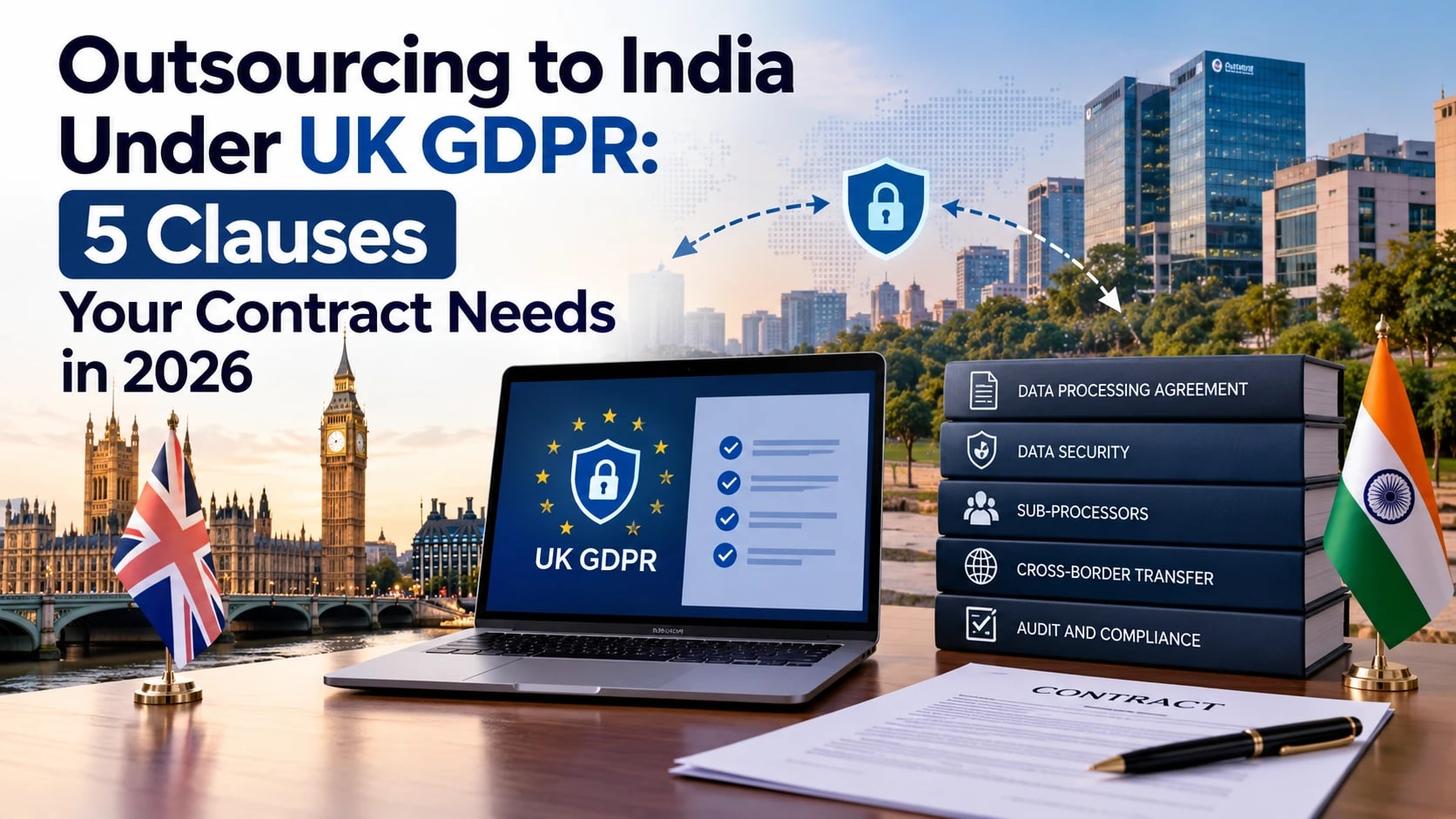
A UK GDPR outsourcing India contract needs more than a standard services agreement. When a UK business sends personal data to a supplier in India, UK data protection law requires a written processor contract with specific terms, a lawful transfer mechanism because India does not have a UK adequacy regulation, and proper security and oversight. Five clauses do most of the work.
This guide sets out those five clauses: processor terms under Article 28, the international transfer mechanism, security and breach notification, sub-processor and onward transfer controls, and audit, return and liability. It also covers the interaction with India’s own data protection law. It is written by an Indian law firm for UK readers. UK data protection points should be confirmed with your UK advisers and the ICO’s current guidance.
Why the contract matters
Under the UK GDPR, a controller that uses a processor must have a binding contract that sets out how the processor handles personal data. The UK business remains responsible for the data. The ICO can take action against a controller that fails to put proper terms in place, and a poorly managed supplier can cause a breach that is the controller’s responsibility to report. The contract is the main control you have.
India adds specific points. India is not covered by UK adequacy regulations, so transfers of personal data to a supplier in India need an appropriate safeguard. The UK legal framework for transfers was also changed by the Data (Use and Access) Act 2025, which introduced a revised test for transfers, so check the ICO’s current guidance before you rely on older templates.
Do not treat the contract as paperwork. Choose the supplier carefully, map what data it will see, limit the data to what is needed, and write the contract around the real flows. A UK GDPR outsourcing India contract that matches how the work is done is much stronger than a generic annex that nobody reads.
Clauses 1 and 2: processor terms and the transfer mechanism
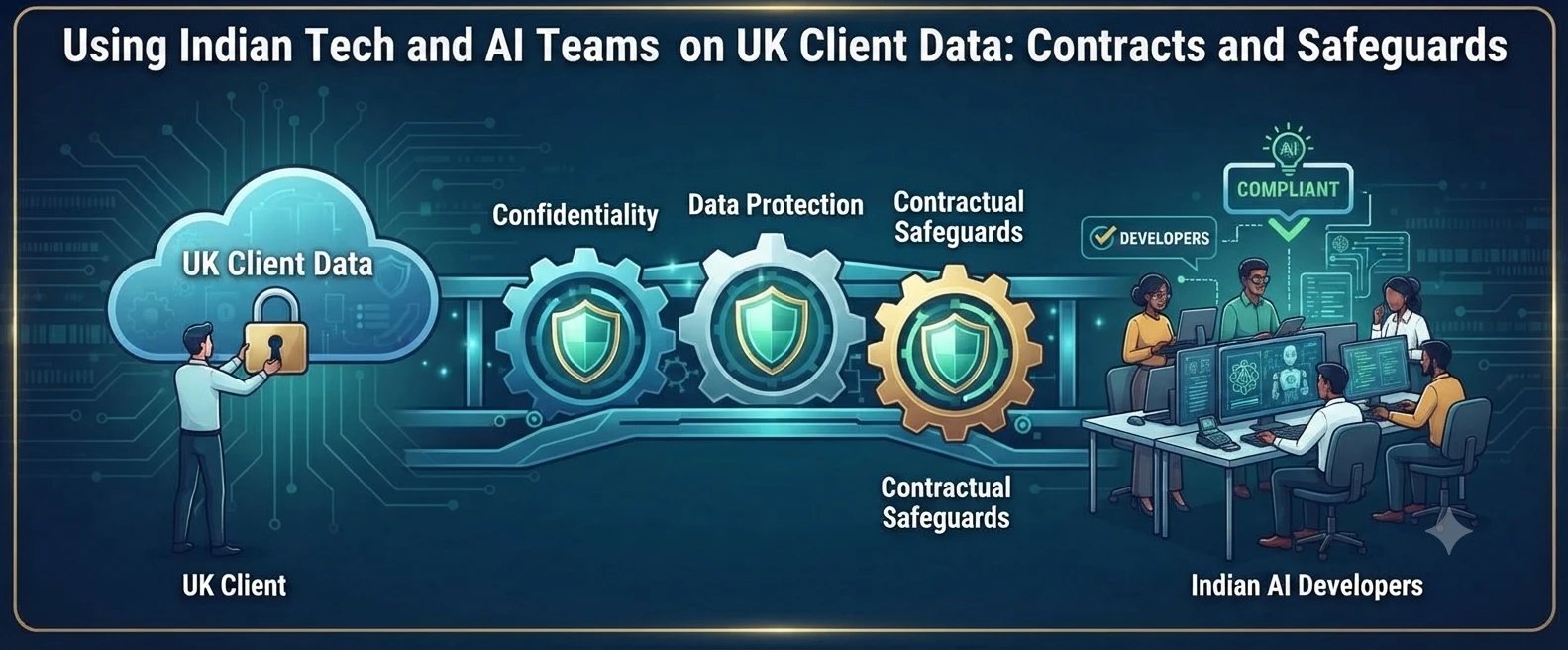
Clause 1 is the processor terms required by Article 28(3). The contract must say that the processor will process personal data only on documented instructions, ensure that people who handle it are bound by confidentiality, take appropriate security measures, respect the conditions for engaging sub-processors, help the controller respond to data subject requests and meet security and breach duties, delete or return data at the end and allow audits. It should also record the subject matter, duration, nature and purpose of processing, the type of data and the categories of people.
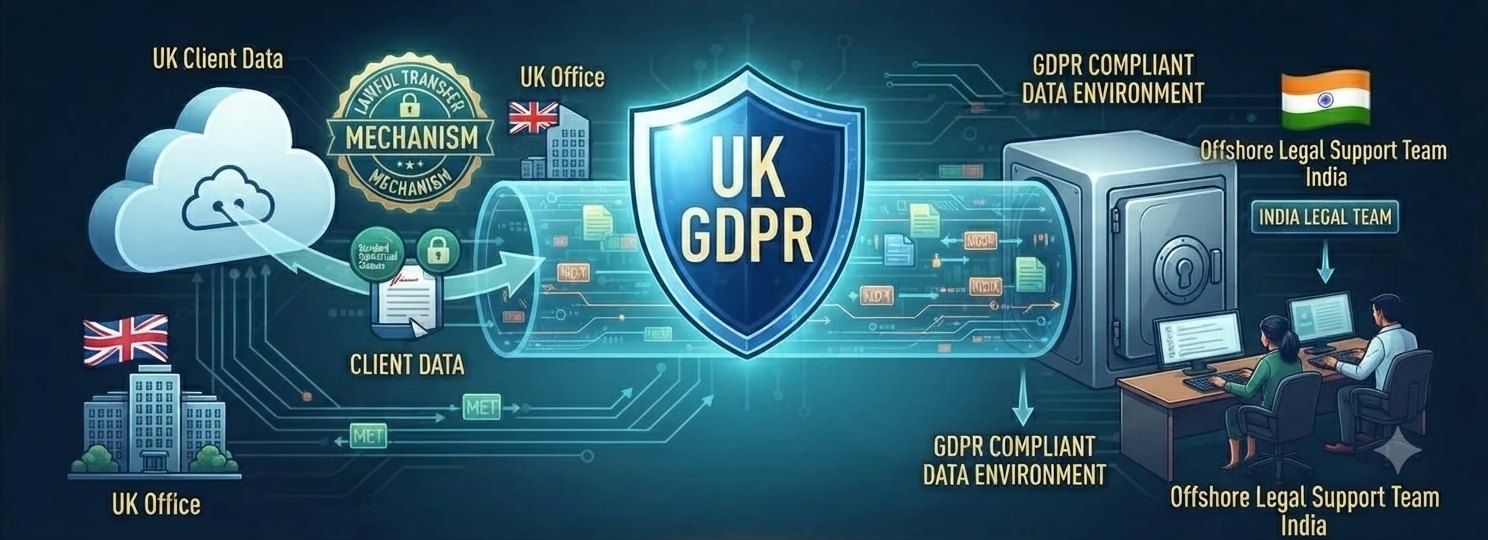
Clause 2 is the transfer mechanism. For a transfer to India, the usual tools are the ICO’s International Data Transfer Agreement, or the UK Addendum to the EU standard contractual clauses. These include binding commitments by the importer and rights for individuals. You should also carry out a transfer risk assessment, or the assessment now required under the revised test, looking at the laws and practices in India and any government access to data.
| Clause | What it covers | Key point |
|---|---|---|
| 1. Processor terms | Instructions, confidentiality, security, sub-processors, assistance, deletion, audit | Article 28(3) UK GDPR |
| 2. Transfer mechanism | IDTA or UK Addendum, with a risk assessment | India has no UK adequacy |
| 3. Security and breach | Specific controls and a short notice deadline | Support the 72-hour ICO duty |
| 4. Sub-processors | Authorisation, flow-down and liability | Control onward transfers |
| 5. Audit, return and liability | Audit rights, deletion certificate, data protection cap or indemnity | Allocate data risk |
Put the transfer tool in the contract as a signed part of the agreement, and make sure it matches the parties and the data. If the supplier is part of a group, check which entity actually receives the data. Keep the assessment on file and review it when laws or the service change. These two clauses are the legal core of any UK GDPR outsourcing India contract.
Clauses 3 and 4: security and sub-processors
Clause 3 should set specific security standards. Do not rely on a promise of “appropriate” security. List the controls: encryption in transit and at rest, access restricted by role, multi-factor authentication, logging, secure development, vulnerability management, staff vetting and training, physical security and business continuity. You may ask for certifications such as ISO 27001, but the contract should also set the standard that must be met whatever the certificates say. Security clauses make a UK GDPR outsourcing India contract measurable.
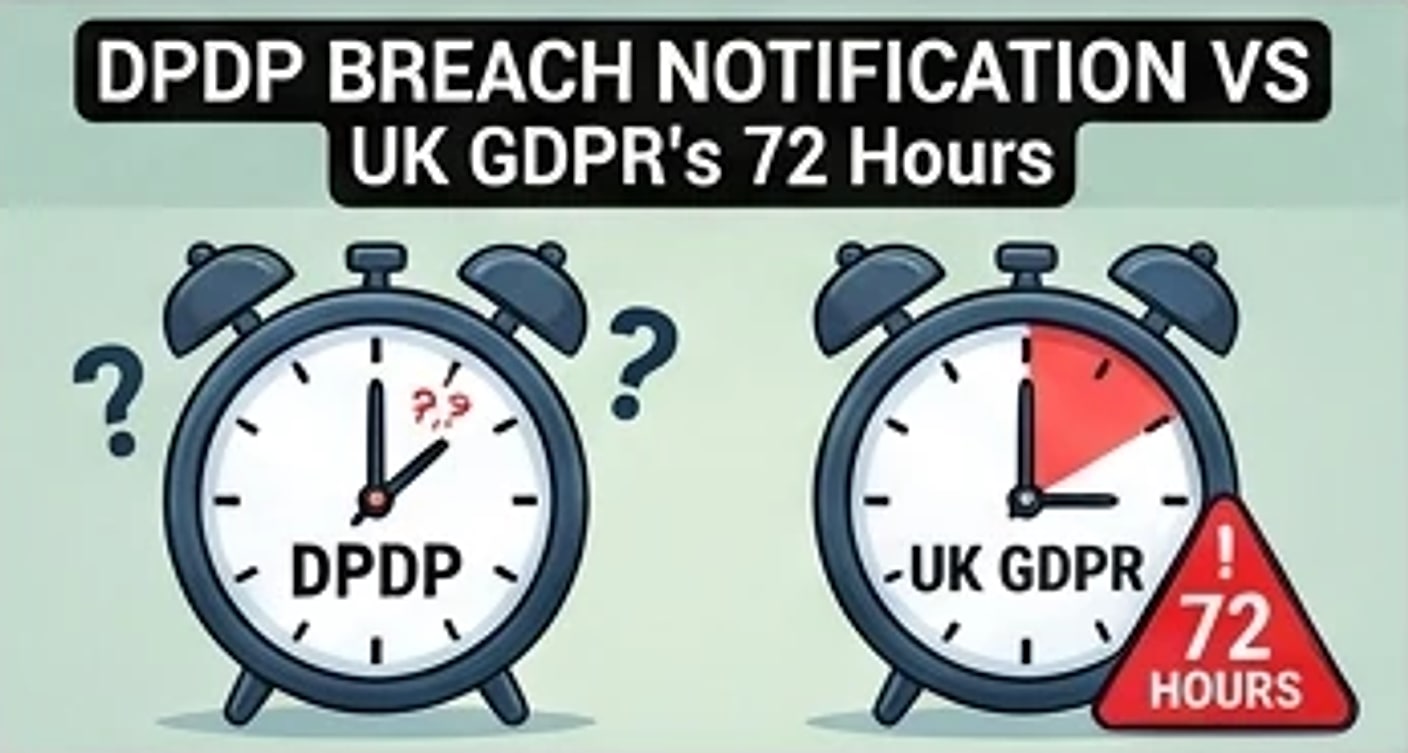
Include breach notification. The processor must tell the controller without undue delay after becoming aware of a personal data breach, and give details to support the controller’s duty to notify the ICO within 72 hours where required. Set a short deadline in hours, say what information is needed and require cooperation. Also say who bears the costs of notification and remediation if the processor is at fault.
Clause 4 covers sub-processors and onward transfers. The processor may use another processor only with the controller’s authorisation, and must impose the same data protection terms on it. Require a list of approved sub-processors, notice of changes with a right to object, and flow-down of the transfer mechanism if data moves again, for example to another country. Make the processor liable for its sub-processors’ acts.
Clause 5: audit, return and liability
Clause 5 puts you in control at the end and in between. Give yourself audit rights: the right to receive information to show compliance, to carry out audits or inspections, and to have a third party do so. Specify how often, on what notice and who pays. Ask for regular reports on security and incidents. Without audit rights, you cannot verify what the supplier does.
Deal with return and deletion. At the end of the services, or on request, the processor must delete or return all personal data and certify that it has done so, unless the law requires storage. Set a deadline, include backups and require deletion from sub-processors. Add data subject request support: how quickly the processor must pass on requests and help you answer them within the legal deadlines.
Allocate liability. A standard cap on liability may not fit data protection risk. Consider a higher or separate cap for data protection breaches, an indemnity for fines and claims caused by the processor’s breach, to the extent the law allows, and insurance requirements. Also consider India’s Digital Personal Data Protection Act, 2023, which may apply to the processor’s activities in India, and Indian law on government access, which the transfer risk assessment should address.
Next steps and quick answers
Map the data and the supplier chain, choose and sign the transfer mechanism, add the five clauses to your agreement, check the supplier’s security, and set up regular reviews. Keep records of your decisions, since accountability is a core UK GDPR principle. Review the contract when the service, the supplier’s locations or the law changes. This is general information, not legal advice. Keep each UK GDPR outsourcing India contract under review.
Related reading: India’s DPDP Act for UK businesses, UK GDPR and transfers to India for offshore legal support, offshore data processing for UK client data, legal outsourcing for UK law firms and the SRA, hiring a freelance developer from India, NDA enforceability in India and the DPDP Act compliance checklist for small businesses; also SaaS terms for Indian users and the UAE data protection law and Indian apps; also a legal outsourcing agreement for solicitors, outsourced IT legal support for UK tech companies and outsourced statutory registers for UK companies; also trade secrets in the UK and India, the Cyber Security and Resilience Bill and UK cookie consent rules in 2026; also the UK GDPR representative rule for Indian companies, IR35 and overseas contractors in India and UK AI regulation in 2026; also processor liability under the UK GDPR.
Quick answers
What clauses does a UK GDPR outsourcing India contract need?
At least five: Article 28 processor terms, a valid transfer mechanism such as the IDTA or UK Addendum, specific security and breach notification terms, sub-processor and onward transfer controls, and audit, return and liability provisions.
Does India have UK adequacy for data transfers?
No. India is not covered by UK adequacy regulations, so you need an appropriate safeguard such as the IDTA or the UK Addendum, and a risk assessment under the current test.
Do I need to follow Indian data protection law too?
Possibly. India’s Digital Personal Data Protection Act, 2023 may apply to processing in India, and your supplier should explain how it complies. The UK contract and the Indian law should be read together.
Is the IDTA the only transfer tool?
No. The UK Addendum to the EU standard contractual clauses is another route. Check the ICO’s current guidance, including the transfer test after the Data (Use and Access) Act 2025.
Who is responsible if the Indian supplier has a breach?
The UK controller remains responsible to the ICO and to individuals, so the contract should require fast notice, cooperation and liability for the processor’s failures.
Final word
Halverton & Co. is an Indian law firm advising UK companies, founders, investors and law firms on Indian law, including outsourcing and offshore services agreements, cross-border data protection and transfers between the UK and India, and legal support for UK businesses. We practise in Jharkhand, Maharashtra and before the Supreme Court of India, and work alongside your UK solicitors, who advise on English law. Halverton & Co.: Where tech needs law! If you have a question about Indian law, write to us at office@halvertonandco.com, or get in touch.
This article reflects developments reported up to 31 October 2026. It is for general information only, is not legal advice, and does not create a solicitor-client relationship. Halverton & Co. is an Indian law firm, is not authorised or regulated by the Solicitors Regulation Authority, and does not advise on English law; UK-law points should be confirmed with UK advisers.
Sources
Related practice area
Technology & AI Law
Contracts, data protection and AI policies for products that handle other people’s data.
View the practice areaComments
No account needed. Comments are reviewed before they appear, so yours will show here once approved. Please do not share confidential details or describe your own legal matter: replies are general discussion, not legal advice, and do not create an advocate-client relationship. For your own situation, write to office@halvertonandco.com.