Key takeaways
- Disputes over .in domains are decided under INDRP, not the UDRP, by a sole arbitrator appointed through the .IN Registry.
- A complainant must show a confusingly similar domain, no legitimate interest in the registrant and registration and use in bad faith.
- INDRP can order transfer or cancellation but cannot award damages, so combine it with a court action if you need an injunction or compensation.
- Register the .in and .co.in versions of your brand early and file an Indian trade mark to strengthen any later dispute.
A UK company planning its first push into India searches for its own name and finds the .in domain already taken. Sometimes it is parked with a “for sale” banner and a price in lakhs. Sometimes it is live, copying your branding and collecting payments or personal data from Indian customers. Either way, the domain is hard to ignore, because it is where Indian customers will look for you.
UK brands are used to the UDRP for .com domains. A .in domain is different: it is governed by the .IN Domain Name Dispute Resolution Policy (INDRP), administered through the .IN Registry. This guide explains how INDRP works, what a UK brand has to prove, what the process costs and how long it takes, what evidence to gather, and when to go to court instead. UK-law and UK-trade-mark points should be confirmed with your UK advisers.
Why .in domains matter to UK brands
A .in domain tells Indian customers that a business is serving India. When someone else holds it, you lose more than a web address. Customers who type your brand name plus .in reach the squatter’s page, search engines may associate the squatter’s site with your name, and a fraudster running a copy of your website can collect payments and personal data from people who think they are dealing with you. The earlier you act, the less damage accumulates.
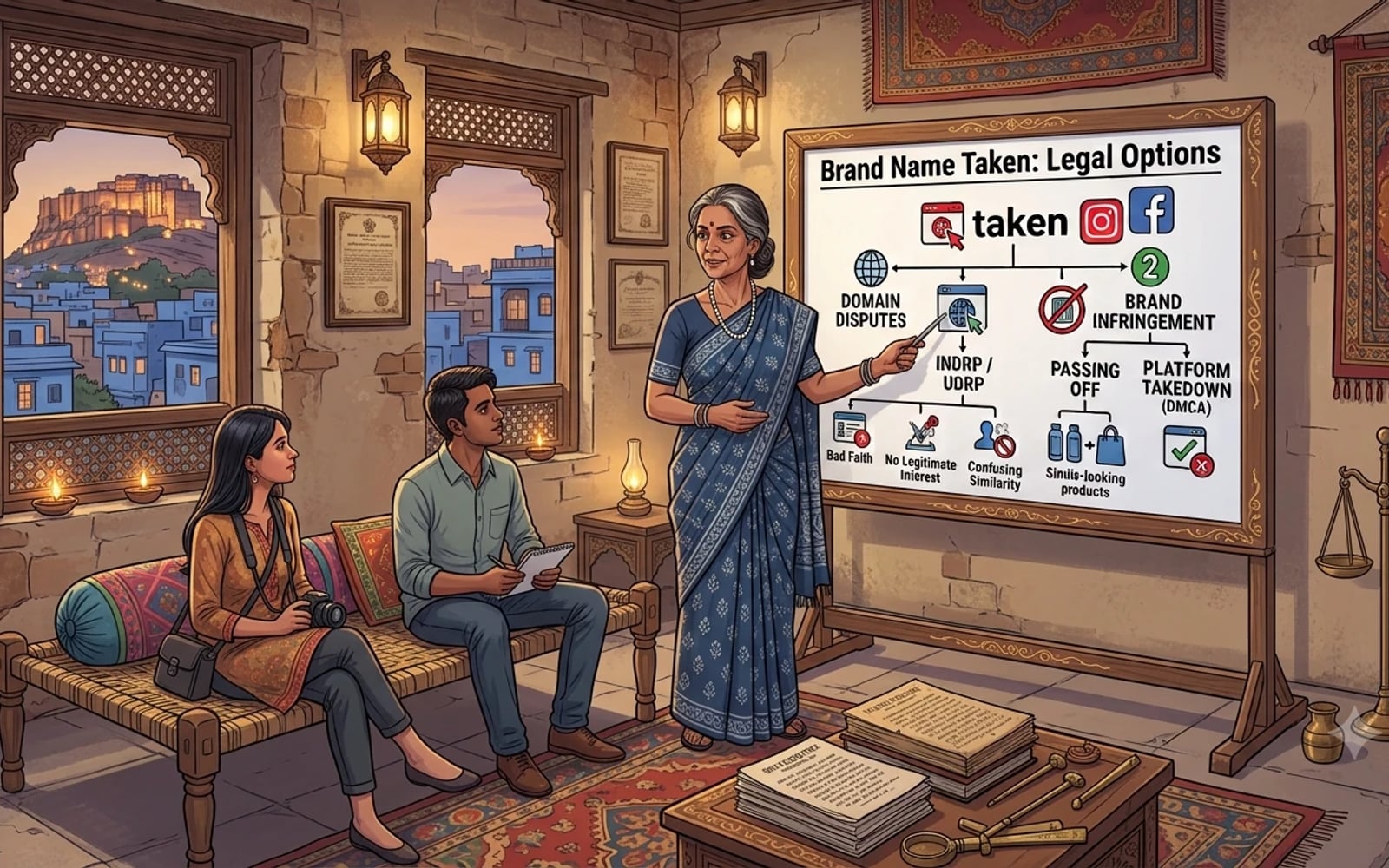
There are four broad routes. You can negotiate or buy the domain, which can be quick but encourages squatters. You can file a complaint under INDRP, which is designed for exactly this problem. You can sue in an Indian court for trade mark infringement and passing off, which is slower and more expensive but can deliver injunctions and damages. Or you can use a combination. The UDRP, which UK brands use for .com domains, doesn’t apply to .in domains, which have their own policy.
Before choosing, gather the basics: who the registrant is (the .IN Registry’s public record may be redacted or protected), when the domain was registered compared with your first use or registration, what is on the site, and whether the registrant has offered it for sale. Take dated screenshots of every page, and archive copies, because the content may disappear as soon as you contact the registrant.
How INDRP works
INDRP is the .IN Registry’s policy for resolving domain disputes. It is administered by the National Internet Exchange of India (NIXI) through the .IN Registry, and a complaint is decided by a sole arbitrator from the Registry’s panel under the Arbitration and Conciliation Act, 1996. The .IN Registry’s rules say that any person or entity can start a proceeding by filing a complaint in accordance with the policy and rules, which means a foreign complainant is not excluded (.IN Registry).
The timetable is short. Once the complaint complies with the rules, the Registry appoints an arbitrator within five working days, and if the complaint is deficient the Registry notifies the complainant within three working days (.IN Registry). Secondary sources suggest the arbitrator typically issues an award within about sixty days of appointment, and that the domain is locked during the proceeding so it can’t be transferred away. Treat those timings as indicative and confirm them with the Registry.
| Stage | What happens | Timing and notes |
|---|---|---|
| Complaint | Filed with the .IN Registry under the policy and rules, one proceeding per domain | Fees are per domain; check the Registry’s current schedule |
| Compliance check | Registry notifies deficiencies if the complaint does not comply | Within three working days, according to the Registry |
| Arbitrator | A sole arbitrator is appointed from the Registry’s panel | Within five working days of a compliant complaint |
| Award | Transfer or cancellation of the domain; no damages | Typically within about sixty days of appointment (secondary source) |
Fees are payable per domain, and a separate proceeding is needed for each domain in dispute. One law-firm comparison gives an official fee of around ₹35,400 per domain, but that figure is from a secondary source and the arbitrator’s fee is a separate component, so check the current fee schedule on the Registry’s website before budgeting (SS Rana). The remedy in an INDRP proceeding is limited: the arbitrator can order the domain to be transferred to you or cancelled, but cannot award damages.
What a UK brand must prove
Under the policy, a complainant has to establish three things: that the domain name is identical or confusingly similar to a name, trade mark or service mark in which the complainant has rights; that the registrant has no rights or legitimate interests in the domain name; and that the domain name was registered and is being used in bad faith. All three are required. A strong UK registration and reputation helps with the first element, and the question for a UK brand is whether to rely on UK rights alone. Arbitrators have accepted foreign registrations and unregistered rights where the complainant shows reputation, but an Indian trade mark application or registration, and proof that Indian customers know your brand, make the case much stronger.
The second element is usually shown by pointing out that the registrant isn’t known by the name, has no licence or connection to you, and isn’t making a genuine use of the domain. The registrant can respond that the word is generic, that they use it for a real business, or that they registered it before you had any presence in India. A domain that sits unused or is only parked with a sale banner usually doesn’t help the registrant.
Bad faith is shown by circumstances the policy lists, such as registering primarily to sell the domain to the trade mark owner for more than the registration cost, registering to block the owner from reflecting its mark, registering to disrupt a competitor, or using the domain to attract users for commercial gain by creating confusion. Evidence of a pattern of similar registrations, of impersonation of your branding, or of an unreasonable asking price is persuasive. Prepare a clear timeline, annexes and a short statement of why this domain was chosen because of your brand.
Court action and parallel routes
INDRP can’t award damages, and an arbitrator can’t stop a registrant from simply registering another domain. If the infringer is running a live site that copies your branding, takes payments or harvests personal data, a court action may be better, or may be needed alongside. Indian courts can grant interim injunctions against infringement and passing off, order registrars to suspend or transfer domains, direct disclosure of the registrant’s details, and award damages. A trade mark registration in India makes this easier, and an application filed at the same time as the complaint shows commitment to the market.
Indian courts have become more willing to grant broad orders against fake and mirror websites. The Delhi High Court granted a dynamic injunction in August 2025 in favour of Premji Invest against fake domains, apps and social media ads that impersonated it, and the order extends to future mirror sites that copy the same content (SCC Online; BananaIP). That case concerned a fraud on investors rather than a domain squat, but it shows what is available where a domain is used to deceive customers.
Compare the cost with the value. If the domain is a plain squat with a price tag, a negotiated purchase through a broker, handled so that the registrant doesn’t know who is buying, can be cheaper than a proceeding. If the registrant has copied your site, report it to the hosting provider and the registrar as well, and file a complaint with the National Cyber Crime Reporting Portal if Indian customers are being cheated. Each route can run alongside INDRP. An INDRP award is enforced through the Registry, which implements a transfer order without a court, and can be challenged only through the limited grounds available under the Arbitration Act.
Prevention, remedies and quick answers
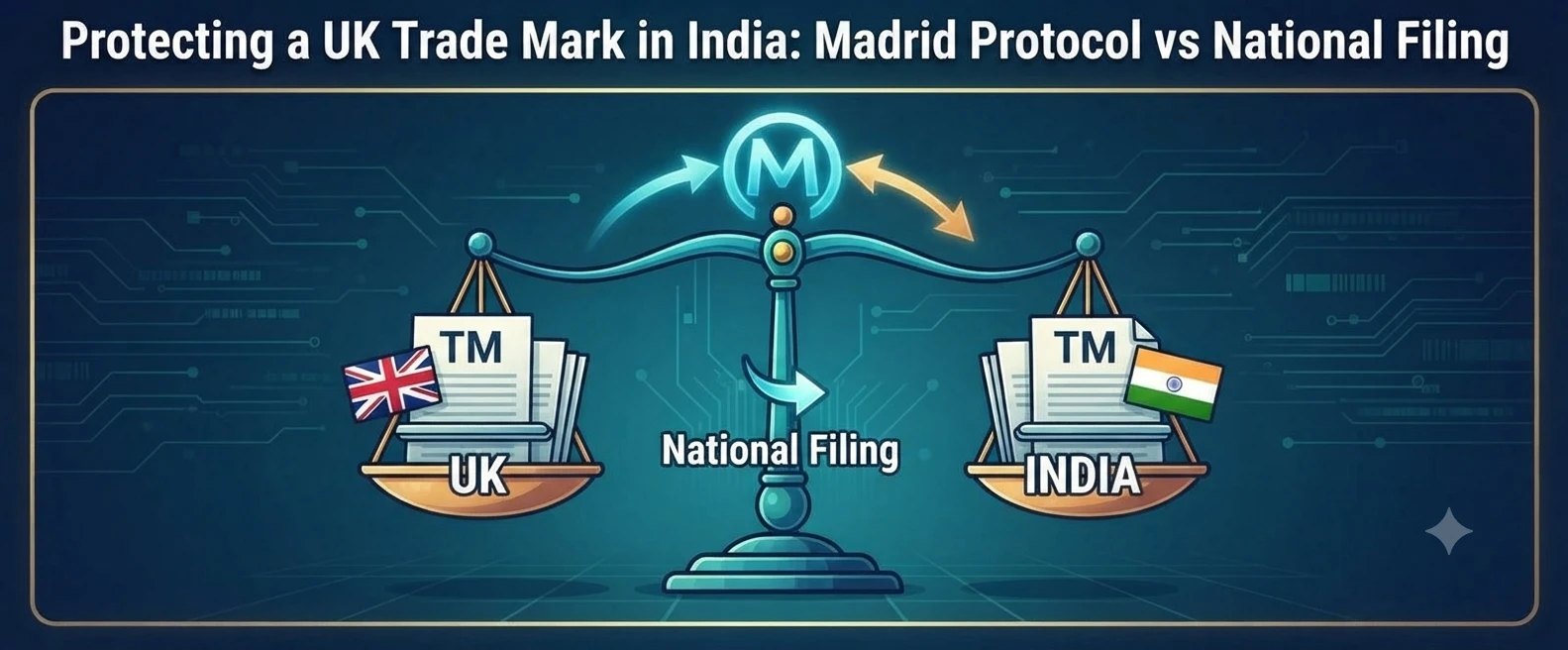
The cheapest protection is registering early. Register the .in and .co.in versions of your brand name when you start planning an Indian launch, and consider defensive registrations of obvious misspellings. File a trade mark application in India, directly or by designating India through the Madrid system from your UK mark, so that you can show Indian rights in any dispute. Put your domain portfolio under a single owner, with auto-renewal and registry lock where available, and use a trade mark watch service that picks up new domain registrations that contain your brand. If you are already in a dispute, don’t contact the registrant until you’ve saved the evidence, and don’t pay a ransom without considering whether a proceeding would be cheaper. If you win, move quickly to take control of the domain, change the registrar credentials and redirect or retire any spoofed pages.
Related reading: your brand name taken as a domain or social handle in India, protecting a UK trade mark in India: Madrid or national filing, someone has registered our brand in India, counterfeit goods from India and remedies for UK brands, trade mark watching and renewals and clone apps and fake sites copying your brand; also the startup name checklist for 2026 and spotting Indian trade mark squatters early.
Quick answers
Can I use the UDRP for a .in domain?
No. .in disputes are decided under the INDRP, administered through the .IN Registry. The UDRP applies to generic domains such as .com.
Do I need an Indian trade mark to file an INDRP complaint?
Not necessarily. Rights in a name or mark can support a complaint, and arbitrators have accepted foreign rights where reputation is shown, but an Indian registration or proof of reputation in India makes your case stronger.
What can I get if I win?
Transfer or cancellation of the domain. INDRP doesn’t award damages, so use a court action if you want compensation or an injunction against continuing misuse.
How long does an INDRP complaint take?
The Registry says an arbitrator is appointed within five working days of a compliant complaint. Secondary sources suggest an award within about sixty days after that, but confirm timings with the Registry.
Is INDRP the same as the UDRP?
No. The UDRP applies to generic domains such as .com. Disputes over .in domains go through INDRP, which is administered through the .IN Registry and decided by a sole arbitrator under the Arbitration and Conciliation Act, 1996.
Final word
Halverton & Co. is an Indian law firm advising UK companies, founders, investors and law firms on Indian law, including domain name disputes, trade mark protection and enforcement in India for UK brands. We practise in Jharkhand, Maharashtra and before the Supreme Court of India, and work alongside your UK solicitors, who advise on English law. Halverton & Co.: Where tech needs law! If you have a question about Indian law, write to us at office@halvertonandco.com, or get in touch.
This article reflects developments reported up to late October 2026. It is for general information only, is not legal advice, and does not create a solicitor-client relationship. Halverton & Co. is an Indian law firm, is not authorised or regulated by the Solicitors Regulation Authority, and does not advise on English law; UK-law points should be confirmed with UK advisers.
Sources
Related practice area
Intellectual Property
Trade marks, copyright, patents and designs. Searched, filed, licensed and enforced under Indian law.
View the practice areaComments
No account needed. Comments are reviewed before they appear, so yours will show here once approved. Please do not share confidential details or describe your own legal matter: replies are general discussion, not legal advice, and do not create an advocate-client relationship. For your own situation, write to office@halvertonandco.com.