Key takeaways
- In Emotional Perception [2026] UKSC 3, the UK Supreme Court stopped following Aerotel and aligned the UK with the EPO approach.
- India applies its technical effect test at the exclusion stage under Section 3(k), so the technical argument must be won earlier.
- Standalone computer program product claims are generally treated as excluded in India.
- PCT national phase entry in India must be made within 31 months of the priority date.
British tech companies have just seen their own patent law change. In February 2026, the UK Supreme Court abandoned the long-standing Aerotel approach to software patents and brought UK law into line with the European Patent Office. That makes it a good moment to ask how India, often a key market and development base for UK tech businesses, compares.
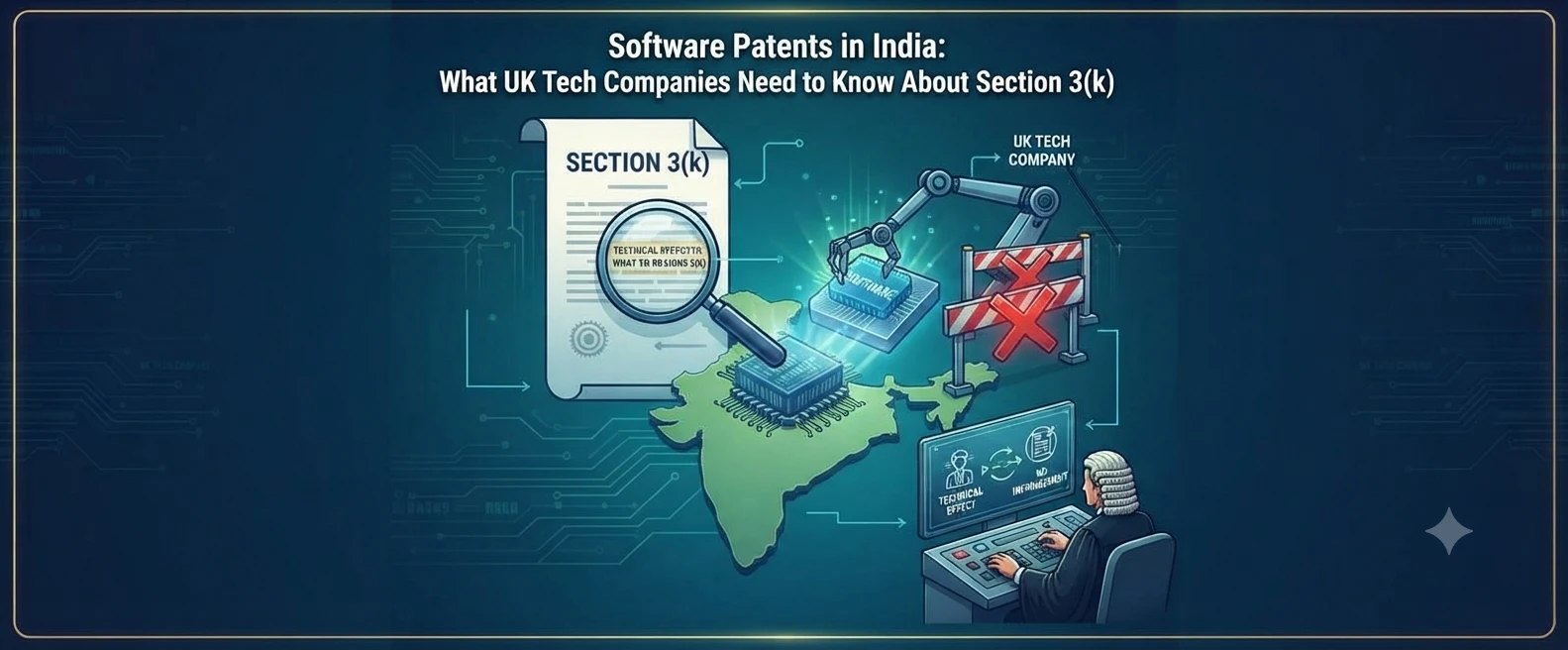
This guide explains software patents in India for UK tech companies: what Section 3(k) of India’s Patents Act says, how Indian courts and the 2025 examination guidelines apply it, how India’s test compares with the new UK position, and how to file and draft for India. The UK-law comparison is general; have a UK patent attorney check it. For the US-facing version, see software patents in India for US tech companies.
The UK background: Emotional Perception and the end of Aerotel
On 11 February 2026, the UK Supreme Court delivered judgment in Emotional Perception AI Ltd v Comptroller-General of Patents, Designs and Trade Marks [2026] UKSC 3. The Court held unanimously that Aerotel should no longer be followed, finding that it conflated the concept of an “invention” with separate requirements such as novelty and inventive step.
The Court held that an artificial neural network is a “program for a computer”, but that the claimed invention was not excluded as a computer program “as such”. In doing so, it brought UK law back into line with EPO practice, lowering the initial barrier for patenting AI and software-related inventions, including the European “any hardware” approach endorsed in G1/19.
The judgment has prompted changes in UKIPO examination practice, and UK applicants are re-examining pending software and AI applications in light of it; check the current UKIPO practice before you rely on this summary. For UK companies, the practical effect is that the exclusion is now a lower threshold, with much of the real assessment moving to inventive step, where only technical features count. India takes a different route.
What Section 3(k) says in India
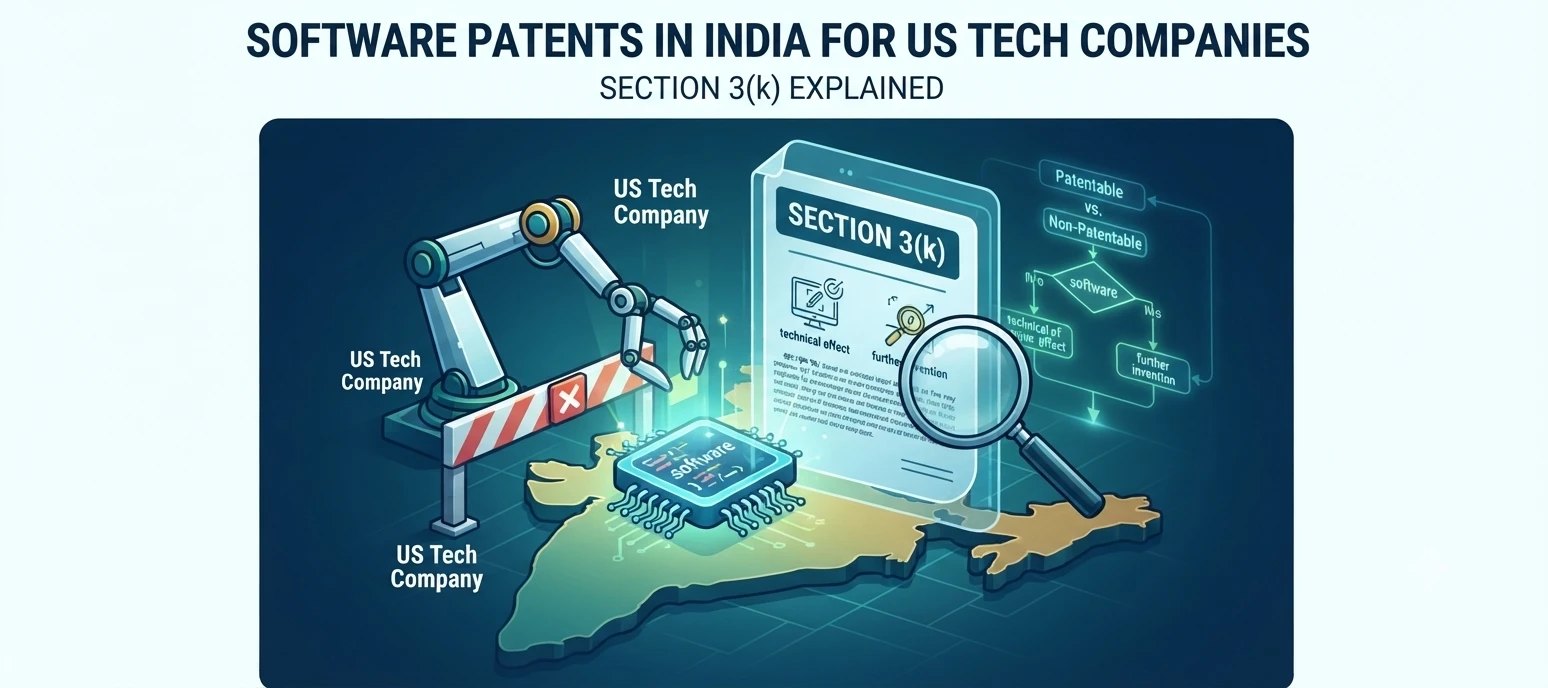
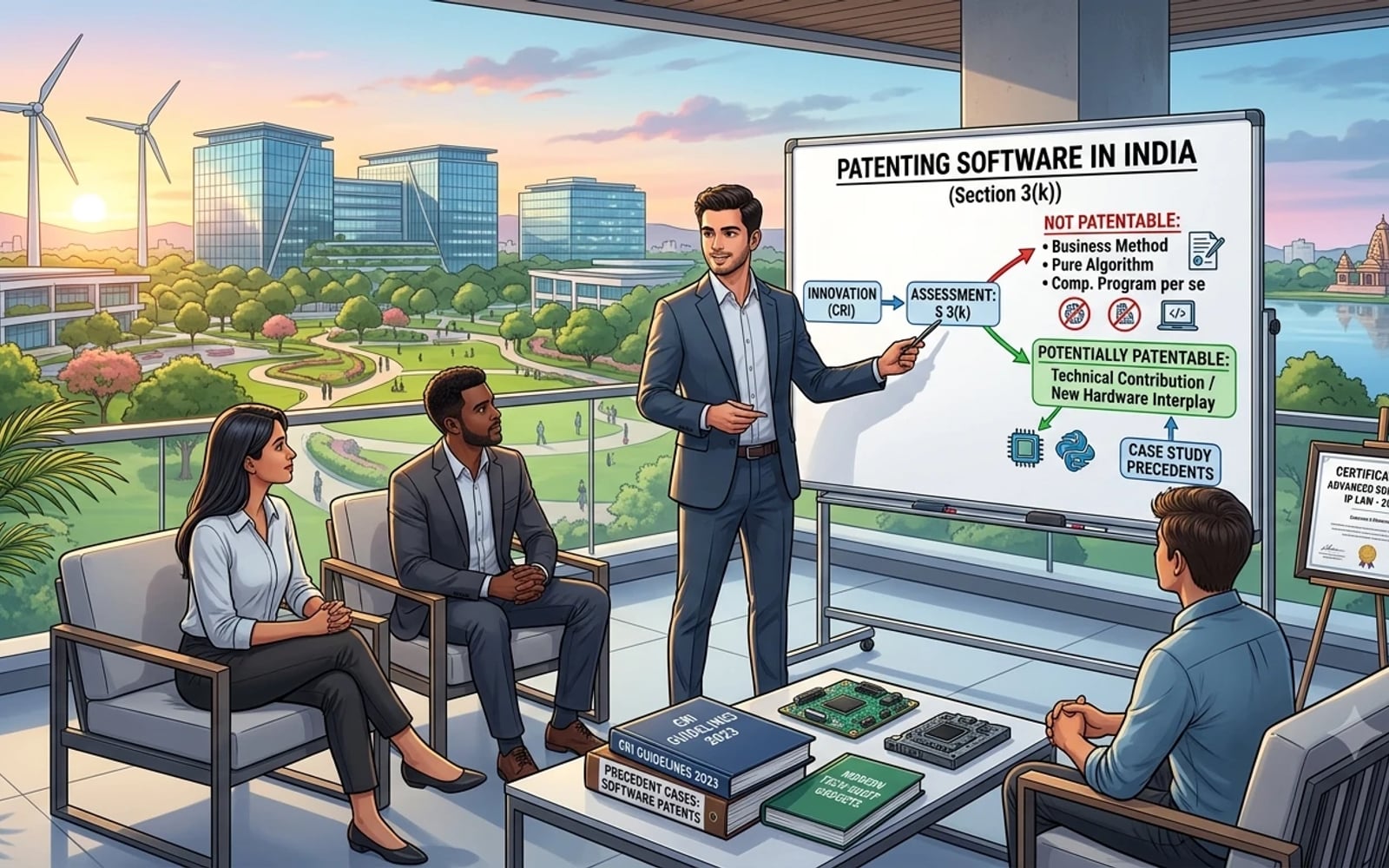
Section 3(k) of India’s Patents Act, 1970 lists as “not inventions”: “a mathematical or business method or a computer programme per se or algorithms”. “Per se” qualifies only computer programs. Business methods are excluded outright, and Indian courts have treated that exclusion as absolute. Algorithms and mathematical methods are excluded as abstract ideas, though their technical implementation may qualify. See also our guide to patenting software in India under Section 3(k).
The key test for software patents in India is “technical effect” or “technical contribution”. In Ferid Allani v. Union of India (2019), the Delhi High Court held that inventions based on computer programs can be patentable if they show a technical effect or contribution. Later decisions refined this: in reported decisions including Raytheon (2023), the court held that requiring novel hardware has no basis in law, and a 2025 Madras High Court decision confirmed that an invention isn’t excluded merely because it lacks novel hardware, provided it makes a technical contribution. Check the reported citations before relying on them in a filing.
In 2025, the Indian Patent Office issued new Guidelines for Examination of Computer Related Inventions, replacing the 2017 version, with step-by-step tests and worked examples.
How India’s test compares with the new UK position
After Emotional Perception, the UK and EPO approach clears most claims involving hardware past the exclusion stage, then asks at the inventive step stage whether the invention’s contribution is technical. India, by contrast, applies the technical effect test at the exclusion stage itself under Section 3(k). In practice, that means the technical contribution argument has to be won earlier in India.
There are also differences in claim formats. Indian practice treats standalone claims to a computer program product or a storage medium as a computer program per se, so they’re generally not allowed, whereas such claims are common in UK and European practice. Method and system claims are both acceptable in India.
Business methods are the sharpest difference. Indian courts treat the business method exclusion as absolute, so commercially framed inventions, such as pricing, marketing or financial workflows, are very unlikely to succeed in India, however much computing they involve. AI-assisted inventions can be patented in India, but an AI can’t be named as inventor, and AI and machine learning inventions face stricter disclosure expectations: in 2025, the Madras High Court upheld the refusal of an AI-related application that didn’t teach how the invention worked.
| United Kingdom | India (Section 3(k)) | |
|---|---|---|
| Where the technical test bites | Mainly at inventive step; exclusion is a lower threshold | At the exclusion stage itself |
| Business methods | Considered after the exclusion hurdle | Excluded outright; treated as absolute |
| Program product or storage medium claims | Common | Standalone claims treated as a program per se |
| AI inventorship | Human inventor required | AI cannot be the true and first inventor |
Filing and drafting software patents in India
Most UK companies enter India through the PCT national phase, which in India must be entered within 31 months of the priority date. Direct Paris Convention filings within 12 months of the UK priority filing are also possible. After filing, you must request examination and respond to the First Examination Report within the statutory period, with a hearing if objections remain.
Timing matters as well. Indian examination can take time, so UK companies that need an Indian patent quickly, for example before a licensing deal or investment, can explore expedited examination options where they qualify. Drafting decides most outcomes for software patents in India. Before national phase entry, review the claims: remove standalone computer program product claims, make sure the description states the technical problem and technical effect clearly (ideally with measurable improvements), and add dependent claims capturing the specific technical implementation. Avoid business language in the claims. Because Indian amendments must stay within the original disclosure, the UK specification should ideally describe technical effects in detail from the start.
Costs for prosecuting software patents in India are generally modest compared with UK and European prosecution, which makes India a sensible addition to the portfolio for core technologies. Two Indian procedural requirements catch foreign applicants: filing and updating Form 3 with details of corresponding foreign applications, and filing periodic statements of working of the patent in India (confirm the current Form 27 frequency). Missing either can cause problems later, including in enforcement. If Indian developers helped invent the technology, check the foreign filing permission rule and the IP position; see our guide to IP assignment for UK start-ups with Indian developers.
Enforcement, remedies and quick answers
Granted software patents in India can be enforced in the Indian courts, with remedies including injunctions and damages or an account of profits, and the Delhi and Madras High Courts have specialised IP Divisions. Refusals by the Controller can be appealed to the High Court. Competitors can oppose applications before grant and within one year after grant, and seek revocation, including on Section 3(k) grounds. UK companies should therefore treat India as a jurisdiction where the technical effect argument must be front and centre from the first draft, rather than an afterthought at national phase. For AI-generated output and copyright rather than patents, see our guide to computer-generated works in India and the UK.
Related reading: patent deadlines under India’s 2024 patent rules; also patent opposition in India for UK companies.
Quick answers
Can software be patented in India?
Yes, if the invention shows a technical effect or contribution. Computer programs per se and business methods are excluded.
How does India compare with the UK after Emotional Perception?
The UK now applies a lower threshold at the exclusion stage, aligned with the EPO. India applies the technical effect test at the exclusion stage itself.
Are computer program product claims allowed in India?
Standalone computer program product or storage medium claims are generally treated as excluded.
Final word
Halverton & Co. is an Indian law firm that advises on Indian law, including software and AI patent strategy, PCT national phase entry and Section 3(k) objections in India. We practise in Jharkhand, Maharashtra and before the Supreme Court of India, and we work alongside your UK solicitors, who advise on English law. Halverton & Co.: Where tech needs law! If you have a question about Indian law, write to us at office@halvertonandco.com, or get in touch.
This article reflects developments reported up to early October 2026. It is for general information only, is not legal advice, and does not create a solicitor-client relationship. Halverton & Co. is an Indian law firm, is not authorised or regulated by the Solicitors Regulation Authority, and does not advise on English law or UK tax.
Sources
Related practice area
Intellectual Property
Trade marks, copyright, patents and designs. Searched, filed, licensed and enforced under Indian law.
View the practice areaComments
No account needed. Comments are reviewed before they appear, so yours will show here once approved. Please do not share confidential details or describe your own legal matter: replies are general discussion, not legal advice, and do not create an advocate-client relationship. For your own situation, write to office@halvertonandco.com.