Key takeaways
- Courts are sanctioning lawyers for AI-generated fake citations, and commentary says Rule 11 requires only negligence, not bad faith.
- Reports in 2026 describe fines, training orders, referrals and sanctions on both sides of a case.
- Delegation is not a defence: the signing lawyer is responsible for every authority.
- Open and check every authority, keep a log and follow each court’s standing orders.
AI hallucination sanctions lawyers face in US courts are no longer rare. Since the 2023 decision in Mata v. Avianca, courts across the country have sanctioned lawyers and litigants for citing cases that do not exist or that do not say what a brief claims. Commentary in 2026 describes a growing database of such incidents and harsher consequences, including fines, continuing education orders, referrals to disciplinary bodies and, in some cases, sanctions on both sides of a case.
This guide summarises the pattern in the sanctions cases, explains how Rule 11 and professional duties apply, and gives a verification checklist for firms, including those that use offshore research teams. It is written by an Indian law firm for US readers, and US law points should be confirmed with US counsel. Case details come from secondary reports and should be checked against the orders.
What the cases show
In Mata v. Avianca, a New York federal court sanctioned lawyers who filed a brief with fabricated citations produced by a chatbot, and the fine was modest by later standards. Since then, courts have addressed hundreds of incidents. A May 2026 article in the ABA’s GP Solo magazine cites a database of cases that counted 1,397 US cases by 6 May 2026 in which filings contained hallucinated content, typically fake case citations. Treat that number as a snapshot from a secondary source.
Reports in 2026 describe stiffer consequences. A federal judge in Mississippi is reported to have sanctioned lawyers on both sides of a case in June 2026 for failing to verify authorities, and a Sixth Circuit panel is reported to have imposed a total of $15,000 across three consolidated appeals in March 2026. An Eastern District of Pennsylvania order in April 2026 is reported to have fined a repeat offender $5,000 and ordered AI and ethics training. Check the orders for exact terms. AI hallucination sanctions lawyers face have grown in size and severity during 2026, according to published reports.
The pattern is consistent: the problem is not the use of AI but the failure to verify. Courts focus on whether the signer read the authorities, whether the lawyer corrected the error promptly when told and whether the lawyer was candid. Fake case citations sanctions rise where the lawyer doubles down or gives an incomplete explanation.
How rule 11 and ethics duties apply
Federal Rule of Civil Procedure 11 requires that a signature certifies, after reasonable inquiry, that legal contentions are warranted by existing law or a nonfrivolous argument. Commentary notes that courts have held that Rule 11 requires only negligence, not bad faith, so Rule 11 AI citations negligence is enough for sanctions. Many state rules and local rules contain similar duties, and courts also use their inherent power and statutes on vexatious litigation. The Rule 11 standard is why AI hallucination sanctions lawyers receive often follow a simple failure to check. Mata v. Avianca sanctions were an early example.
Professional rules point the same way. Model Rule 1.1 requires competence, including understanding the benefits and risks of technology. Rule 3.3 requires candour to the tribunal and prohibits false statements of law. Rule 5.3 requires reasonable measures to supervise non-lawyer assistance, which courts and commentators apply to AI tools and vendors. ABA Formal Opinion 512 on generative AI, issued in 2024, discusses these duties and says lawyers must review AI outputs.
Many judges have also issued standing orders or local rules that require disclosure or certification of AI use. Check the judge’s standing orders and the local rules in each court. Disclosure requirements differ widely, and some courts require certification that all citations have been verified by a human.
Why delegation is not a defence
Commentary says courts have rejected the argument that someone else did the research. A lawyer who signs a filing is responsible for it, whether the draft came from an associate, a contract lawyer, an offshore team or a chatbot. In the Mississippi case reported in 2026, one lawyer’s firm is said to have had a verification policy that she did not follow, and the report treats that as no excuse.
That has two lessons. First, a written policy is useful only if people follow it, so supervising lawyers must check compliance. Second, firms that use outside research support should write verification into the engagement terms. The law firm AI policy supervision framework should say who must verify, how, and when, and require the signer to confirm before filing.
Clients should be told where appropriate. A fabricated citation can harm a client, produce adverse costs and damage reputation. Malpractice insurers are also asking questions about AI use. Review your policy, ask your carrier what is expected, and keep records of verification steps in case a court or client asks. A firm that wants to avoid AI hallucination sanctions lawyers see in the reports should treat verification as a supervised step.
A verification checklist
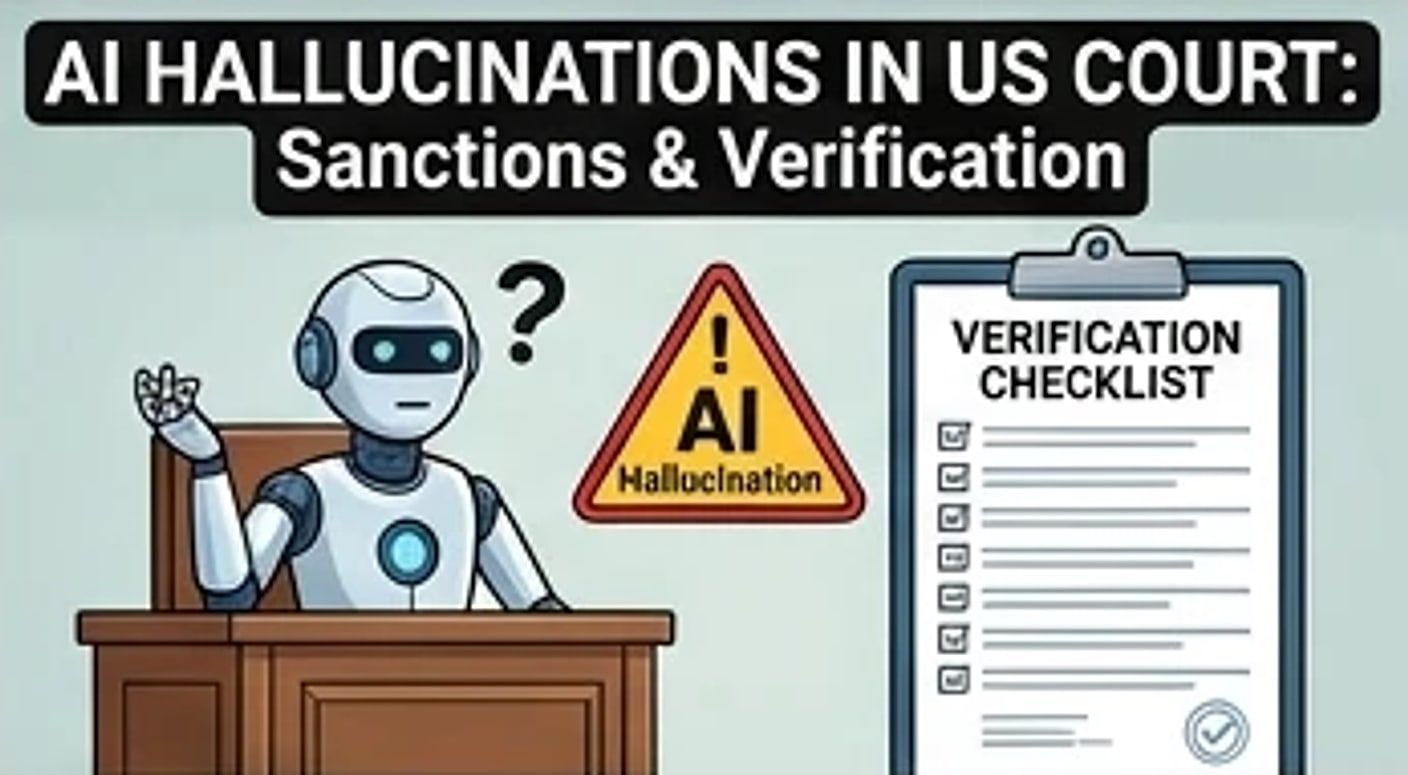
A practical verification checklist for AI legal research begins with a simple rule: every authority is checked in a trusted database by a human before filing. Open the case, confirm that it exists, that the citation, court and year are right, that the quoted language appears and that the proposition is supported. Check subsequent history with a citator, and confirm that statutes and rules are current. This verification checklist AI legal research teams can adopt starts with one rule: a human opens every authority.
| Step | Action | Evidence |
|---|---|---|
| Open every authority | Read the case or statute in a trusted database | Checker initials and date |
| Check quotes and pinpoints | Confirm the language appears | Annotated copy |
| Check history | Use a citator | Citator report |
| Sign-off | Signing lawyer confirms | Certification in the file |
| Vendors | Include checklist in work instructions | Signed verification log |
Add process steps. Require the drafter to list all authorities in a table with the check date and the checker’s initials. Separate the drafter from the checker where possible. Require that AI tools be used only through approved platforms with confidentiality controls. Prohibit pasting client confidential information into public tools. Check quotations and pinpoint pages, since models often invent them.
Final steps matter too. The signing lawyer should read every cited authority or at least the relevant parts, and certify in the file that the checks are done. If an error is found after filing, correct it promptly and candidly with the court. For offshore teams, include the checklist in the work instructions and require a signed verification log with each deliverable. Keep a signed log, because AI hallucination sanctions lawyers contest often turn on what the signer actually checked.
Next steps and quick answers
Adopt a written policy, train lawyers and support teams, build the checklist into your workflow and audit a sample of filings. Update engagement terms with vendors and confirm insurance. This is general information, not legal advice, and US counsel should advise on US law. Revisit your AI hallucination sanctions lawyers risk assessment each quarter as courts issue new standing orders.
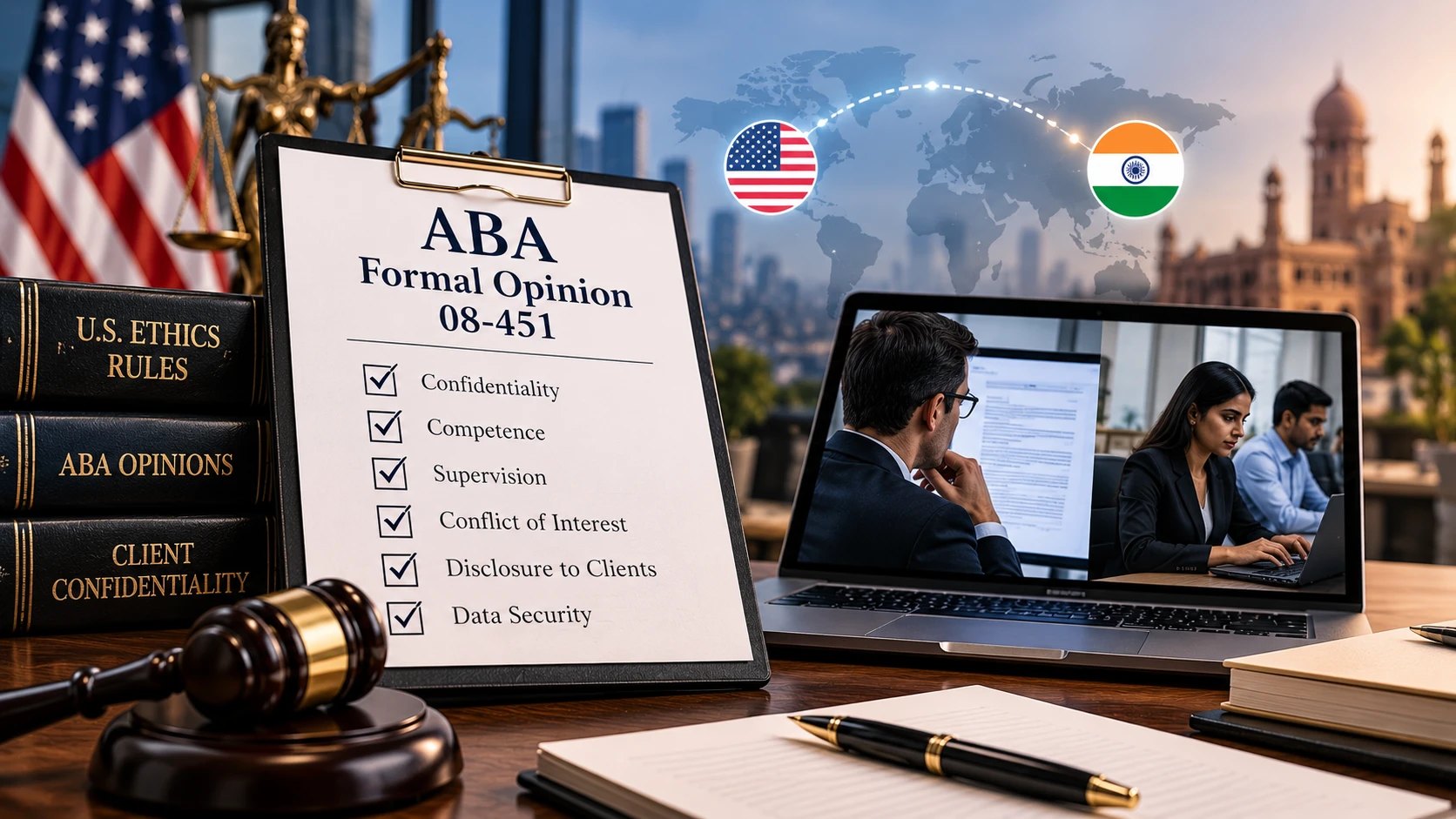
Related reading: outsourced legal research for US law firms, ABA Opinion 08-451 and outsourcing legal work to India, Thomson Reuters v. Ross and legal tech startups, client consent for offshore legal work, privilege and offshore legal vendors and the SRA AI warning notice.
Quick answers
Can lawyers be sanctioned for AI hallucinations?
Yes. Courts have sanctioned lawyers for filings with fabricated citations under Rule 11, inherent powers and professional rules, and sanctions have included fines, training orders and referrals.
Does Rule 11 require bad faith for AI errors?
Commentary says courts have held Rule 11 requires only negligence, so a failure to make reasonable inquiry can be enough.
What should a firm do to avoid sanctions?
Verify every authority in a trusted database, assign responsibility, keep a log, follow court standing orders and supervise outside support.
Do courts require disclosure of AI use?
Some judges have standing orders or local rules on AI. Check the judge and court rules in each matter.
Final word
Halverton & Co. is an Indian law firm advising US companies, founders, investors and law firms on Indian law, including legal research and drafting support for US law firms from India, with verification protocols and confidentiality safeguards. We practise in Jharkhand, Maharashtra and before the Supreme Court of India, and work alongside US counsel, who advise on US law. Halverton & Co.: Where tech needs law! If you have a question about Indian law, write to us at office@halvertonandco.com, or get in touch.
This article reflects developments reported up to 31 October 2026. It is for general information only, is not legal advice, and does not create an attorney-client relationship. Halverton & Co. is an Indian law firm and does not advise on US law; US-law points should be confirmed with US counsel.
Sources
Related practice area
Technology & AI Law
Contracts, data protection and AI policies for products that handle other people’s data.
View the practice areaComments
No account needed. Comments are reviewed before they appear, so yours will show here once approved. Please do not share confidential details or describe your own legal matter: replies are general discussion, not legal advice, and do not create an advocate-client relationship. For your own situation, write to office@halvertonandco.com.