Key takeaways
- The SRA has published a warning on AI risks, and commentary says firms remain responsible for work that suppliers produce with AI.
- Confidentiality, supervision and accuracy duties do not change because a tool or an offshore team helped.
- Contracts should require disclosure of AI tools and bar training on client data without consent.
- Keep a human review step and a log, and train staff on what may and may not be entered into AI tools.
In August 2026 the Solicitors Regulation Authority published a warning notice on the misuse of artificial intelligence. It said solicitors stay fully responsible for checking AI-generated content and protecting client information, and that AI does not shift professional duties to the tool or its supplier. The SRA AI warning notice follows a rise in reports of fake citations and breaches of confidentiality, and it matters equally to firms that use offshore support teams. The SRA AI warning notice is short, but its message is broad.
This guide explains what the notice says, what the reported numbers show, how it connects to supervision and outsourcing, and a checklist of what solicitors should verify before they use AI or send work to an offshore team. It is written by an Indian law firm for UK readers. Read the notice itself and take advice from your COLP, ethics adviser or regulatory counsel.
What the notice says
The SRA’s warning notice, published on 17 August 2026 according to press reports, tells solicitors that they remain responsible for the accuracy of work produced with AI and for the confidentiality of client information. It stresses that failure to have regard to the notice can lead to regulatory action. It identifies two main risks: inaccurate output, including invented legal citations, and breaches of confidentiality when client data is put into AI tools. For any firm, the SRA AI warning notice is a reminder to check what the regulator expects.
The message is not that AI is banned. It is that existing duties apply. Solicitors must act with competence and care, protect confidential information, supervise those who work for them and not mislead the court or others. Using AI does not reduce these duties, and it does not allow a solicitor to delegate responsibility to the tool. The SRA misuse of AI warning notice therefore reads as a reminder of familiar standards. The SRA AI warning notice applies to every regulated firm.
Some commentators say the notice is narrow. One law firm view is that it addresses only hallucinations and confidentiality, and that it does not signal changes to the SRA Handbook. That is a fair reading: the notice is a warning notice, not new rules. It sets out the regulator’s expectations and the consequences of ignoring them, and it applies to every firm, large or small.
The numbers and examples
Press coverage reports that the SRA received 42 reports of possible AI misuse between July 2025 and July 2026, and that a number of investigations are under way. A caution applies: one outlet noted that the 42 figure does not appear in the public notice itself and was attributed to other reporting, so treat it as a press figure until the SRA confirms it. Check the notice and the SRA’s statements.
The notice and coverage refer to real examples. One concerned a judge who publicly criticised a large law firm after a junior solicitor used AI to draft misleading letters, and another referred to a tribunal decision that raised concerns about AI in case preparation. These examples show that the risk is not limited to court filings. Letters, advice and internal documents can also contain errors that cause harm. Reports of solicitors AI hallucination citations are now common.
Courts elsewhere have imposed sanctions for fabricated citations, which shows the wider trend. For solicitors in England and Wales, the exposure is professional as well as reputational: disciplinary action, costs orders and complaints from clients. SRA investigations AI August 2026 coverage suggests that the regulator is watching, so a firm should assume that it may be asked how it controls AI use.
Supervision, confidentiality and offshore support
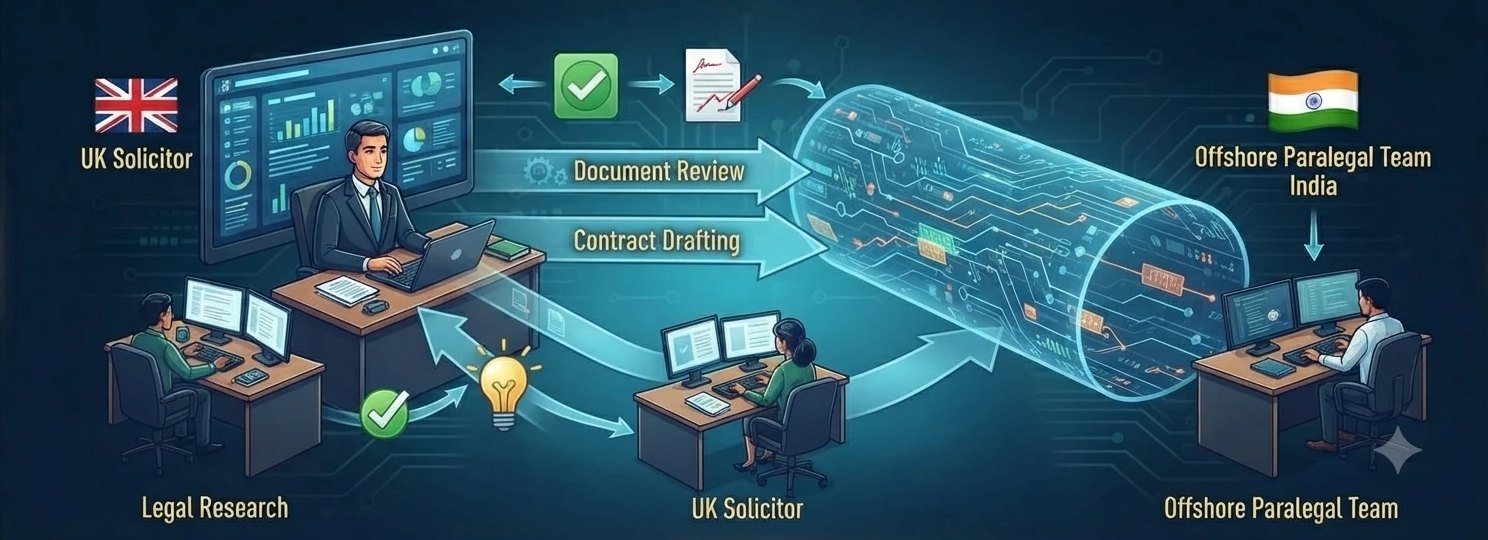
The notice links directly to supervision. Solicitors who delegate work, whether to a trainee, a paralegal, an offshore team or a tool, must supervise it. A firm that uses an offshore team that in turn uses AI tools has a longer chain of responsibility, and the firm must know about it. Ask vendors whether they use AI, which tools, how data is handled and how outputs are checked, and put the answers in the contract.
| Question | What to ask | Evidence |
|---|---|---|
| Which AI tools are used? | Full list, including supplier tools | Written disclosure |
| Is client data used to train models? | Prohibit without consent | Contract clause |
| How is output checked? | Human review before use | Review log |
| Where is data stored? | Location and transfer safeguards | Data map |
| Who is accountable? | Named supervising solicitor | Policy and training |
Confidentiality is the second theme. Client information put into a public AI tool may be stored or used to train models, and it may leave the firm’s control. The SRA’s confidentiality guidance already says that client permission may be needed before information is shared with third parties. Firms should use enterprise tools with contractual protections, restrict what staff can enter and keep a record of approved tools. On AI confidentiality client information SRA expects care and permission where needed.
Outsourcing rules also apply. A firm that outsources work remains responsible for it, and the contract should give it the information and audit rights it needs, including rights for the regulator to obtain information. Supervision of AI and offshore staff should be written into procedures, with named supervisors, review standards and escalation routes. Offshore support can be used safely if these controls are in place.
A pre-use checklist
Before using AI: approve specific tools, check their terms on data use and retention, ban entry of client data into unapproved tools, require human review of all outputs and require independent verification of every citation against a primary source. Train staff with real examples. Keep a log of AI use on matters where it matters, such as research for court documents.
Before using offshore support: carry out due diligence on the provider, agree confidentiality and security terms, check conflicts, define supervision, require disclosure of AI use, set audit rights and plan exit. Consider whether clients should be told, in line with the SRA’s guidance on confidentiality and your engagement terms. Keep records of the decision.
Review governance. Your COLP and COFA should understand the risks, include AI in risk registers and report breaches. Check professional indemnity cover for AI-related claims and review any exclusions. Update policies after the notice, and test them with scenarios. A firm that can show a clear policy, training and checks is better placed if the regulator asks. Use the SRA AI warning notice as the basis of your next policy review.
Next steps and quick answers
Read the notice, update your AI and outsourcing policies, approve tools, train staff, require citation checks and ask offshore vendors about their AI use. Keep records. This is general information, not legal or regulatory advice. Keep a dated record of how your firm responded to the SRA AI warning notice.
Related reading: legal outsourcing for UK law firms and the SRA, UK GDPR and outsourcing to India: five clauses, UK GDPR transfers to India for offshore legal support, a legal outsourcing agreement for solicitors, AI hallucination sanctions for lawyers and paralegal support for solicitors offshore; also the Section 14 reserved legal activity offence.
Quick answers
What does the SRA’s AI warning notice say?
It says solicitors remain responsible for checking AI output and protecting client information, identifies inaccurate citations and confidentiality breaches as key risks and warns of regulatory action for ignoring it. Read the notice itself for the exact wording.
How many AI misuse reports did the SRA receive?
Press coverage reports 42 reports between July 2025 and July 2026, but one outlet noted that the figure is not in the notice itself, so treat it as reported rather than confirmed.
Does the notice apply to offshore support teams?
It applies to solicitors, who stay responsible for supervised work, including work done by offshore teams and tools. Ask vendors about their AI use and put controls in the contract.
Does the SRA ban AI?
Not as far as published commentary shows. The notice warns about risks and expects firms to manage them. Read the notice itself.
Final word
Halverton & Co. is an Indian law firm advising UK companies, founders, investors and law firms on Indian law, including legal outsourcing and AI governance for UK law firms, supervision frameworks and cross-border confidentiality and data protection. We practise in Jharkhand, Maharashtra and before the Supreme Court of India, and work alongside your UK solicitors, who advise on English law. Halverton & Co.: Where tech needs law! If you have a question about Indian law, write to us at office@halvertonandco.com, or get in touch.
This article reflects developments reported up to 31 October 2026. It is for general information only, is not legal advice, and does not create a solicitor-client relationship. Halverton & Co. is an Indian law firm, is not authorised or regulated by the Solicitors Regulation Authority, and does not advise on English law; UK-law points should be confirmed with UK advisers.
Sources
Related practice area
Startups & Venture
From incorporation to term sheet. The documents a company needs to be fundable.
View the practice areaComments
No account needed. Comments are reviewed before they appear, so yours will show here once approved. Please do not share confidential details or describe your own legal matter: replies are general discussion, not legal advice, and do not create an advocate-client relationship. For your own situation, write to office@halvertonandco.com.