Key takeaways
- The Copyright Office refused to register a work naming the AI system DABUS as author, because DABUS is not a natural or juristic person.
- It treated Stephen Thaler as the person who caused the work to be created and accepted that the work could meet the originality test.
- Thaler declined to amend the application, so it stayed refused, and the order is fact-specific.
- Keep records of human input and name a human as author if you want a registration.
The DABUS copyright India order, reported at the end of August 2026, is short on drama and long on consequences. The Copyright Office refused to register an artwork that named an AI system, DABUS, as its author. But it didn’t throw the work out. It treated Stephen Thaler, the person behind the system, as the person who caused the work to be created, and it found the work met the originality test.
That mix is what makes it interesting. Many commentators expected a flat no. What came out is closer to: the machine can’t be the author, a person can be, and the work can qualify. If you use generative tools in a business, that is the line to understand. Dates and details below come from press and law-firm reports, since the order itself isn’t something we have seen in full. For anyone using generative tools, the DABUS copyright India order is the first signal from an Indian authority on authorship. It also touches who owns AI-generated work India law will recognise.
What the Registrar actually decided
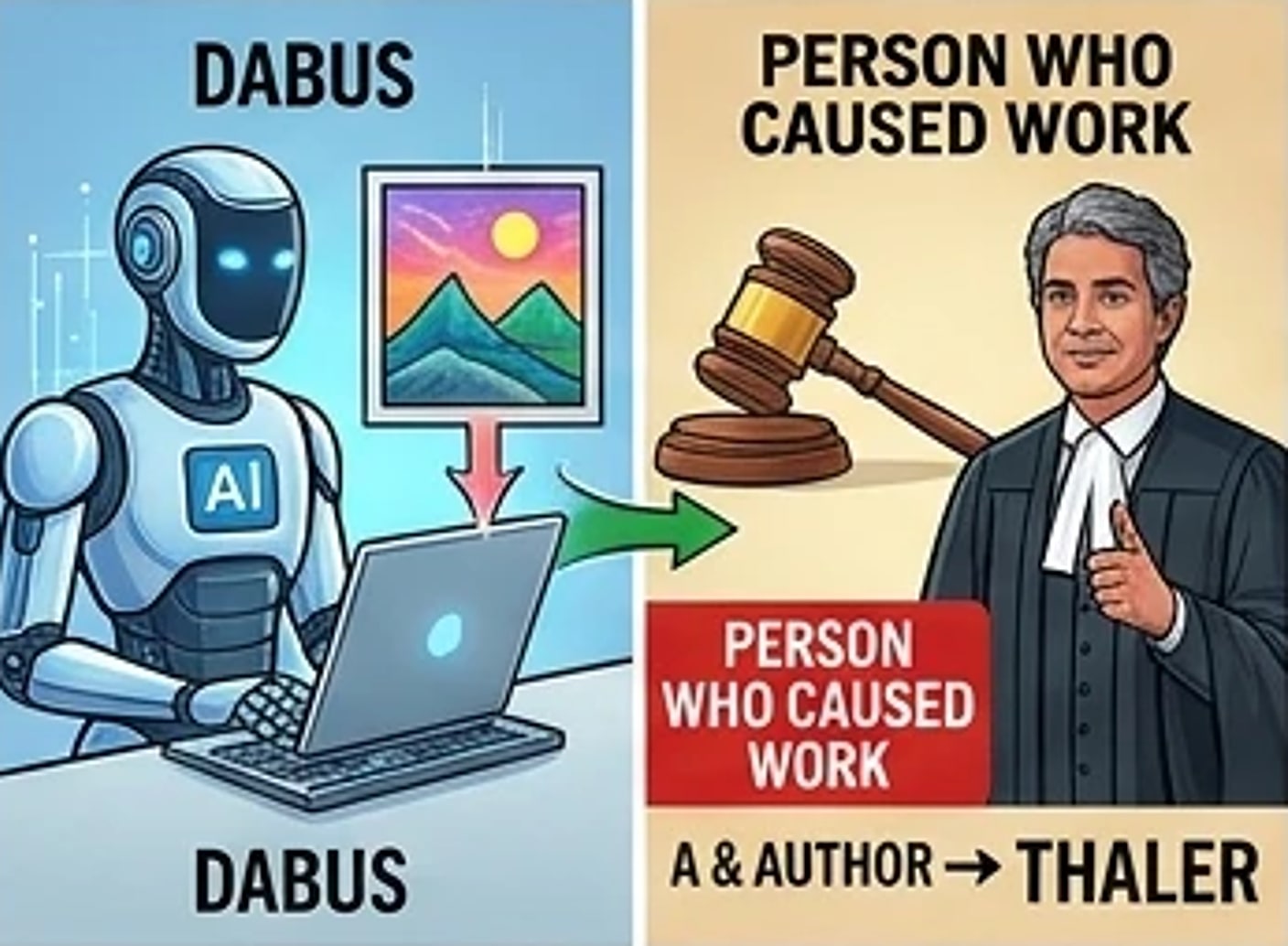
Thaler applied to register an artwork called A Recent Entrance to Paradise, listing DABUS as author. The Registrar said no to that entry. DABUS isn’t a natural or juristic person recognised in law, so it cannot be recorded as author under Section 2(d)(vi) of the Copyright Act, 1957. That much matches what courts in the US and UK have said in the same long-running litigation. The DABUS copyright India order turns on one clause. The Act’s Section 2(d)(vi) computer-generated work author rule says the author is the person who causes the work to be created.
Then came the twist. The Office concluded that Thaler was the person who caused the work to be created for the purposes of that provision, and it accepted the work met the modest originality threshold. Thaler was invited to amend the application to name himself. He declined and insisted on DABUS, so the application stayed refused.
Reports differ on the exact date, with one placing the order on 31 August 2026 and a law firm newsletter dated later in September. Read the order if you plan to cite it. The Office also took care not to lay down a rule for every AI-assisted work. If you plan to cite the DABUS copyright India order, read it first, and note that Thaler DABUS India refusal was based on the form, not on originality.
Why the author line matters in Indian law
Indian law has an odd feature here. Section 2(d)(vi) says that for a computer-generated literary, dramatic, musical or artistic work, the author is the person who causes the work to be created. The wording is older than modern AI. It was written for programs that produce output on command. The originality AI-generated work India registrars may accept is the modest threshold under Section 13.
| Point | Decided | Left open |
|---|---|---|
| AI as author | DABUS cannot be recorded as author | Other AI systems |
| Person who caused the work | Thaler was treated as that person | How much input is enough |
| Originality | The work could meet the threshold | All AI output |
| Binding effect | Registrar order | High Court view |
So the question of who owns AI-generated work India law would recognise starts from that clause. Ownership, term and moral rights all flow from knowing who the author is. If the author is the person who causes the work to come into being, a business that commissions output through a tool might claim that role, depending on how much it directs the result.
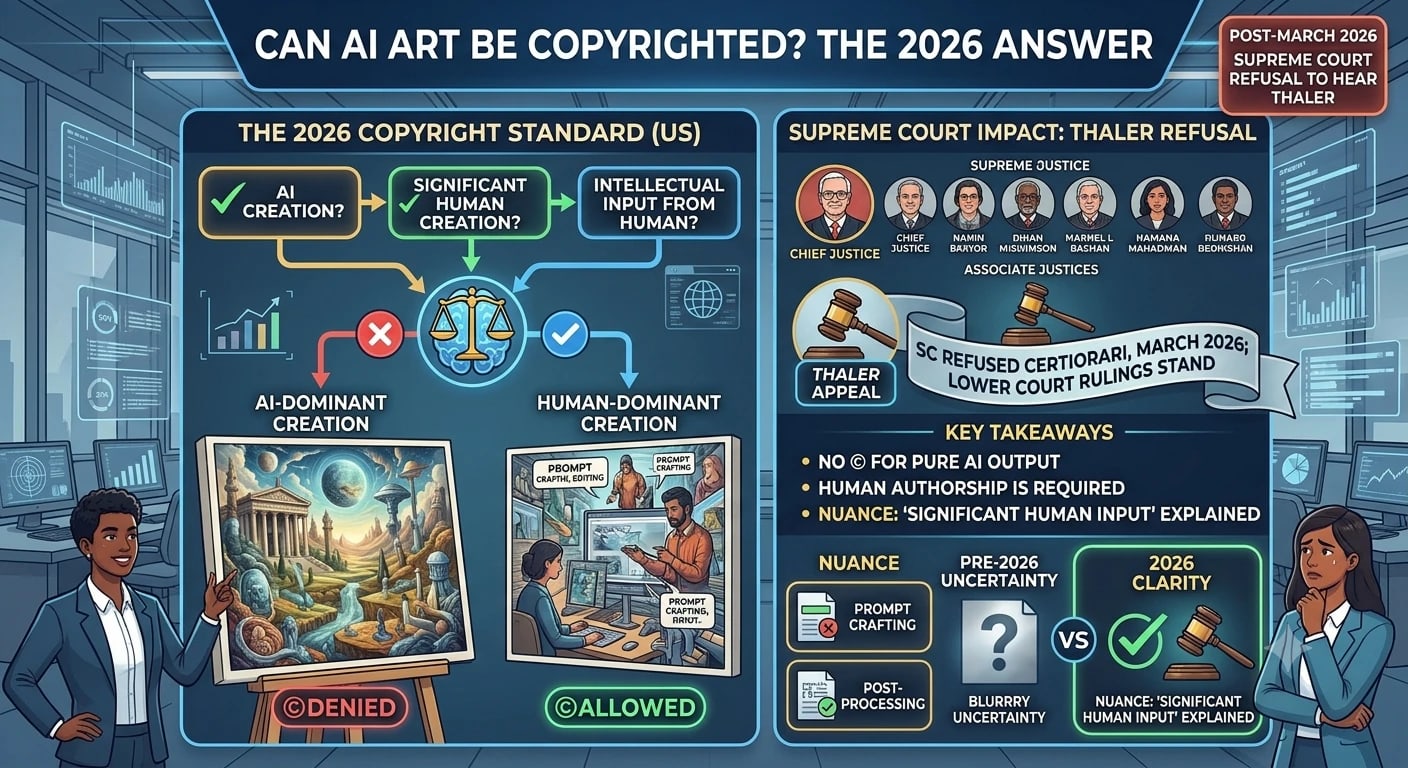
The order’s second finding matters just as much. If AI-generated work can meet the originality standard, it can be protected. That is different from the US position, where the Copyright Office has insisted on human authorship and the Supreme Court is reported to have declined to review the Thaler case this year. That is why the DABUS copyright India order is being read as more open to AI-assisted work than the US rule.
What the order does not decide
It doesn’t say all AI output is copyrightable. A prompt of a few words may not amount to causing the work to be created in any meaningful sense, and an examiner may judge the case differently. The Office was careful to treat this one on its facts. The DABUS copyright India order does not say all AI output is protected.
It also doesn’t decide how much human input is needed, how a registration is affected when a tool uses training data from other creators, or what happens when two people claim to have caused a work. None of that has been tested. And a Registrar’s order is not a High Court judgment. It can be challenged and others may be decided differently.
Be wary, too, of the AI cannot be author Indian Copyright Act headline readings. The clause is about authorship, not about whether the Act protects the output at all. Those are separate steps, and the order treats them separately. The AI cannot be author Indian Copyright Act reading is correct, but it only answers who goes on the form.
Practical steps for people using AI tools
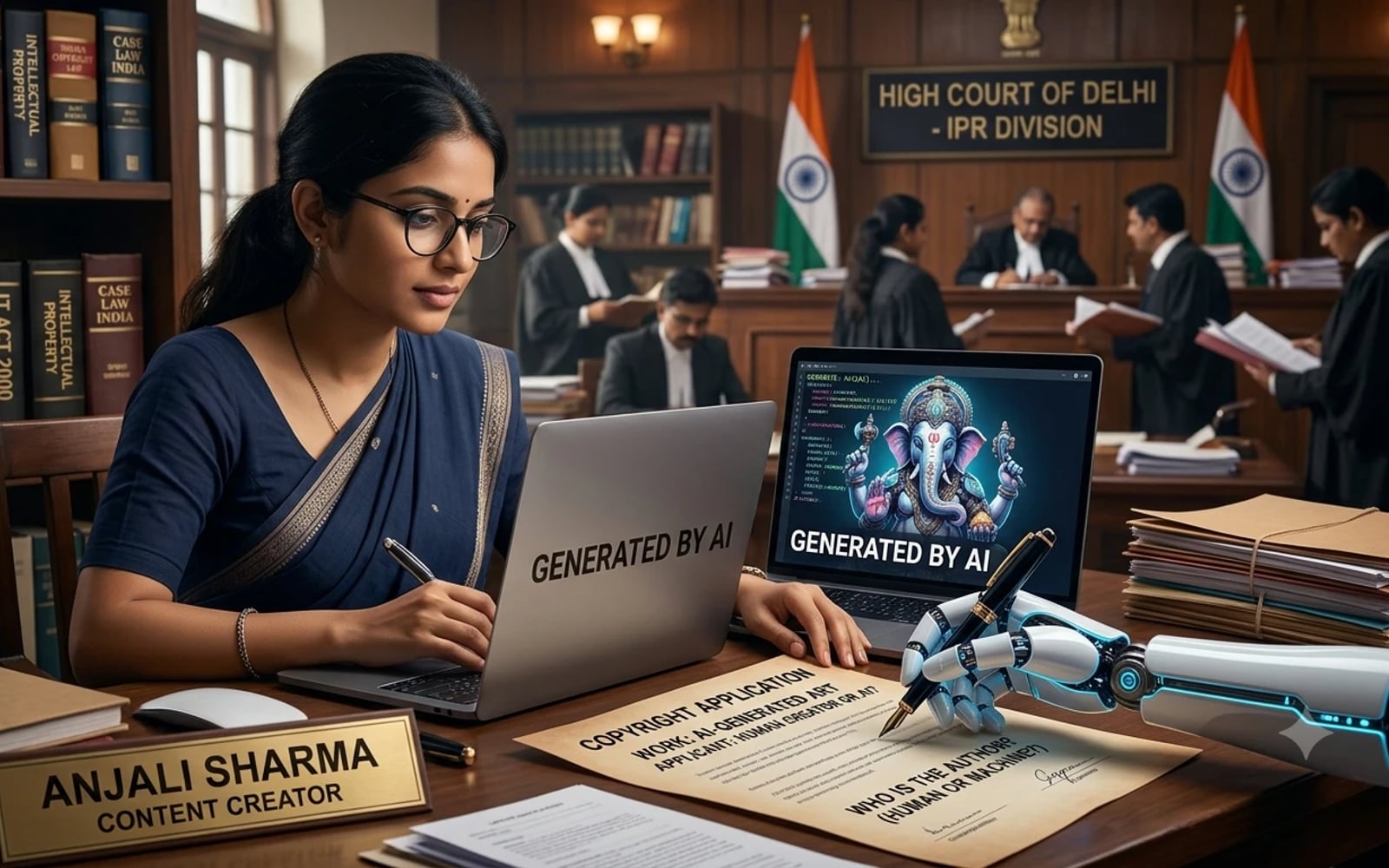
If you want a registration, name a human as author and describe your role honestly. Keep records of prompts, choices, edits and selections. Evidence that a person shaped the result carries real weight if the registration is ever challenged. Don’t list the tool as author, since it is likely to be refused. If you want a registration after the DABUS copyright India order, name a human as author.
Treat contracts as the first line of defence. Commissioning agreements with agencies and freelancers should say who owns output, whether AI tools were used, and that the supplier warrants it has the right to deliver the work. If you buy AI content for a campaign, ask what was used to make it.
Don’t rely on registration alone. Trade marks, passing off, confidentiality and contract each protect parts of what AI helps you make. Our posts on AI-generated content, the DPIIT working paper and the ANI case cover the wider picture. This order is one piece. In a dispute, the DABUS copyright India order is persuasive reading, not binding precedent.
Questions people ask
It would be a mistake to read the order as good or bad for AI. It is a narrow decision that settled who goes on the form and left the bigger questions for later. What the DABUS copyright India order leaves open is bigger than what it decides.
Related reading: AI-generated content and copyright in India, computer-generated works in India and the UK, whether AI art can be copyrighted: the Thaler case, AI copyright in India and the US compared, ANI v OpenAI and the interim order and who owns code written with AI; also AI art copyright in the UAE.
Quick answers
What did the DABUS copyright India order decide?
The Copyright Office refused to register a work naming the AI system DABUS as author, held that the person who caused the work to be created was Stephen Thaler, and accepted that the work could be original. The application stayed refused because Thaler would not amend it. The DABUS copyright India order is a narrow decision, so keep records.
Can AI be an author under the Indian Copyright Act?
Not on this order. An AI system isn’t a natural or juristic person, so it cannot be recorded as author under Section 2(d)(vi). A human who causes the work to be created can be.
Is AI-generated work protected by copyright in India?
It may be, if the work is original and a person is recognised as the author, but the order was fact-specific and doesn’t set a general rule. Keep records of human input and take advice for valuable works.
Is AI-generated work protected in India?
It may be, if it is original and a person is recognised as author, but the order was narrow and fact-specific.
Final word
Halverton & Co. is an Indian law firm advising founders, startups, technology companies and investors on Indian law, including copyright, AI and technology contracts for creators, startups and platforms in India. We practise in Jharkhand, Maharashtra and before the Supreme Court of India, and act as fractional legal counsel for technology-driven businesses. Halverton & Co.: Where tech needs law! If you have a question about Indian law, write to us at office@halvertonandco.com, or get in touch.
This article reflects developments reported up to 31 October 2026. It is for general information only, is not legal advice, and does not create an advocate-client relationship. Halverton & Co. is an Indian law firm.
Sources
Related practice area
Technology & AI Law
Contracts, data protection and AI policies for products that handle other people’s data.
View the practice areaComments
No account needed. Comments are reviewed before they appear, so yours will show here once approved. Please do not share confidential details or describe your own legal matter: replies are general discussion, not legal advice, and do not create an advocate-client relationship. For your own situation, write to office@halvertonandco.com.