Key takeaways
- DPIIT notification G.S.R. 108(E) of 4 February 2026 created a deep tech startup category, raised the ordinary startup turnover limit to ₹200 crore and set ₹300 crore for deep tech.
- Deep tech startups can stay recognised for up to 20 years, against 10 years for ordinary startups.
- Recognition unlocks fee rebates, self-certification and procurement relaxations, but tax and funding benefits depend on separate rules.
- Prepare a technology summary, a development timeline, IP and research evidence and clean ownership records before applying.
India has, for the first time, defined a deep tech startup in its startup rules. A notification of the Department for Promotion of Industry and Internal Trade (DPIIT) dated 4 February 2026 created the category, raised the turnover limit for ordinary startups to ₹200 crore and set a higher limit of ₹300 crore for deep tech startups. For founders building in artificial intelligence, semiconductors, biotechnology, space and similar fields, the deep tech startup India 2026 framework changes how long they can stay recognised and which benefits they can reach.
This guide explains who qualifies, how the new limits and periods work, what benefits recognition does and does not bring, how to apply and what to prepare. It is general information for founders and investors. Always read the notification itself, G.S.R. 108(E), and check current scheme conditions before you rely on a benefit.
What the 4 February 2026 notification changed
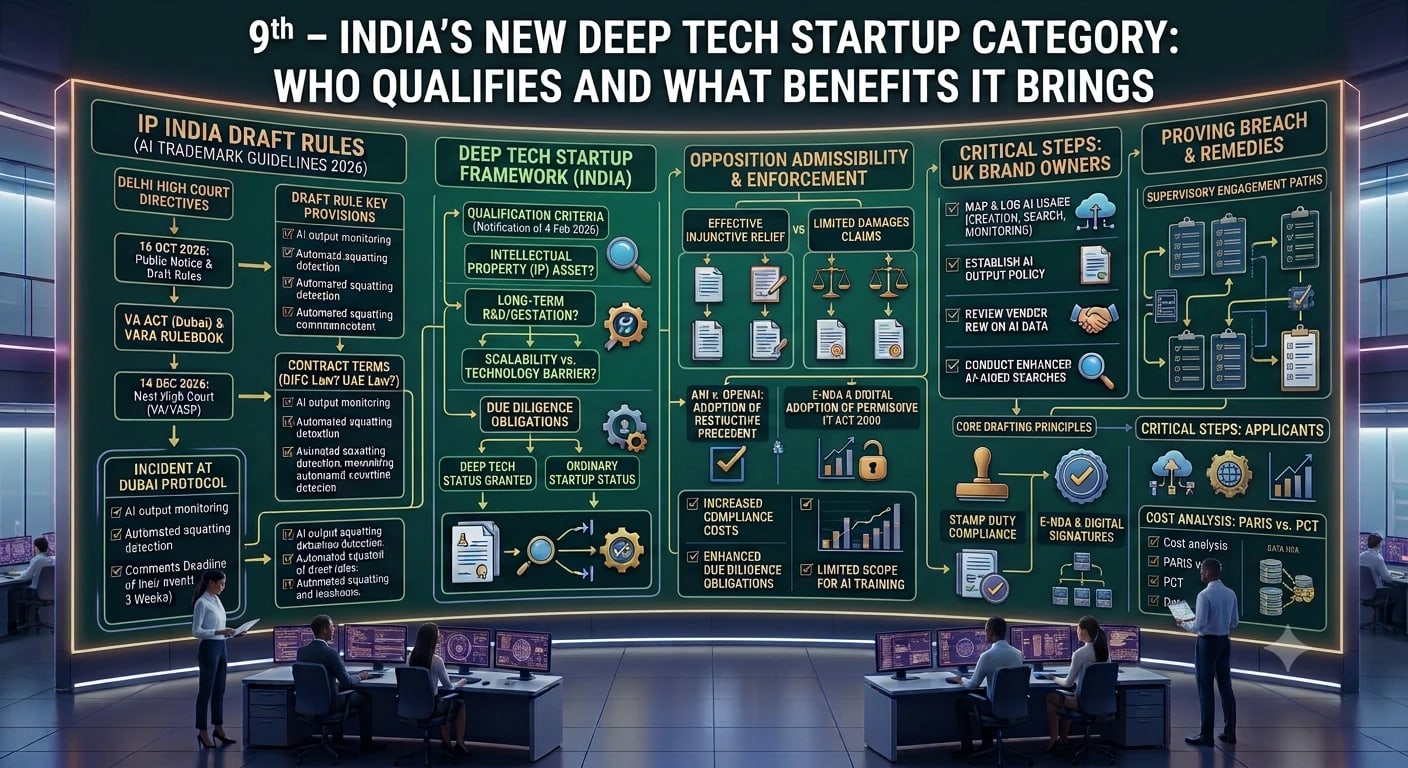
The notification, issued as G.S.R. 108(E), revised the definition of a startup for the purposes of Startup India. It raised the maximum annual turnover for an ordinary startup from ₹100 crore to ₹200 crore, and introduced a new category of deep tech startup with a turnover limit of ₹300 crore. Reports say the turnover test applies to any financial year since incorporation, so an entity that crosses the limit loses recognition.
It also lengthened the period of recognition. An ordinary startup is recognised for up to ten years from incorporation, as before. A deep tech startup can remain recognised for up to twenty years, which suits companies whose products need long research and development before revenue. Some reports say the framework also brought cooperative entities within the definition. Check the notification for the exact wording.
The change matters because many deep tech companies lose startup status before they have a commercial product. A ten-year clock and a ₹100 crore limit can end recognition just as a company starts to sell. The deep tech startup India 2026 rules respond to this by giving longer time and a higher limit, though the benefits attached still depend on separate schemes and conditions.
| Feature | Ordinary startup | Deep tech startup |
|---|---|---|
| Turnover limit | ₹200 crore (earlier ₹100 crore) | ₹300 crore |
| Recognition period | Up to 10 years from incorporation | Up to 20 years from incorporation |
| Basis | Innovation or a scalable business model | New scientific or engineering knowledge, long development, high capital |
| Who decides | DPIIT, on application | DPIIT, on application and evidence |
Who qualifies as a deep tech startup
The general conditions for a startup continue to apply. The entity must be incorporated as a private limited company, a limited liability partnership or a registered partnership firm, within the permitted period from incorporation, and below the turnover limit. It must be working towards innovation, development or improvement of products, processes or services, or a scalable business model with high potential for employment or wealth creation. It must not be formed by splitting up or reconstructing an existing business.
For the deep tech label, reports describe a definition based on building on new scientific or engineering knowledge, with significant research and development, long development cycles and high capital needs, and a technology that is hard to copy. Typical fields include AI and machine learning, robotics, semiconductors, advanced materials, quantum, space, biotechnology and clean energy. The exact test is in the notification, and DPIIT will decide each case on the facts.
Not every technology business is deep tech. A company that applies an existing software tool to a new market is unlikely to qualify. A company that has invented a new model architecture, a new material or a new device, and can show research, patents or lab results, has a better case. Be ready to explain what is new, what is hard and why it takes time. The deep tech startup India 2026 label is a recognition decision, not a self-declaration.
What benefits recognition brings
Recognition by DPIIT unlocks a set of benefits that depend on separate rules and schemes. Startups can get a rebate on patent filing fees, reportedly 80%, and on trade mark fees, and can use a panel of facilitators for IP help. They can self-certify compliance with certain labour and environmental laws, and they get easier exit under the Insolvency and Bankruptcy Code through a fast-track process. Public procurement rules relax prior experience and turnover requirements for recognised startups. Founders should treat the deep tech startup India 2026 framework as a planning tool and check each scheme’s conditions.
Tax and funding benefits need care. DPIIT recognition does not itself decide tax treatment. A tax holiday for eligible startups depends on a further certification and on the conditions of the Income-tax law, which changed with the Income-tax Act, 2025. The abolition of angel tax from 1 April 2025 helps early investment. Access to the Fund of Funds for Startups, seed funding schemes and government research programmes depends on each scheme’s own rules and cycles.
A longer period and higher limit help in practice. A deep tech company can plan long research and compliance strategies, court investors with more certainty and continue to use startup-linked fee rebates and procurement relaxations as it scales. The benefit is time, not a guaranteed grant. Founders should list which benefits they actually plan to use and check the conditions for each before they build a plan around them. The deep tech startup India 2026 change is therefore mainly about time and scale.
How to apply and prepare
Applications are made on the Startup India portal. You will need the certificate of incorporation, PAN, a description of the business and innovation, proof of the product or prototype, and supporting documents such as patents, research papers, grants or a recommendation letter from a recognised body. If you want deep tech recognition, say so clearly and give a short note on the science or engineering behind your product and why development takes long.
Prepare the file before you apply. Prepare a one-page technology summary, a timeline of development stages, a list of patents or applications, details of the research team and any partnerships with universities or labs. Keep financial statements ready to show turnover. If your company has previously been recognised as an ordinary startup, ask DPIIT how to apply for the new category and what happens to your existing period.
Also review related compliance. Make sure your IP assignments, employee contracts and shareholder agreements are in order, because DPIIT and investors will ask about ownership of the technology. If you receive foreign investment, check the FEMA rules for the sector, and consider whether a patent filing is better done before a public announcement. Good records now will help with later funding rounds. Strong records make a deep tech startup India 2026 application easier to defend.
Next steps and quick answers
In the next weeks, read the notification, check whether your company fits the deep tech definition, and prepare a technology note. Decide whether to apply as an ordinary or deep tech startup, and check which benefits you want to use. If you are an investor, ask portfolio companies about their recognition status. Take advice before relying on tax or fee benefits, since conditions change.
Related reading: DPIIT startup recognition: benefits and eligibility, patent deadlines under the 2024 Patent Rules, the Income-tax Act 2025 and startups, trade mark registration for startups in India, ESOPs for startups in India, India’s standalone AI law and what startups should prepare, the Corporate Laws (Amendment) Bill 2026 and startups and registering app screens and icons as designs; also Startup India registration in 2026.
Quick answers
What is the turnover limit for a deep tech startup in India?
Under the 4 February 2026 DPIIT notification, the limit is ₹300 crore for a deep tech startup and ₹200 crore for an ordinary startup, as reported. Confirm the details in G.S.R. 108(E).
How long can a deep tech startup stay recognised?
Up to twenty years from incorporation, compared with ten years for an ordinary startup, as long as it stays within the turnover limit and other conditions.
Does DPIIT recognition give automatic tax benefits?
No. Recognition is an administrative status. Tax benefits depend on separate certification and the conditions of the Income-tax law.
Can an existing recognised startup switch to deep tech status?
Ask DPIIT how to apply for the new category and what happens to your existing period. Prepare a technology note and evidence of research.
Does the longer period mean longer tax benefits?
Not automatically. Recognition is an administrative status, and tax benefits depend on separate certification and the conditions of the Income-tax law.
Final word
Halverton & Co. is an Indian law firm advising founders, startups, technology companies and investors on Indian law, including startup recognition and compliance, IP and technology law, fundraising and shareholder agreements, and regulatory advice for deep tech companies. We practise in Jharkhand, Maharashtra and before the Supreme Court of India, and act as fractional legal counsel for technology-driven businesses. Halverton & Co.: Where tech needs law! If you have a question about Indian law, write to us at office@halvertonandco.com, or get in touch.
This article reflects developments reported up to late October 2026. It is for general information only, is not legal advice, and does not create an advocate-client relationship. Halverton & Co. is an Indian law firm.
Sources
Related practice area
Startups & Venture
From incorporation to term sheet. The documents a company needs to be fundable.
View the practice areaComments
No account needed. Comments are reviewed before they appear, so yours will show here once approved. Please do not share confidential details or describe your own legal matter: replies are general discussion, not legal advice, and do not create an advocate-client relationship. For your own situation, write to office@halvertonandco.com.