Key takeaways
- The Online Safety Act applies to services with links to the UK wherever the company is based, including Indian apps with UK users.
- Pornographic services must use highly effective age assurance, and other services must protect children where they are likely to be accessed by them.
- Self-declaration is not enough, and Ofcom has fined overseas operators for missing age checks.
- Do the children’s access assessment, pick a tested method and keep records.
Online Safety Act age verification isn’t just for adult websites. An Indian app with UK users, a social feature, a chat tool, a creator platform or a community forum, may be covered by the UK’s Online Safety Act 2023, and Ofcom has made clear it wants age checks that really work, not a box that asks “are you over 18?”. Ofcom’s powers reach services based anywhere if they have a significant number of UK users or target the UK.
Enforcement has begun. Ofcom has fined adult sites and at least one overseas service for missing age checks, and the regulator and the ICO issued a joint statement in March 2026. So where does an Indian founder start? Here is who is in scope, when age assurance is required, what counts as “highly effective”, and a step-by-step plan. Figures on fines come from reports, so check Ofcom’s own pages. Online Safety Act age verification for apps starts with scope. Highly effective age assurance Ofcom expects is the standard.
Is your app in scope
The Online Safety Act applies to user-to-user services (where users can share content with each other), search services and services that publish pornographic content. A service with links to the UK is covered, even if the company is abroad. A link exists if the service has a significant number of UK users, or the UK is a target market, or there is a material risk of harm to UK users. Online Safety Act age verification applies when a service has links to the UK.
For an Indian app, that means a chat app, a dating app, a video sharing platform, a gaming community with open chat, a social network or a forum with UK users is likely in scope. A plain business app with no user-to-user features is not. If you are unsure, assess your features, not your category.
The Indian app UK users Online Safety Act question is therefore one of facts: how many UK users, what they can post and see, and whether children are likely to use the service. Document your analysis even if you decide you are out of scope. Online Safety Act age verification should be part of any UK launch plan.
When age checks are required
Two situations matter most. First, services that allow pornographic content must use highly effective age assurance to stop children from encountering it. That duty took effect in July 2025. Second, services that are likely to be accessed by children and that carry content harmful to children, such as pornography, self-harm, suicide and eating disorder content, must protect children, and in many cases that means age assurance for the risky parts. Online Safety Act age verification duties depend on content and likely child users.
Every in-scope service must do a children’s access assessment to decide whether children are likely to use it. The children’s access assessment Online Safety Act requires is the gateway: if it says children can access the service, a children’s risk assessment follows, and safety measures flow from that. The Act does not have a blanket minimum age rule for all apps, but if your terms set a minimum age, Ofcom expects you to enforce it.
A joint statement by Ofcom and the ICO in March 2026 said that if a child is likely to access a service, the provider should have a highly effective age assurance process. Combined with data protection rules on children’s data, the age check question has become part of mainstream compliance, not a niche. Online Safety Act age verification duties tie in with the ICO’s children’s data rules.
What highly effective age assurance means
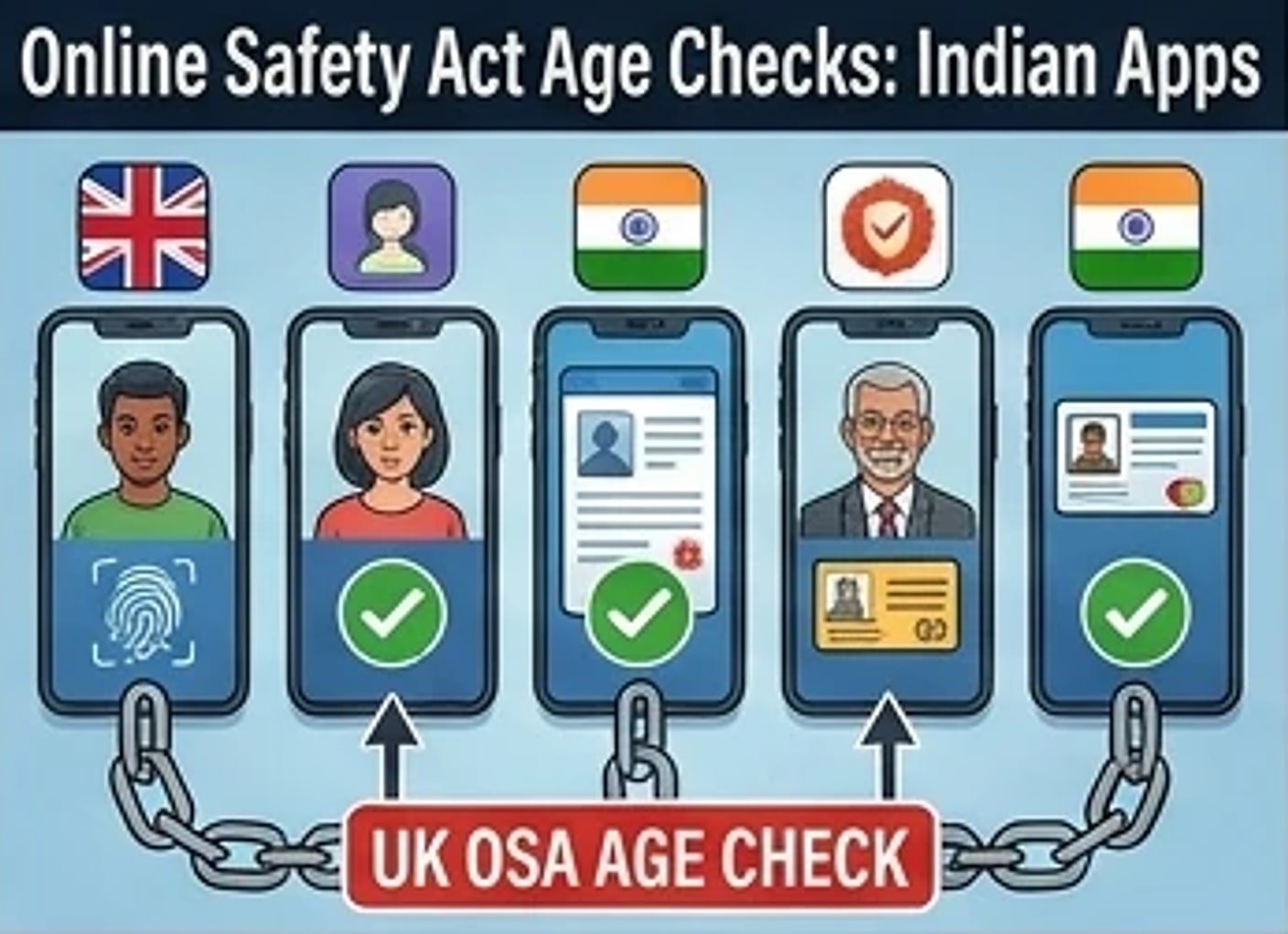
Ofcom’s guidance gives examples of methods it considers capable of being highly effective: facial age estimation, photo ID matching, open banking checks, credit card checks, mobile network operator checks and digital identity wallets. Self-declaration by ticking a box, or simply stating you are over 18 in terms, is not enough. Highly effective age assurance Ofcom expects must be accurate, reliable and fair. Highly effective age assurance Ofcom approves includes age estimation facial age check tools.
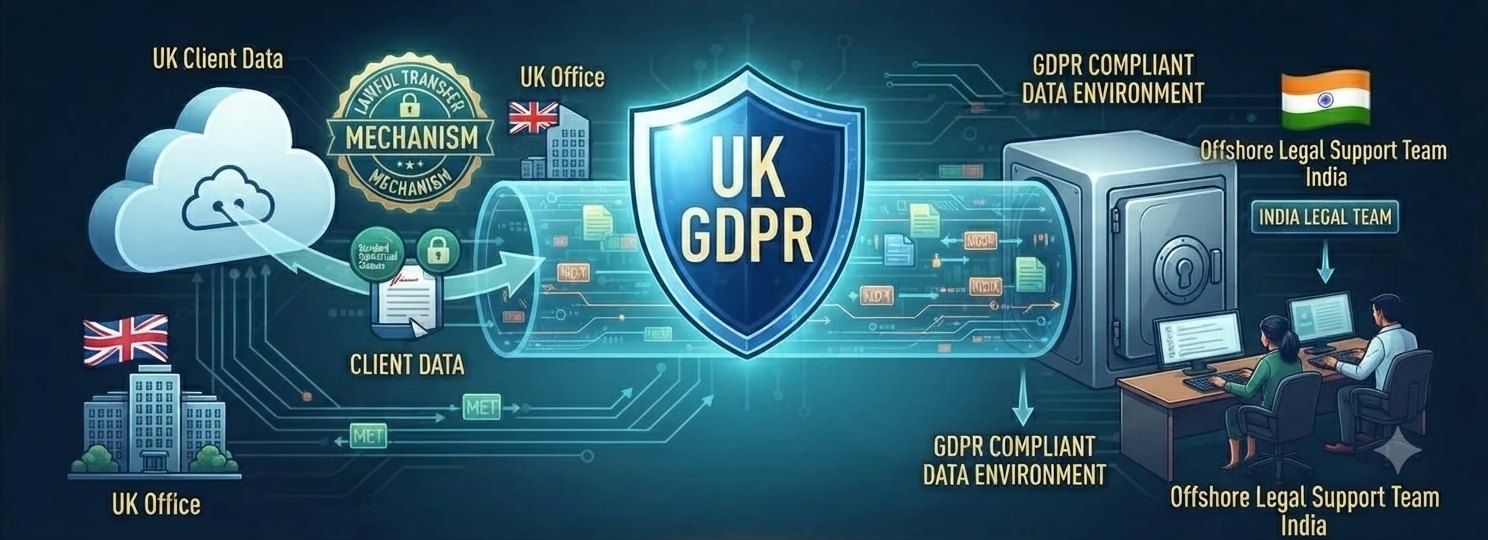
Many Indian teams will buy a third-party age assurance provider instead of building their own. Choose one with a track record, assess its accuracy, privacy and accessibility, and check where it stores data. Age checks involve sensitive information, so the UK GDPR applies, and you need a DPIA and processor terms.
Plan the user flow. Decide where the check happens: sign-up, before seeing certain content, or when a feature is used. Offer more than one method so people without a card or ID aren’t locked out. Keep records of how the system works, how you tested it and what changes you made. Ofcom will ask. Document how your Online Safety Act age verification system was tested.
What Ofcom has done so far
Ofcom began opening investigations soon after the duties started. Reports say it fined an adult site operator £1.35 million (plus £50,000 for ignoring an information request), fined Kick Online Entertainment £800,000 for failing to have compliant age checks over several months, and fined First Time Videos £80,000. It has also acted against 4chan, giving it a deadline and a daily penalty. These are Ofcom fines age checks non-UK services have faced, so overseas companies are not exempt. Ofcom has shown that Online Safety Act age verification applies abroad.
| Step | Action | Output |
|---|---|---|
| Scope | Check UK links and user-to-user features | Written analysis |
| Children access assessment | Decide whether children are likely to use the service | Assessment record |
| Age assurance | Pick a highly effective method | Tested system |
| Records | Document testing and changes | Evidence for Ofcom |
The Act allows fines of up to £18 million or 10% of qualifying worldwide revenue, whichever is greater, and in serious cases a court can order payment providers or advertisers to withdraw services or block access. That is the extreme end. Most early cases have ended with smaller fines and compliance undertakings.
A practical plan for an Indian founder: confirm scope, complete the children’s access assessment, run the risk assessment if needed, pick an age assurance method, update terms and privacy information, appoint a named person and keep records. If you serve UK users and have done none of this, start now. Take UK legal advice on details, since this is English regulation. If you serve UK users, Online Safety Act age verification needs action now.
Questions people ask
One point catches people out: a ban on under-18s in your terms doesn’t help if you don’t enforce it. Ofcom looks at what the service actually does. Online Safety Act age verification is not optional once you are in scope.
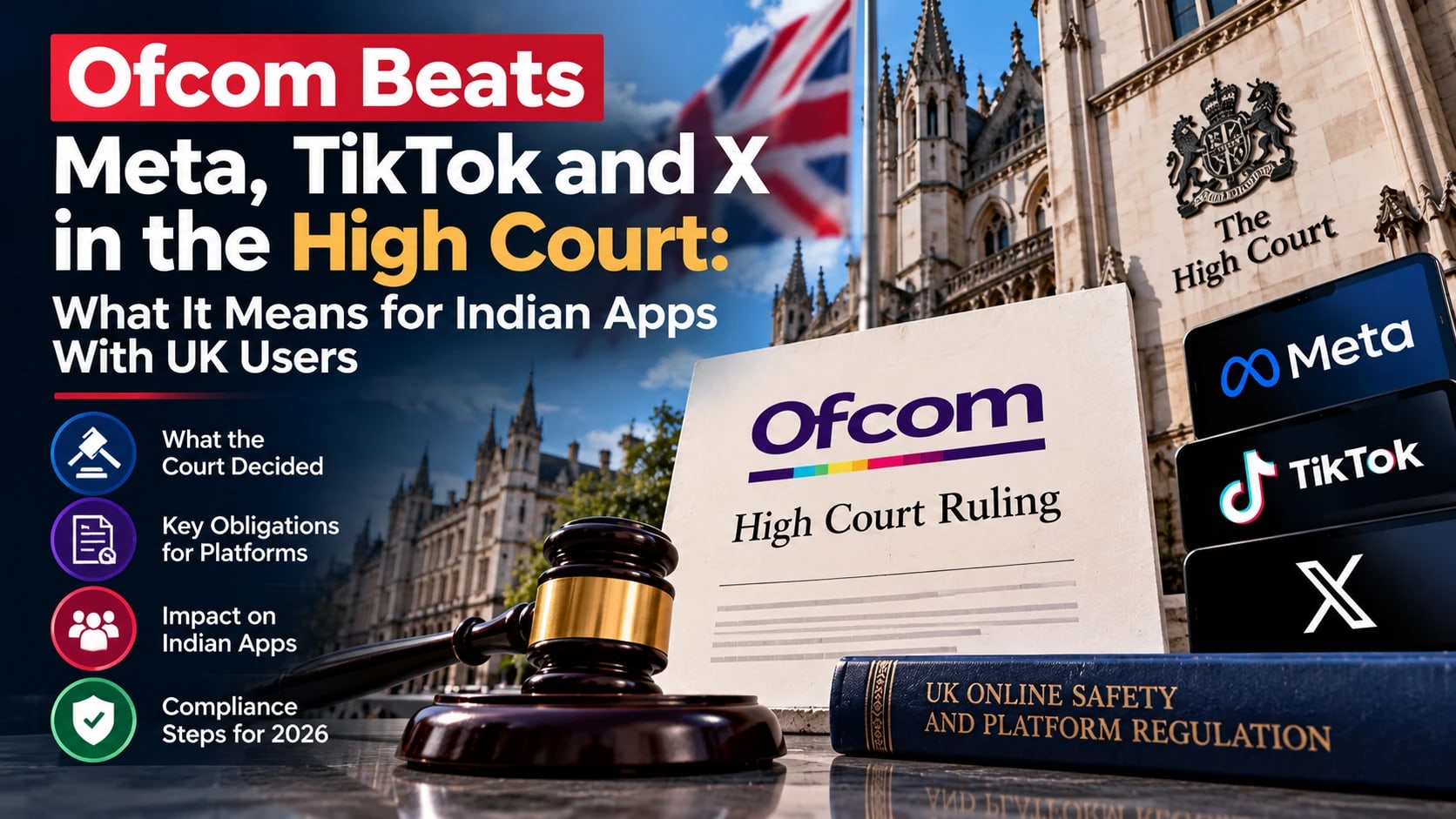
Related reading: Ofcom, Meta, TikTok, X and Indian apps with UK users, AI chatbots, children and the DPDP Act, the DPDP Act for UK businesses, UK cookie rules in 2026, the UK ransomware payment ban and the Cyber Security and Resilience Bill; also Ofcom Online Safety Act fines.
Quick answers
Does Online Safety Act age verification apply to apps based in India?
It can, if the service has links to the UK, such as a significant number of UK users or the UK as a target market. The Act applies regardless of where the company is based.
What counts as highly effective age assurance?
Ofcom’s guidance lists methods such as facial age estimation, photo ID matching, open banking, credit card checks and mobile operator checks. Self-declaration doesn’t count.
What are the penalties for failing age checks?
Ofcom can fine up to £18 million or 10% of qualifying worldwide revenue and seek business disruption orders. Early fines have been in the tens of thousands to over a million pounds.
What are the penalties?
Ofcom can fine up to £18 million or 10% of qualifying worldwide revenue.
Final word
Halverton & Co. is an Indian law firm advising UK companies, founders, investors and law firms on Indian law, including Indian-law support and cross-border compliance coordination for Indian apps and platforms with UK users, alongside UK counsel. We practise in Jharkhand, Maharashtra and before the Supreme Court of India, and work alongside your UK solicitors, who advise on English law. Halverton & Co.: Where tech needs law! If you have a question about Indian law, write to us at office@halvertonandco.com, or get in touch.
This article reflects developments reported up to 31 October 2026. It is for general information only, is not legal advice, and does not create a solicitor-client relationship. Halverton & Co. is an Indian law firm, is not authorised or regulated by the Solicitors Regulation Authority, and does not advise on English law; UK-law points should be confirmed with UK advisers.
Sources
Related practice area
Technology & AI Law
Contracts, data protection and AI policies for products that handle other people’s data.
View the practice areaComments
No account needed. Comments are reviewed before they appear, so yours will show here once approved. Please do not share confidential details or describe your own legal matter: replies are general discussion, not legal advice, and do not create an advocate-client relationship. For your own situation, write to office@halvertonandco.com.