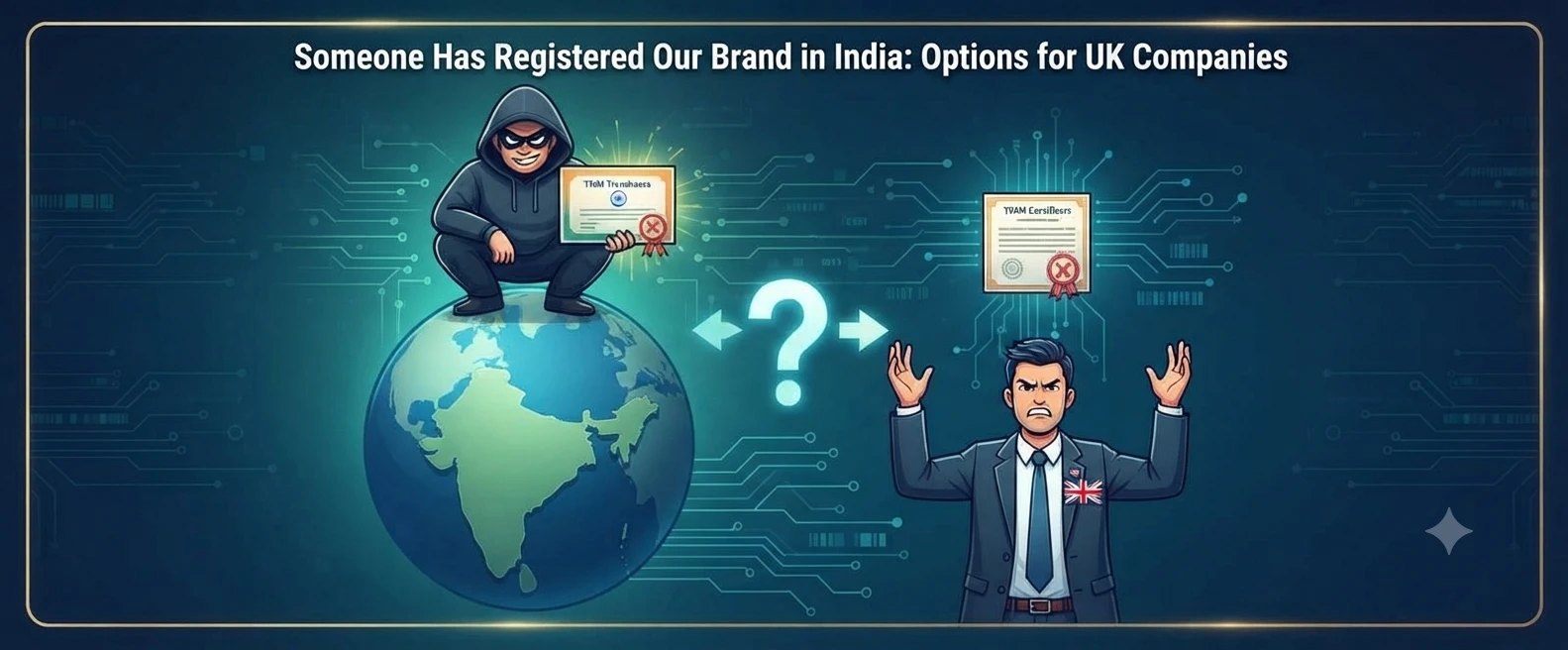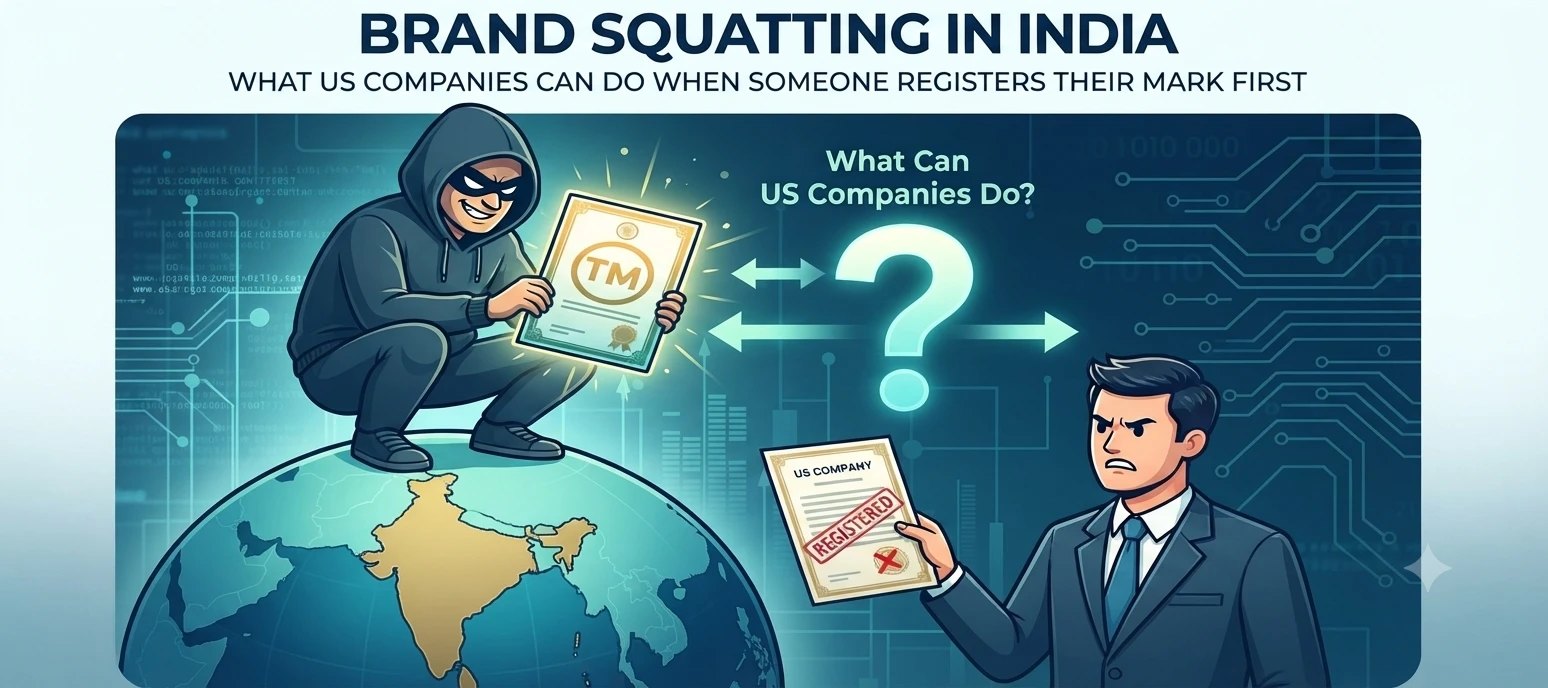
It’s a story Indian IP lawyers hear regularly. A US company decides to launch in India, runs a trademark search, and discovers that someone in Mumbai or Delhi filed its brand name two years ago. Sometimes it’s a former distributor. Sometimes it’s a stranger who watches foreign brands and files their names in the hope of selling them back.
Trademark squatting in India is a real risk, but it isn’t the end of the road. Indian law gives foreign brand owners several remedies against bad-faith filers. This guide explains how squatting happens, the legal tools available, how Indian courts treat foreign reputation, and what US companies should do next. To avoid the problem in the first place, read our guide to registering a US trademark in India.
How trademark squatting in India happens
Trademark rights are territorial, and registration in India is open to anyone who applies for a mark that isn’t already registered or pending for similar goods or services. Squatters exploit the gap between a brand becoming known internationally and its owner filing in India. They look at US product launches, crowdfunding campaigns, trade shows and app store rankings, then file before the foreign owner does.
The other common source is people the brand already knows: distributors, franchisees, joint venture partners, local agents and even contractors who helped launch the product in India. Sometimes the filing is made innocently, “to protect the brand locally”, and sometimes deliberately, to gain bargaining power in a later commercial dispute; see our guide to hiring contractors in India from the US.
Trademark squatting in India isn’t limited to brand names, either: logos, product names and app names are targeted too. Either way, the consequences for the US company are similar. The squatter’s application or registration can block the US company’s own filing, give the squatter a basis to send infringement notices to the US company’s Indian distributors, and allow the squatter to demand payment to transfer the mark. Domain names and social handles are often taken at the same time; see our guide to brand names, domains and social handles.
Remedy one: opposition before registration
If the squatter’s application hasn’t yet been registered, the fastest remedy is opposition. Every accepted application is advertised in the Trade Marks Journal, and under Section 21 of the Trade Marks Act any person can file a notice of opposition within four months of the advertisement. This window can’t be extended, so monitoring the journal for marks similar to yours is essential.
Strong opposition grounds against trademark squatting in India include Section 11 (likelihood of confusion with an earlier mark, or detriment to a well-known mark) and bad faith. The Act recognizes bad faith expressly: Section 11(10)(ii) requires the Registrar to consider bad faith involved in an application, whether by the applicant or the opponent. Evidence that the applicant had a prior business relationship with the US company, or has filed many foreign brands, is particularly persuasive.
Monitoring is what makes opposition possible. A trademark watch service that searches each weekly issue of the Trade Marks Journal for marks similar to yours is inexpensive, and it’s the only reliable way to catch trademark squatting in India early enough to oppose. Opposition proceedings involve written pleadings, evidence by affidavit and a hearing. They take time, but a successful opposition stops the squatter’s mark from ever being registered.
Remedy two: rectification and cancellation
If the squatter’s mark is already registered, the US company can apply for rectification of the register. Section 57 allows removal of an entry made without sufficient cause or wrongly remaining on the register, which covers registrations obtained in bad faith or in breach of Section 9 or 11. Section 47 allows removal for non-use: where the mark was registered without a bona fide intention to use it and hasn’t been used, or where there has been no bona fide use for a continuous period of five years (plus the statutory lead time before the application).
Non-use is a powerful tool against squatters, because many never genuinely use the mark. They simply hold it. Evidence such as market investigations, the absence of any products, websites or sales under the mark, and the applicant’s pattern of filing foreign brands can support a rectification application.
Since the abolition of the Intellectual Property Appellate Board in 2021, rectification applications are heard by the Registrar or, where the matter is linked to litigation, by the High Courts, including the specialized IP Divisions of the Delhi and Madras High Courts.
Remedy three: passing off, prior use and well-known marks
Indian law protects a prior user against a later registered owner. Under Section 34 of the Trade Marks Act, the registered proprietor can’t stop a person who has continuously used the mark since before the proprietor’s use or registration. If the US company was selling in India before the squatter’s filing, that prior use is a strong shield and a basis for attacking the registration.
Passing off is the main sword. Indian courts accept that a foreign brand’s reputation can extend to India before it trades there, a concept known as transborder reputation, recognized by the Supreme Court in N.R. Dongre v. Whirlpool (1996). But in Toyota v. Prius Auto Industries (2017), the Supreme Court made clear that the brand must show goodwill among Indian consumers, not just international fame. Evidence such as Indian website traffic, Indian media coverage, Indian app downloads and Indian customer inquiries is therefore critical. (Verify reporter citations before relying on either case.)
Famous US brands may also seek recognition as a well-known trademark, which gives protection across all classes of goods and services and makes bad-faith filings easier to defeat. Indian courts can declare marks well known, and the Registry has a procedure for applications.
| Remedy | When it applies | Key point |
|---|---|---|
| Opposition (Section 21) | Squatter’s mark is advertised but not yet registered | Four months from advertisement; cannot be extended |
| Rectification (Sections 47 and 57) | Squatter’s mark is already registered | Bad faith, breach of Sections 9 or 11, or non-use |
| Prior use (Section 34) | You used the mark in India first | Registered owner cannot stop continuous prior use |
| Passing off | You have goodwill among Indian consumers | Foreign fame alone is not enough (Toyota v. Prius) |
| Well-known mark status | Your brand is famous in India | Protection across all classes |
What US companies should do now, and quick answers
If you discover trademark squatting in India, act quickly. First, collect evidence of your use and reputation in India, and of any relationship with the filer. Second, check the status of the squatter’s mark and whether the opposition window is open. Third, file your own Indian application immediately, so you’re in the queue. Fourth, consider a cease-and-desist letter, bearing in mind that Indian law allows a person threatened without justification to sue for groundless threats.
Negotiating a purchase can be the fastest route in some cases, but paying a squatter rewards the practice and should be weighed against the legal remedies. For the future, the best protection is to file in India before you launch, sign distributor and partner agreements that prohibit local filings, and monitor the Trade Marks Journal. Docketing opposition and renewal dates matters too; see our guide to trademark docketing outsourcing, and for the Indian filing process, our guide to trademark registration for startups.
Quick answers
Can a US company stop trademark squatting in India?
Yes, through opposition, rectification for bad faith or non-use, prior use defenses and passing off actions, depending on the facts and timing.
Does a famous US brand automatically get protection in India?
Not automatically. Indian courts require evidence of reputation and goodwill among Indian consumers, though well-known marks receive broad protection.
How long do I have to oppose a squatter’s application?
Four months from its advertisement in the Trade Marks Journal, and the period can’t be extended.
Related reading: trade mark squatting in India (the UK-facing version); also design registration in India for US companies; also IP India’s draft rules on AI and trade mark squatting, keyword advertising and trade marks in India, getting a well-known trade mark declared in India and clearing a brand name for India before a US launch; also IP India’s AI trade mark search and trade marking an AI-generated logo.
Final word
Halverton & Co. is an Indian law firm that advises on Indian law, including trademark oppositions, rectification and anti-squatting strategy for US brands in India. We practice in Jharkhand, Maharashtra and before the Supreme Court of India, and we work alongside US counsel, who advise on US law. Halverton & Co.: Where tech needs law! If you have a question about Indian law, write to us at office@halvertonandco.com, or get in touch.
This article reflects developments reported up to early October 2026. It is for general information only, is not legal advice, and does not create an attorney-client relationship. Halverton & Co. is an Indian law firm and does not advise on US law.
Related practice area
Intellectual Property
Trade marks, copyright, patents and designs. Searched, filed, licensed and enforced under Indian law.
View the practice areaComments
No account needed. Comments are reviewed before they appear, so yours will show here once approved. Please do not share confidential details or describe your own legal matter: replies are general discussion, not legal advice, and do not create an advocate-client relationship. For your own situation, write to office@halvertonandco.com.