Key takeaways
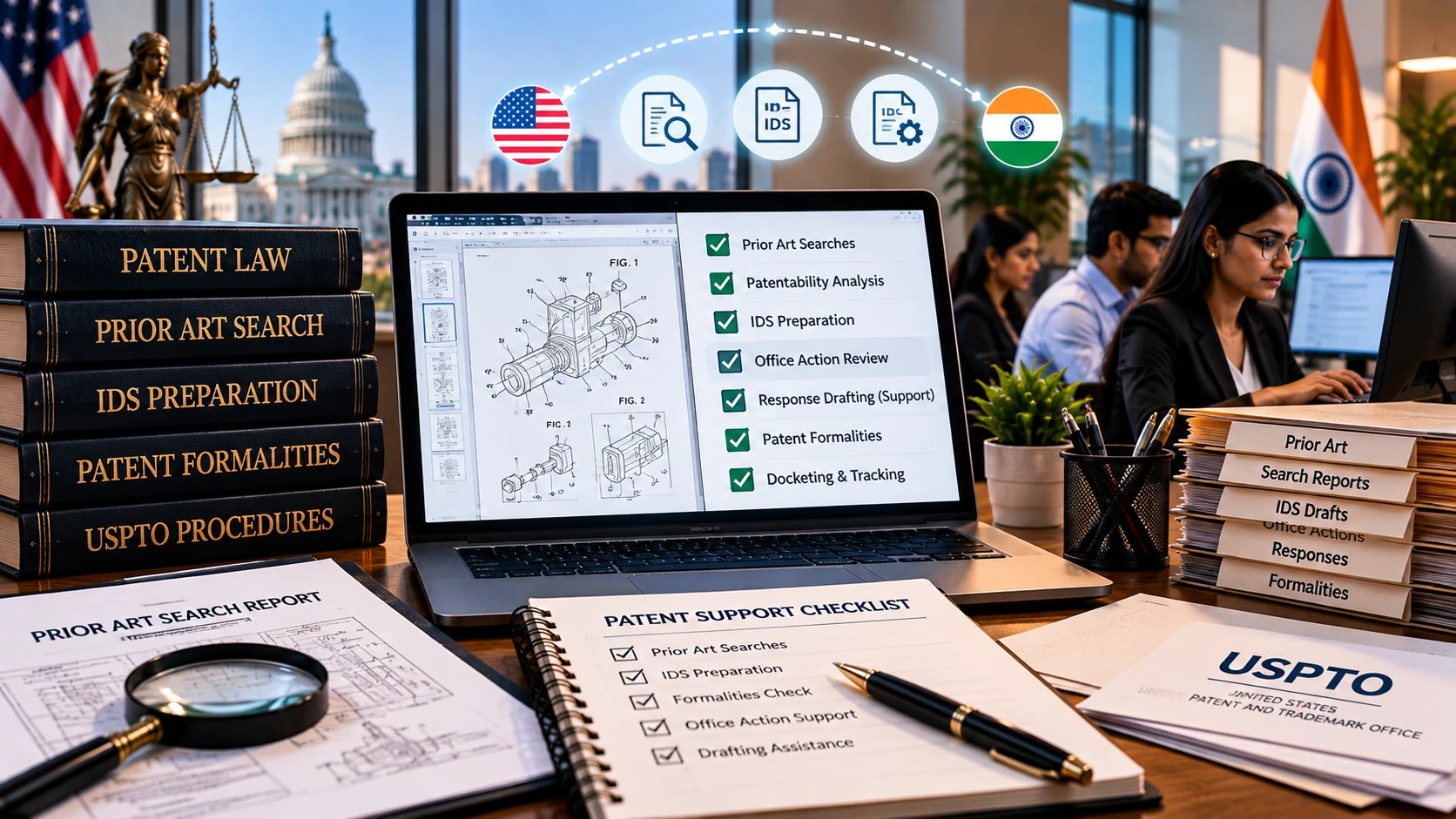
- Prior art searches, IDS preparation, formalities checks and docketing are well-established outsourced patent tasks.
- Under 37 CFR 1.56, everyone substantively involved in prosecution owes a duty of candor, and the US practitioner decides materiality.
- Failing to disclose material information can lead to inequitable conduct and an unenforceable patent.
- Screen technical subject matter for US export controls before sending it offshore.
Patent prosecution is expensive for clients and demanding for firms. A large part of that cost isn’t claim drafting or arguing with examiners. It’s the support work around them: searching prior art, assembling information disclosure statements, checking formalities and tracking deadlines. Done badly, that work can sink a patent. Done well, it’s invisible.
Patent paralegal outsourcing to India is one way US patent firms and in-house IP teams get that support work done. This guide explains which patent tasks are well suited to outsourcing, how IDS preparation and prior art searching should be handled, the safeguards that matter, and how to start. The ethics framework is in our ABA 08-451 compliance checklist.
Why patent firms outsource paralegal work
Patent paralegal outsourcing has grown alongside wider legal outsourcing, which the ABA has described as a common practice in the legal services industry. India has a deep pool of science and engineering graduates with legal training, which suits patent support particularly well. Searchers and formalities specialists who understand both the technology and the procedure are hard to find and expensive to hire in the US.
The economics are simple. Prior art searches, IDS assembly and formalities checks are time-consuming but rule-bound. Outsourcing them frees patent agents and attorneys to spend their time on claims, responses and client strategy, which is where their training adds the most value.
The ethical framework is the same as for any outsourcing. Under ABA Formal Opinion 08-451, a lawyer may outsource provided they remain ultimately responsible for competent service to the client, and must supervise the work and protect confidentiality. See also our guide to offshore paralegal services.
Prior art searches
Prior art searching is one of the best-established forms of patent paralegal outsourcing. Common search types include patentability searches before filing, freedom-to-operate searches before launch, validity and invalidity searches for litigation or licensing, and state-of-the-art mapping searches for strategy. Each requires a clear understanding of the invention, careful construction of search strings across patent and non-patent literature, and a well-organized report.
Turnaround is another advantage. Because the work happens overnight in US terms, a search requested at the end of the day can often be delivered within a few working days, which keeps filing timelines on track. Patent paralegal outsourcing also scales well when a client’s filing program grows suddenly.
A good search report doesn’t just list documents. It explains the search strategy and databases used, ranks references by relevance, maps key features of the invention to passages in the closest references, and flags gaps. That lets the attorney assess patentability or risk quickly and decide what to do next.
Search quality depends on communication. The best results come when the attorney shares a short invention disclosure, identifies the features that matter most, and specifies the jurisdictions and date cut-offs. A quick call at the start of a complex search often saves hours later. The legal judgment stays with the attorney. Whether a reference anticipates a claim, whether a combination renders it obvious, and what to advise the client are attorney decisions. The outsourced searcher’s job is to make sure the attorney is looking at the right art.
IDS preparation and the duty of candor
Information disclosure statements carry legal weight. Under the USPTO’s duty of candor and good faith in 37 CFR 1.56, everyone substantively involved in prosecuting a US application must disclose information known to be material to patentability. Failing to do so can lead to a finding of inequitable conduct, which can make an entire patent unenforceable. IDS preparation is therefore detail work with very high stakes.
Patent paralegal outsourcing teams can handle the mechanics: collecting references cited in related US and foreign applications, search reports and office actions; de-duplicating and checking citations; preparing the IDS forms; obtaining copies of non-patent literature and foreign references; and tracking which references have been cited in which family members. They can also track the timing rules under 37 CFR 1.97, which determine whether an IDS can be filed without a fee or statement depending on when it’s submitted. Check the current USPTO rules and fee schedule before relying on any summary.
The attorney decides what’s material, reviews the final IDS, and signs it. A clear workflow, with the offshore team flagging new references from foreign prosecution as soon as they appear, is one of the most effective ways to manage duty of candor risk across large patent families.
| Task | Offshore support team | US attorney or agent |
|---|---|---|
| Collect references from related US and foreign applications | Yes | Reviews the list |
| De-duplicate and check citations; prepare IDS forms | Yes | Reviews the forms |
| Decide what is material to patentability | No | Yes |
| Sign and file the IDS | No | Yes |
Formalities, docketing and portfolio management
Formalities work is another strong fit for patent paralegal outsourcing. It includes checking filing packages for completeness, reviewing drawings and specifications for formal defects, preparing assignments, declarations and powers of attorney for signature, monitoring the USPTO’s Patent Center for notices, and responding to notices of missing parts by preparing the documents for attorney review.
Docketing is closely linked. Patent deadlines include office action responses, appeal and RCE deadlines, priority claims, PCT national phase entry, maintenance fee windows and foreign filing deadlines. As with trademarks, the safeguard is independent double-checking of every calculated deadline and regular reconciliation against official records; see our guide to trademark docketing outsourcing.
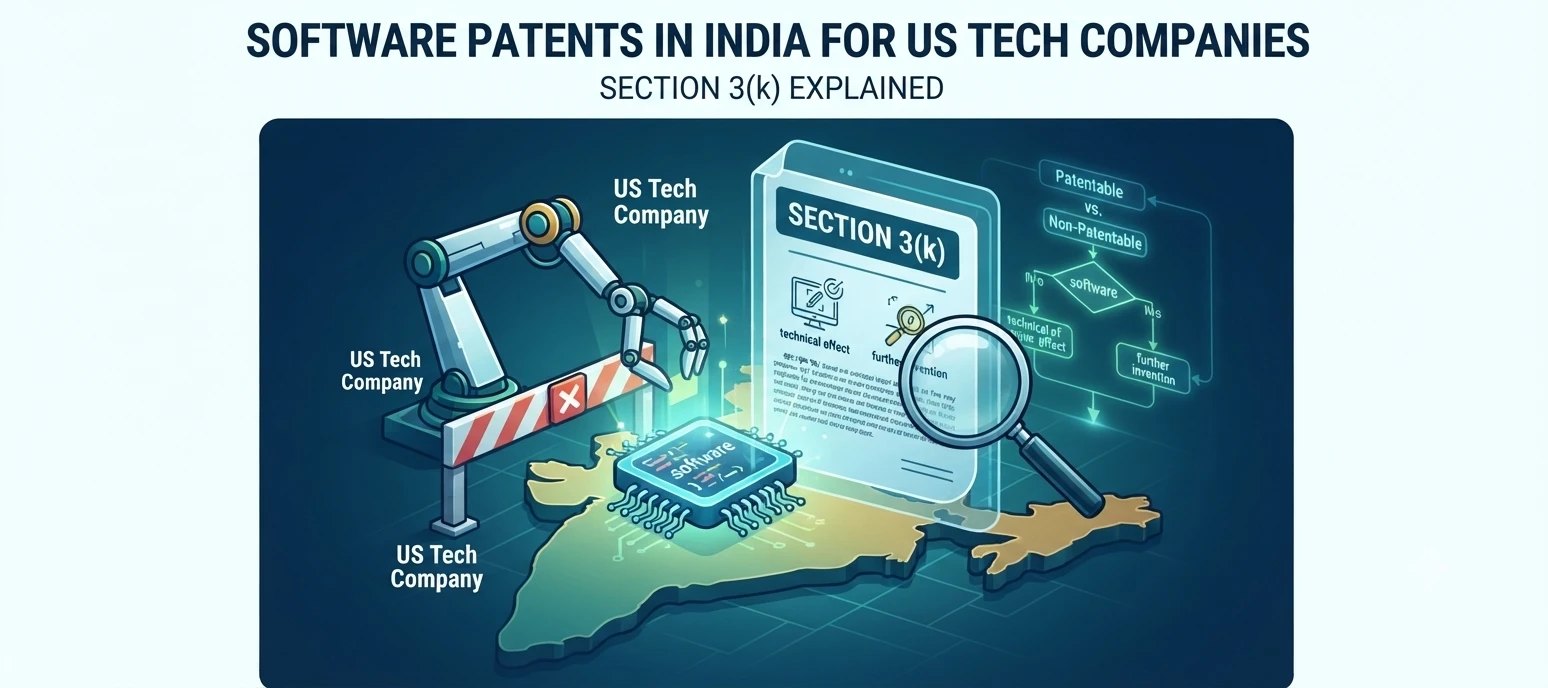
Formalities and docketing are also where patent paralegal outsourcing works best over time, because the work is continuous rather than project-based and benefits from a stable team that knows each client’s portfolio. For clients with Indian inventors, an India-based team adds another advantage. India’s Patents Act requires a resident inventor to file in India first, or obtain a foreign filing permit, before filing abroad, and breach can lead to serious consequences. An Indian team can flag that issue early, before it becomes a problem for the US filing. Our guides to patenting software in India and IP assignment in India cover related Indian rules.
Starting patent paralegal outsourcing: safeguards, remedies and quick answers
Start with a pilot in one area, for example IDS management for one client’s patent families, or a set of patentability searches. Sign a written agreement covering confidentiality, data security, export control screening for sensitive technologies, quality standards and turnaround. Keep attorney review mandatory for every deliverable that goes to a client or the USPTO.
If an error surfaces, such as a reference missed from an IDS, the remedy depends on timing. A supplemental IDS or other USPTO procedures may be available, so report problems immediately rather than hoping they go unnoticed. Export controls need US counsel’s input before technical data goes offshore.
Quick answers
What patent tasks can be outsourced to India?
Prior art searches, IDS preparation, formalities checks, docketing, assignment and declaration preparation, and portfolio audits, all under attorney supervision.
Who is responsible for the duty of candor if IDS work is outsourced?
The US practitioners and others substantively involved remain responsible. The outsourced team supports the process, but the attorney decides materiality and signs.
Can technical subject matter be exported for outsourced work?
Some technologies are subject to US export controls, so screen matters before sending technical data offshore.
Related reading: software patents in India for US tech companies; also patent deadlines under India’s 2024 patent rules and Indian patent prosecution for US firms; also filing in India after a US provisional patent; also hiring a virtual paralegal from India.
Final word
Halverton & Co. is an Indian law firm. We do not provide US legal advice or represent clients before US courts or the USPTO, and nothing in this article is an offer of services. If you have a question about the Indian side of an offshore arrangement, such as Indian law, contracts or data protection, you can write to us at office@halvertonandco.com, or get in touch. Halverton & Co.: Where tech needs law!
This article reflects developments reported up to early October 2026. It is for general information only, is not legal advice, and does not create an attorney-client relationship. Halverton & Co. is an Indian law firm and does not advise on US law.
Sources
Related practice area
Intellectual Property
Trade marks, copyright, patents and designs. Searched, filed, licensed and enforced under Indian law.
View the practice areaComments
No account needed. Comments are reviewed before they appear, so yours will show here once approved. Please do not share confidential details or describe your own legal matter: replies are general discussion, not legal advice, and do not create an advocate-client relationship. For your own situation, write to office@halvertonandco.com.