Key takeaways
- For most USPTO office actions issued on or after 3 December 2022, the response period is three months, with one three-month extension for a fee.
- Section 66(a) Madrid applications keep a six-month response period with no extension.
- Foreign-domiciled applicants must be represented by a US-licensed attorney, who should review and sign filings.
- Independent double-checking of every deadline and regular audits against USPTO records prevent missed deadlines.
In trademark practice, the most expensive mistake isn’t a weak argument. It’s a missed date. An unanswered office action or a forgotten Section 8 declaration can cost a client a registration they spent years building. That’s why docketing is the backbone of every IP practice, and why so many firms struggle to staff it well.
Trademark docketing outsourcing is one way US IP firms keep deadlines tightly managed, with work continuing while the US office is closed. This guide explains the USPTO deadlines that matter most, what an offshore docketing team actually does, the safeguards that prevent missed dates, and how to set it up. For the ethics framework, see our ABA 08-451 compliance checklist.
Why trademark docketing is worth outsourcing
Docketing is high-volume, rule-bound and unforgiving. Every incoming USPTO communication has to be read, classified, matched to the right file, and turned into calendar entries with reminders, and all of it has to be double-checked. It’s skilled work, but repetitive, and it competes for the time of paralegals and associates who could be doing higher-value work.
The tighter deadlines introduced by the Trademark Modernization Act have made docketing harder. For office actions issued on or after December 3, 2022, applicants have three months to respond, down from six. A shorter window means less slack for a docketing error to be caught before it becomes a missed deadline.
Trademark docketing outsourcing addresses this by giving your practice a dedicated team whose only job is to get dates right, often working while your US office is closed, so new office actions are docketed and reported before your attorneys start their day.
The USPTO deadlines that matter most
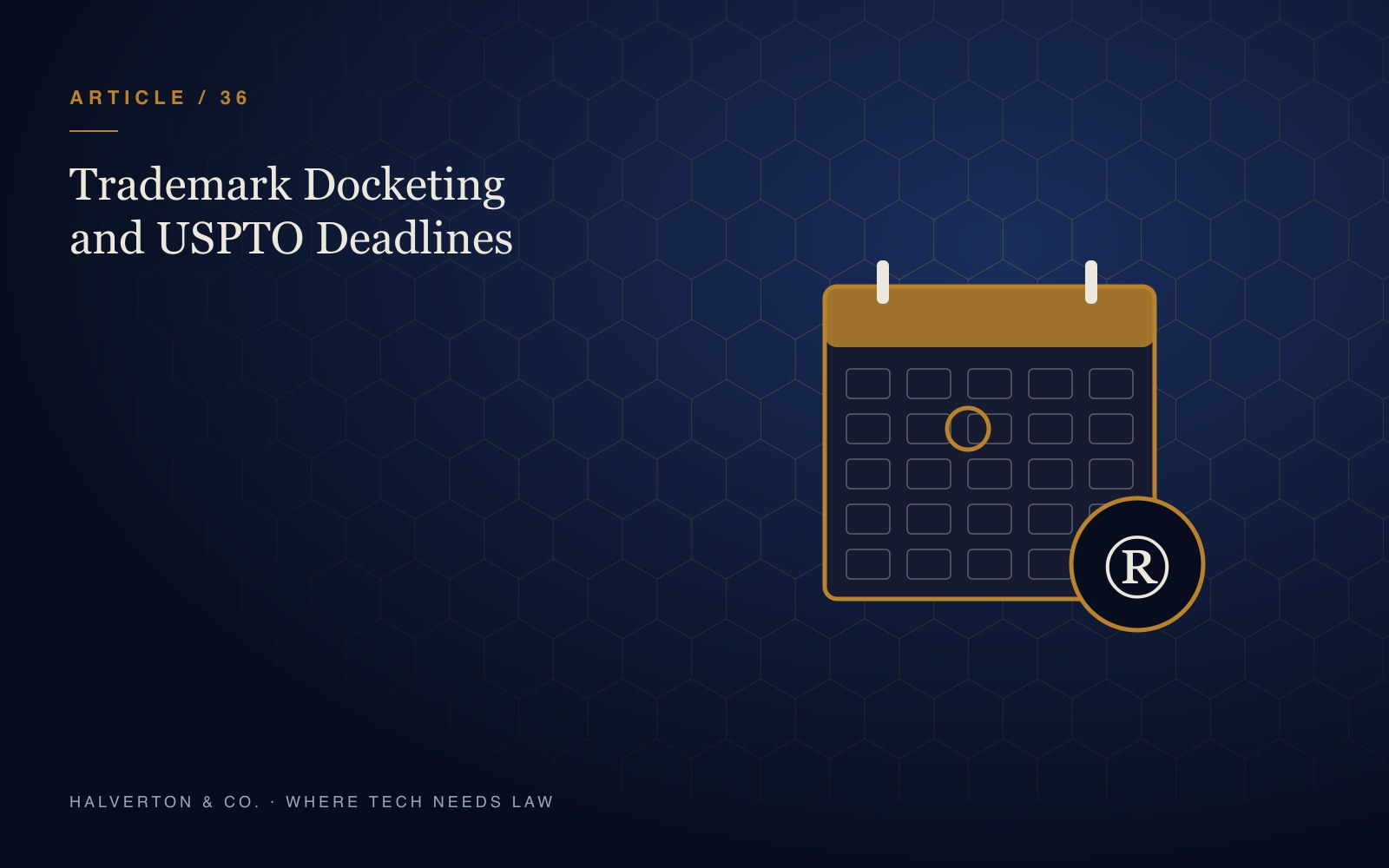
Office action responses come first. For most office actions, applicants have three months from the issue date to respond, and can request one three-month extension for a fee, which must be filed before the initial three-month period expires and before any response is filed. Only one extension can be requested for each office action, and the examining attorney has no discretion to extend the deadline. Check the USPTO’s own guidance and current fee schedule before you quote any fee.
There are exceptions that a docketing team must catch. Applications filed under Section 66(a) through the Madrid system keep a six-month response period with no extension available. Post-registration office actions moved to the three-month deadline after October 7, 2023. Applying the wrong rule to the wrong file is a classic docketing error.
Then come the maintenance deadlines: the declaration of use between the fifth and sixth years after registration, combined declarations and renewal applications every ten years, statements of use and extensions of time after a notice of allowance, and opposition and TTAB deadlines. Missing an office action deadline can cause the application to be abandoned, and missing maintenance deadlines can cancel registrations.
| Event | Deadline |
|---|---|
| Office action (most applications, issued on or after December 3, 2022) | 3 months, with one 3-month extension available for a fee |
| Office action, Section 66(a) Madrid application | 6 months, no extension |
| Post-registration office action (after October 7, 2023) | 3 months |
| Declaration of use (Section 8) | Between the 5th and 6th year after registration |
| Renewal (with combined declaration) | Every 10 years |
What an offshore trademark docketing team does
A good trademark docketing outsourcing team handles the full cycle. It monitors USPTO correspondence and TSDR status changes, reads each office action and notice, identifies the filing basis and the correct rule, calculates every deadline, and enters it into your docketing system with reminders at agreed intervals. It also reports new deadlines to the responsible attorney each day.
The team can also run regular portfolio audits, comparing your docket against USPTO records to catch missing or wrong entries, and prepare renewal and maintenance reminder letters for attorney approval. It can track international deadlines for clients with portfolios in India and other countries, and prepare draft extension requests and routine filings for attorney review and signature. For Indian filings, see our guide to trademark registration for startups in India and what a trade mark examination report is asking.
What the offshore team doesn’t do is file on the client’s behalf or decide strategy. Foreign-domiciled applicants must be represented by a qualified US-licensed attorney before the USPTO, including for extension requests, and the decision whether to respond, extend or abandon belongs to the attorney and the client.
Safeguards that prevent missed deadlines
The core safeguard in trademark docketing outsourcing is the “two-key” rule: every deadline is calculated by one person and checked independently by another before it’s final. Rule-based checklists help, for example by flagging Section 66(a) files that keep the six-month rule, and recording the basis for each calculation makes errors easy to spot.
Communication with the USPTO’s systems also needs attention: email addresses of record, correspondence settings and TSDR monitoring should all be checked during onboarding. Reporting matters as much as calculation. Daily summaries of new deadlines, weekly lists of upcoming deadlines, and escalation rules for anything due within two weeks keep attorneys informed. Regular reconciliation between your docket and the USPTO’s TSDR records catches entries that slipped through.
Training matters too. A good trademark docketing outsourcing team keeps an internal rules manual covering every USPTO deadline type, updated whenever the USPTO changes its practice, and new team members work under review until their accuracy is proven. Ask any provider to show you that manual and explain how it’s kept current.
Finally, keep control in your hands. The docketing system should be yours, with the offshore team working inside it under defined permissions, so you always have a complete record, whatever happens to the outsourcing relationship. Confidentiality and data security terms should be in a written agreement, as ABA Formal Opinion 08-451 recommends for all outsourcing relationships.
Setting up trademark docketing outsourcing: remedies and quick answers
Many firms find that the main benefit of trademark docketing outsourcing is consistency: the same process applied to every file, every day, with a clear audit trail. Start with a defined scope: new incoming correspondence for a portion of the portfolio, or a full docket audit. Run it in parallel with your existing process for a month, compare results, then expand. Agree service levels in writing (turnaround times, accuracy targets, escalation) and keep the supervising attorney’s sign-off on every final deadline.
If a deadline is missed despite the safeguards, check immediately whether a petition to revive or other remedy is available under USPTO rules. Fast action often saves the right, which is one more reason daily reporting matters. The same approach to supervision applies to patent work; see our guide to patent paralegal outsourcing.
Quick answers
How long do I have to respond to a USPTO trademark office action?
For most office actions issued on or after December 3, 2022, three months, with one three-month extension available for a fee. Section 66(a) Madrid applications keep a six-month period with no extension.
Can an offshore team file trademark documents with the USPTO?
They can prepare filings, but foreign-domiciled applicants must be represented by a US-licensed attorney, who should review and sign.
What is the biggest docketing risk?
Applying the wrong deadline rule to a file. Independent double-checking and regular audits against USPTO records are the best protection.
Related reading: registering a US trademark in India, trademark squatting in India and choosing an offshore legal support partner; also trade mark renewals and watching for UK IP firms; also Indian patent prosecution for US firms; also hiring a virtual paralegal from India.
Final word
Halverton & Co. is an Indian law firm. We do not provide US legal advice or represent clients before US courts or the USPTO, and nothing in this article is an offer of services. If you have a question about the Indian side of an offshore arrangement, such as Indian law, contracts or data protection, you can write to us at office@halvertonandco.com, or get in touch. Halverton & Co.: Where tech needs law!
This article reflects developments reported up to early October 2026. It is for general information only, is not legal advice, and does not create an attorney-client relationship. Halverton & Co. is an Indian law firm and does not advise on US law.
Related practice area
Intellectual Property
Trade marks, copyright, patents and designs. Searched, filed, licensed and enforced under Indian law.
View the practice areaComments
No account needed. Comments are reviewed before they appear, so yours will show here once approved. Please do not share confidential details or describe your own legal matter: replies are general discussion, not legal advice, and do not create an advocate-client relationship. For your own situation, write to office@halvertonandco.com.