Key takeaways
- A US provisional can support a Paris Convention priority claim for twelve months, and India is a member of the Paris Convention and the PCT.
- Under the PCT route, Indian national phase entry is due within 31 months from the priority date, deferring Indian cost.
- Section 8 requires Form 3 on foreign filings, and Section 39 can apply where inventors live in India.
- A missed twelve-month priority date cannot be repaired, so calendar it on day one.
A US startup files a provisional patent application to hold a date, and twelve months later it must decide where to go next. If India is on the list, the question is how to file patent in India after US provisional filing, and whether to use the Paris Convention route or the PCT. The two routes have different deadlines, costs and risks, and a missed date cannot be repaired.
This guide explains how to file patent in India after US provisional filing: the priority rules, the direct Paris Convention route, the PCT national phase route, the documents and forms Indian practice requires, the traps that catch US teams with Indian developers and a simple way to decide. It is a general guide, not advice on a specific invention, and US patent points belong to US counsel.
How priority from a US provisional works
A US provisional application can serve as the basic application for a claim of priority under the Paris Convention. The priority period is twelve months from the filing date of the provisional. If you file within that period in a Paris Convention country, or file a PCT application, you can ask that your later application be treated as filed on the provisional’s date for the purpose of judging novelty and inventive step against prior art published in between.
India is a member of the Paris Convention and the Patent Cooperation Treaty. Section 135 of the Patents Act, 1970 and the related Rules provide for convention applications and priority claims. The twelve-month deadline is firm. If you miss it, the provisional’s date cannot be used in India, and your own publication or sales in the meantime can become prior art against you.
This is why the question of how to file patent in India after US provisional filing should be settled well before month twelve. The provisional itself must also be adequate: it must describe the invention in enough detail to support the claims in the later application, because priority only covers what the provisional actually discloses.
| Feature | Direct Paris route | PCT route |
|---|---|---|
| Deadline to act | 12 months from the provisional | File the PCT within 12 months; enter India within 31 months from priority |
| Cost timing | Indian costs start early | Indian costs are deferred |
| Search report | None before deciding on India | International search report and written opinion first |
| Best for | India is one of a few target countries | Many countries or still deciding |
Route one: direct filing under the Paris Convention
Under the direct route, you file an Indian application within twelve months of the provisional, claiming its priority. Many companies choose this route when India is one of only a few target countries, or when they want an Indian patent sooner. The application is filed with the Indian Patent Office on Form 1 with a complete specification on Form 2, and a priority claim, and the process runs from there.
Filing at month twelve starts the Indian clock early. The patent term is twenty years from the filing date in India, and the request for examination deadline begins running. Reports of the Patents (Amendment) Rules, 2024 say the period to request examination is now 31 months, counted from the priority date or the earlier of filing and priority in different readings, so check the Gazette text for your case. Costs are incurred earlier than under the PCT route.
The direct route leaves less time to see how the US application is going. There is also no international search report to inform the decision. For a company that already knows India is a priority market and has a strong invention, how to file patent in India after US provisional filing can be answered simply: file directly within twelve months.
Do not forget Indian filing formalities that depend on the applicant’s status. A foreign applicant needs an address for service in India, and an Indian patent agent or advocate files on its behalf. Translations are not usually needed for English documents, but a priority document in another language must be translated. A US company that has already filed the provisional can usually have the Indian filing prepared from the US specification, adapted for Section 3(k) and Section 3(d), which is why starting the Indian review in month six or seven of the priority year is sensible.
Route two: the PCT and national phase entry
Under the PCT route, you file an international application within twelve months of the provisional, claiming its priority. The international phase produces a search report and written opinion. You then enter the national phase in each country you choose. For India, national phase entry is due within 31 months from the priority date, which gives you about 19 months more than the Paris deadline to decide whether India is worth the cost.
This deferral is the main benefit. It lets a US startup test the invention against the search report, raise funding and observe the market before paying for Indian filing. In the national phase, the Indian application is treated as filed on the international filing date, and the patent term is counted from that date. Requests for examination follow the Indian time limits.
The cost is that the PCT is an extra step with its own fees, and a PCT filing does not itself produce any patent. Companies filing in many countries usually choose the PCT. Companies targeting only the US and India sometimes find that a direct Indian filing is cheaper. When you decide how to file patent in India after US provisional filing, compare total cost over the whole period, not only the first year.
Forms, documents and Indian-law traps
Indian practice requires several documents. Besides Form 1 and the specification, expect Form 3, the statement and undertaking about foreign filings under Section 8, which must be filed within six months of the Indian filing and updated until grant. You will need a power of attorney on Form 26 if an agent files, an inventorship declaration, proof of right to apply and, for the priority claim, a copy of the provisional and the details the Rules require. Check the Patents Rules for the current form of the priority document and the time to file it. Our guide on Indian patent prosecution for US firms covers Section 8 and Form 27 working statements.
The trap that catches US teams most often is Section 39. An Indian resident cannot file a patent application outside India without first filing in India, or getting written permission from the Controller, and must wait six weeks after filing in India. If an inventor lives in India and the provisional was filed in the US first, there may already be a Section 39 problem. Fix it before filing further, and take advice, because penalties can include loss of the patent.
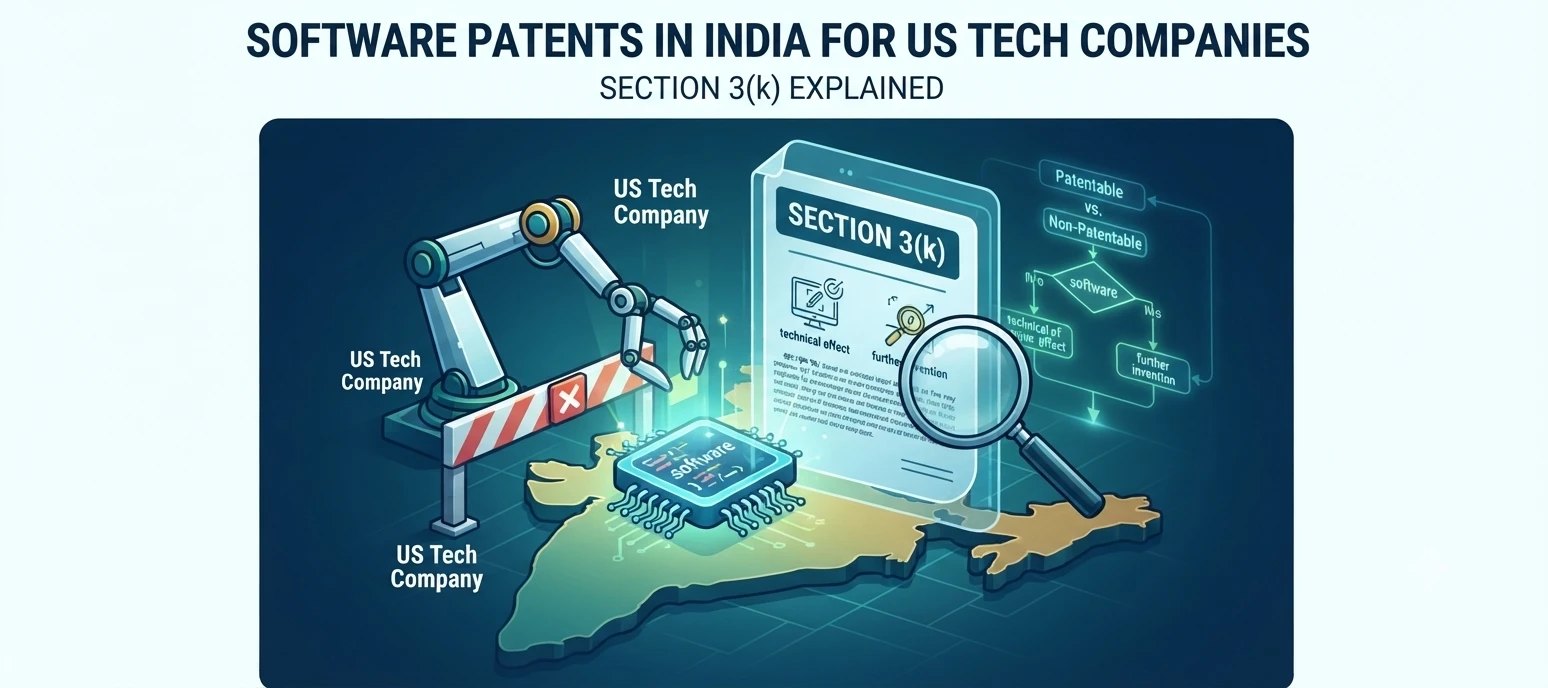
Other points are substantive. Section 3(k) excludes computer programmes per se and business methods, and Section 3(d) restricts new forms of known substances. A claim set that works in the US may need redrafting for India. Reduced fees apply to startups, small entities and natural persons, and expedited examination is available for startups and small entities, so check eligibility before filing.
Choosing a route, remedies and quick answers
Use a simple test. If India is one of one to three countries and you are ready to commit, file directly within twelve months. If you are unsure about markets, funding or the strength of the invention, or you plan to file in many countries, use the PCT and enter India at 31 months. Either way, calendar the dates on day one, confirm inventor residence and Section 39, check that the provisional supports the claims and instruct an Indian agent in good time. If a deadline is missed, options are limited: Indian law allows some extensions for procedural steps but not for priority, so the outcome of how to file patent in India after US provisional filing may be a new application without priority. Reduce risk by avoiding public disclosure before filing, keeping the same inventors and owners on the later application and filing assignments promptly. Review the plan again after any US office action, since amendments in the US may affect what you can claim in India.
Related reading: Indian patent prosecution for US firms: Form 3 and Form 27, patent deadlines under India’s 2024 patent rules, software patents in India for US tech companies, can you patent software in India? Section 3(k), design registration in India for US companies, patent paralegal support from India and who owns code written by Indian developers; also USPTO’s DesignVision design search tool and whether you can patent AI; also patent filing costs for Indian startups; also how to file a patent in India; also the USPTO rule on US counsel for foreign applicants.
Quick answers
How long do I have to file patent in India after a US provisional?
Twelve months from the provisional’s filing date if you file directly in India under the Paris Convention or file a PCT application. If you use the PCT, Indian national phase entry is due within 31 months from the priority date.
Is the PCT route better than filing directly in India?
The PCT defers the cost and gives you a search report, so it suits companies filing in many countries or still deciding. Direct filing suits companies sure about India. Compare total cost and timing for your case.
Does Section 39 apply to a US company?
Section 39 applies to inventions by Indian residents. A US company with inventors who live in India must file in India first or obtain permission before filing abroad, so check inventor residence before filing the US provisional.
When is the Indian request for examination due?
Reports of the Patents (Amendment) Rules, 2024 say 31 months, but sources differ on whether it runs from the priority date or from the earlier of filing and priority. Check the Gazette text for your case.
What if an inventor lives in India?
Section 39 may require an Indian filing or written permission before filing abroad, with a wait of six weeks. Check inventor residence before filing the US provisional.
Final word
Halverton & Co. is an Indian law firm advising US companies, founders, investors and law firms on Indian law, including Indian patent filing and prosecution, Section 8 and Section 39 compliance and IP strategy for US technology companies. We practise in Jharkhand, Maharashtra and before the Supreme Court of India, and work alongside US counsel, who advise on US law. Halverton & Co.: Where tech needs law! If you have a question about Indian law, write to us at office@halvertonandco.com, or get in touch.
This article reflects developments reported up to late October 2026. It is for general information only, is not legal advice, and does not create an attorney-client relationship. Halverton & Co. is an Indian law firm and does not advise on US law; US-law points should be confirmed with US counsel.
Sources
Related practice area
Intellectual Property
Trade marks, copyright, patents and designs. Searched, filed, licensed and enforced under Indian law.
View the practice areaComments
No account needed. Comments are reviewed before they appear, so yours will show here once approved. Please do not share confidential details or describe your own legal matter: replies are general discussion, not legal advice, and do not create an advocate-client relationship. For your own situation, write to office@halvertonandco.com.