Key takeaways
- Leaver clauses link equity to service: good leavers usually keep value, bad leavers forfeit or sell at a discount.
- Define cause clearly, set a neutral valuation method and align the ESOP plan and the articles.
- Section 27 of the Contract Act limits post-employment non-competes and Section 74 limits penalties.
- Foreign investors raise FEMA pricing and reporting points for share transfers.
Good leaver bad leaver India clauses decide what happens to a founder’s or employee’s shares when they leave a startup. They are among the most negotiated terms in a shareholders’ agreement, because they link equity to continued service and decide whether a departing founder keeps shares, sells them at a discount or loses them. A poorly drafted clause can lead to disputes just when the company is most vulnerable.
This guide explains how leaver provisions shareholders agreement India investors use are structured, how good and bad leavers are defined, how shares are valued, and what Indian law says about enforceability. It is general information, not legal advice. Terms differ by deal, so read your own documents and take advice before you sign or enforce. Good leaver bad leaver India terms should be read together with vesting and the articles.
What leaver clauses do
A leaver clause gives the company, the investors or the remaining founders a right to buy back or acquire the shares of someone who stops working for the company. The aim is to protect the business from a situation where a co-founder walks away after a few months but still holds a large share of the equity. Investors usually insist on such terms. Good leaver bad leaver India provisions are usually negotiated at the term sheet stage.
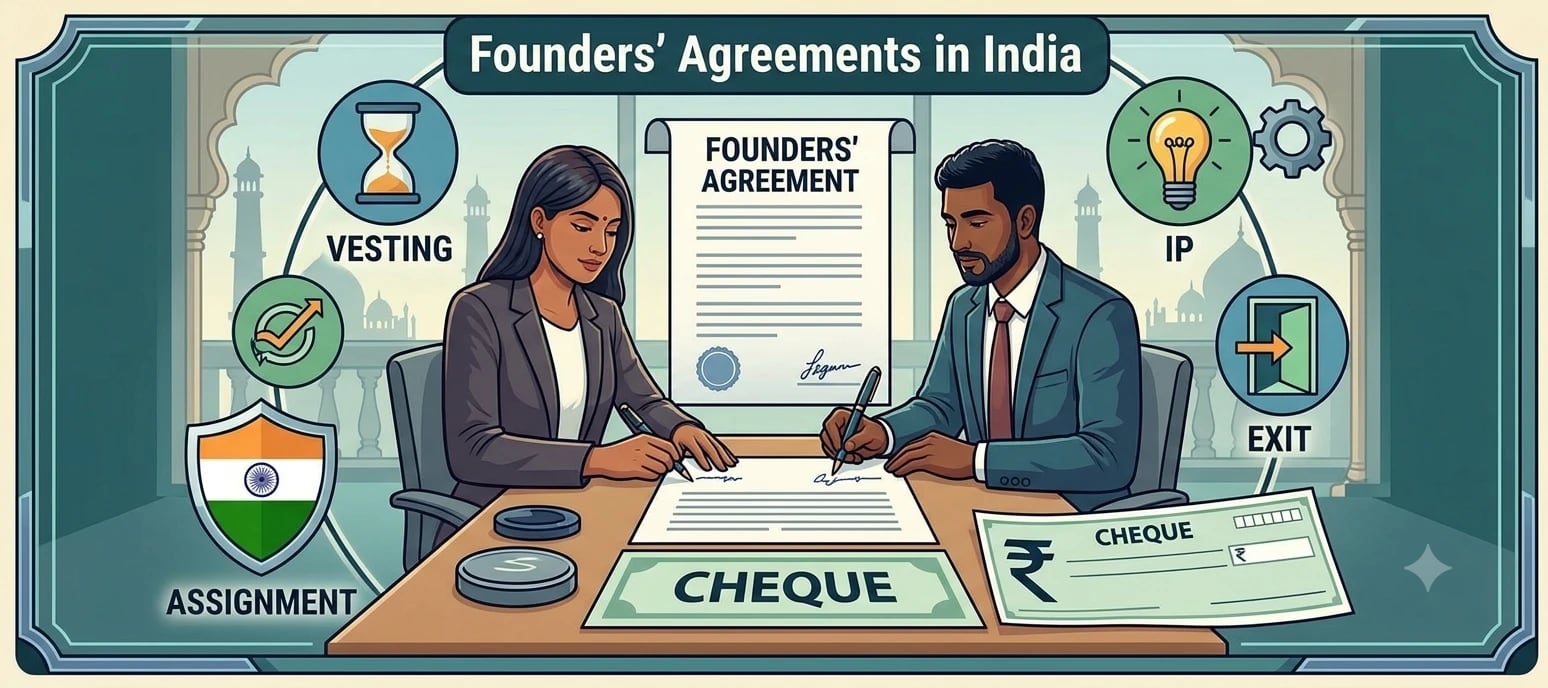
The clause normally sits in the shareholders’ agreement or the articles of association, and works with a vesting schedule. Under founder vesting and cliff India term sheets use, a founder earns shares over time, often over four years with a one-year cliff, and the company can reclaim unvested shares if the founder leaves. The leaver clause then addresses what happens to the vested shares too.
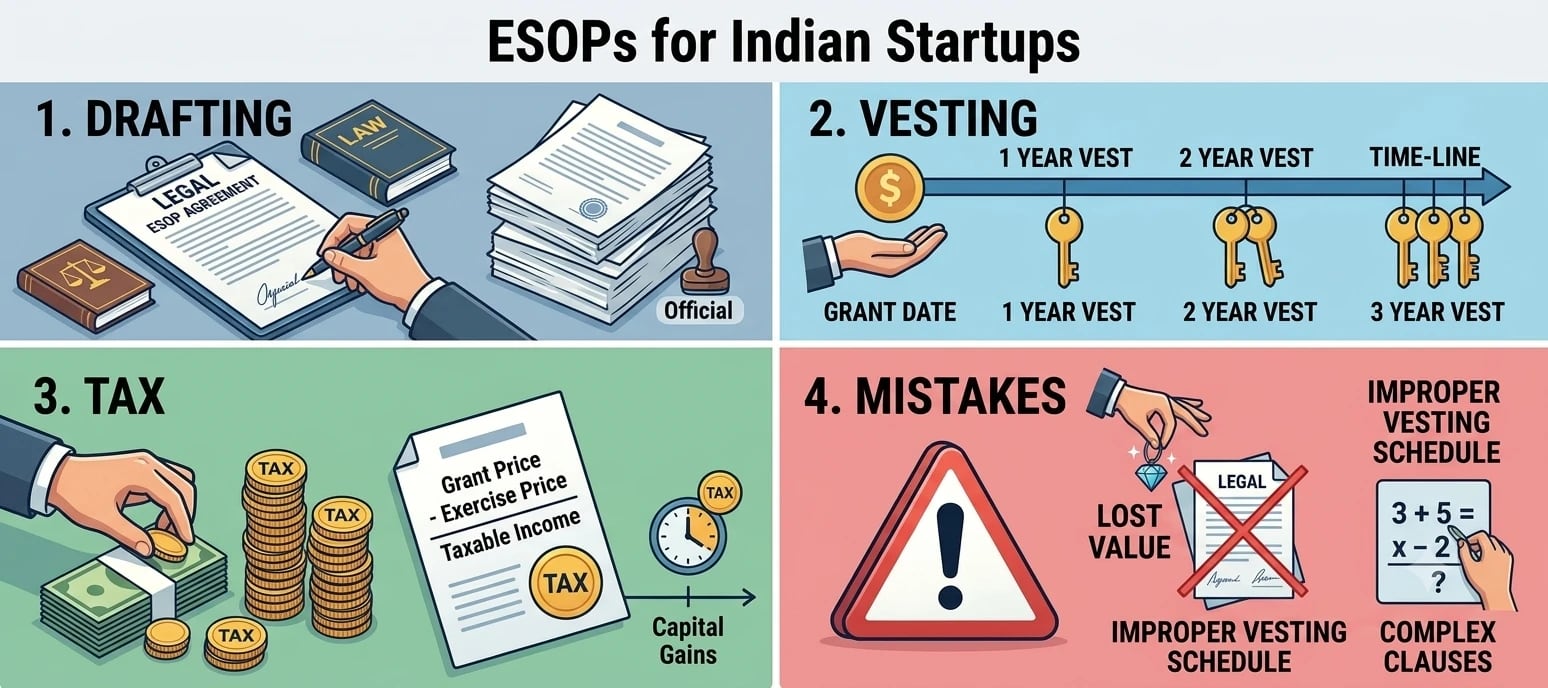
Employees receive similar treatment under ESOP plans. ESOP leaver terms Indian startup plans contain say whether vested options can be exercised after resignation, within what period and at what price, and what happens on termination for cause. Align the ESOP plan and the shareholders’ agreement so that they do not contradict each other.
Good leaver and bad leaver definitions
A good leaver is typically someone who leaves for reasons that are not their fault, such as death, permanent disability, retirement, termination without cause, or in some deals resignation after a lock-in period. A good leaver usually keeps vested shares and may be paid fair market value if the shares are bought back. Some deals add an intermediate category for those who leave early without fault.
A bad leaver is typically someone who is dismissed for cause, commits fraud or breach, resigns within the lock-in period or competes with the business. Bad leaver forfeiture of vested shares or a sale at a discount, such as the lower of cost and fair market value, is common in term sheets. The definition of cause is crucial, so insist on clear grounds, notice and a chance to cure.
Negotiation points include who decides whether someone is a bad leaver, what evidence is needed and how disputes are resolved. Founders often ask for a neutral determination, an expert or an arbitrator. Make sure that the clause does not allow investors to label a founder as a bad leaver for commercial disagreements. Good leaver bad leaver India definitions that leave ’cause’ vague often end in arbitration.
Valuation, vesting and mechanics
Valuation drives the economics. Fair market value is often determined by an independent valuer, with a discount for bad leavers, say 30% to 100% off, as negotiated. The method, timing, appointment of the valuer and whether minority and illiquidity discounts apply should be written down. Vague wording invites litigation.
| Term | Good leaver | Bad leaver |
|---|---|---|
| Typical triggers | Death, disability, termination without cause | Fraud, breach, early resignation, competing |
| Vested shares | Usually kept or bought at fair value | Forfeited or sold at a discount |
| Unvested shares | Lapse or buy back | Lapse or buy back |
| Valuation | Independent fair value | Lower of cost and fair value |
Mechanics matter. The clause should state whether the buyback is a call option exercisable by the company, investors or other founders, the period for exercise, the payment terms and the effect on voting and information rights during the process. Consider tax, stamp duty and company law steps such as buyback or transfer procedures, and approvals needed.
Cross-border investors raise FEMA points. A transfer between a resident and a non-resident, or a buyback from a non-resident shareholder, must follow pricing and reporting rules under the foreign exchange regulations. Check the current rules and file the required forms. Private companies also have restrictions on share transfers in their articles, so make sure the articles reflect the leaver provisions.
Enforceability under Indian law
Indian courts enforce commercial arrangements, but they test them against statute. Section 27 of the Indian Contract Act, 1872 makes agreements in restraint of trade void, so post-employment non-competes are generally unenforceable, though restrictions during employment and some restrictions linked to sale of goodwill are accepted. The Section 27 Contract Act restraint of trade limit means a leaver clause should not be disguised as a non-compete. Good leaver bad leaver India clauses are tested against the Contract Act when someone challenges them.
Section 74 of the Contract Act deals with liquidated damages and penalties. A forfeiture of shares that looks like a penalty out of proportion to any loss may be challenged. Courts have enforced buyback and call options where terms are clear and reasonable, but there is no guarantee. Drafting should link the discount to legitimate interests such as protecting the company from a departing founder.
Company law adds layers. A private company can restrict transfers through its articles under Section 58 of the Companies Act, 2013, and the leaver provisions should be in the articles to bind the company. Buybacks must comply with the Act. Disputes are often decided by arbitration, so choose seat and rules carefully. Take legal advice before you rely on the clause.
Next steps and quick answers
Before you sign, define good and bad leaver clearly, agree the valuation method, align vesting and ESOP terms, and put the provisions in the articles. This is general information, not legal advice. Revisit good leaver bad leaver India terms when the company raises a new round.
Related reading: ESOPs for startups in India, founders’ agreements in India, RSUs, SARs and phantom stock in India, SAFE and convertible notes in India, stock options for Indian employees of a US startup and Web3 regulations in India; also ESOPs at a Dubai startup for Indian employees; also shareholders agreement clauses in India; also a founder-owned trademark licensed to the company and seed-round due diligence in India.
Quick answers
What is the difference between a good leaver and a bad leaver?
A good leaver leaves for reasons not their fault and usually keeps vested shares at fair value. A bad leaver leaves for cause or breach and may forfeit shares or sell at a discount.
Are leaver clauses enforceable in India?
Often yes if clear and reasonable, but Sections 27 and 74 of the Contract Act, company law and FEMA can limit them.
Do leaver clauses apply to ESOPs?
ESOP plans have their own leaver terms on vesting, exercise and lapse, which should be consistent with the shareholders’ agreement.
Are leaver clauses enforceable in India?
Often yes if clear and reasonable, but contract, company law and FEMA rules can limit them.
Final word
Halverton & Co. is an Indian law firm advising founders, startups, technology companies and investors on Indian law, including startup shareholder agreements, founder equity and ESOP structuring in India. We practise in Jharkhand, Maharashtra and before the Supreme Court of India, and act as fractional legal counsel for technology-driven businesses. Halverton & Co.: Where tech needs law! If you have a question about Indian law, write to us at office@halvertonandco.com, or get in touch.
This article reflects developments reported up to 31 October 2026. It is for general information only, is not legal advice, and does not create an advocate-client relationship. Halverton & Co. is an Indian law firm.
Related practice area
Startups & Venture
From incorporation to term sheet. The documents a company needs to be fundable.
View the practice areaComments
No account needed. Comments are reviewed before they appear, so yours will show here once approved. Please do not share confidential details or describe your own legal matter: replies are general discussion, not legal advice, and do not create an advocate-client relationship. For your own situation, write to office@halvertonandco.com.