Key takeaways
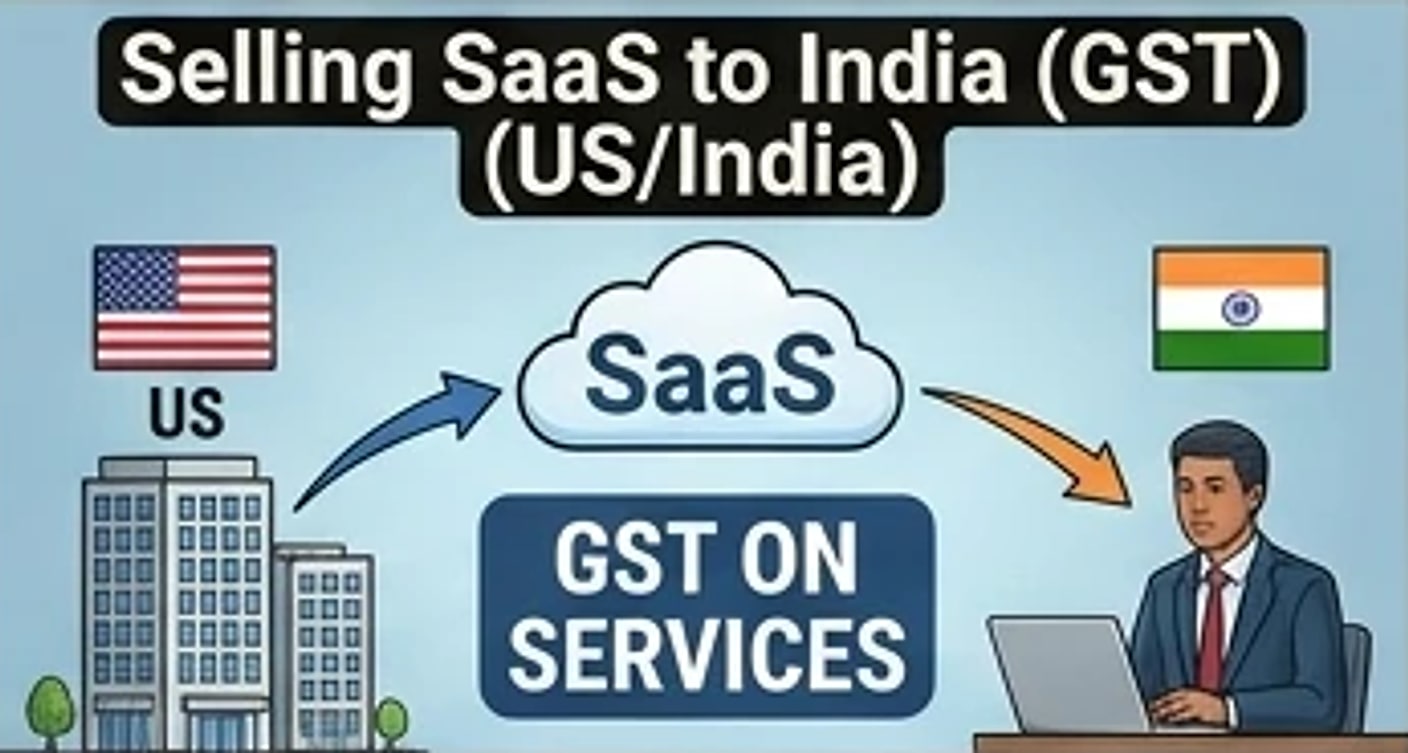
- OIDAR rules treat SaaS as an online service, and the place of supply is India when the recipient is in India.
- For GST-registered business customers, the Indian buyer generally pays under reverse charge.
- For consumers, a foreign supplier generally registers under the simplified scheme and files GSTR-5A.
- Withholding tax and permanent establishment questions are separate and need their own review.
Selling subscriptions to customers in India raises a question most US software founders meet late: do you need to register for GST? The answer depends on who your customers are. For GST on SaaS India US company sellers face, the line runs between business customers who are registered for GST, where the Indian buyer generally pays the tax under reverse charge, and consumers or unregistered users, where the foreign supplier may have to register and pay. GST on SaaS India US company sellers face is mostly a question of customer type.
This guide explains the OIDAR rules in plain terms, the simplified registration scheme, how B2B and B2C sales differ, and practical points on invoicing and tax on payments. It is general information, not tax advice. Rates, thresholds and notifications change, so confirm the current rules on the GST portal and with an Indian tax adviser. US tax issues need US advisers.
What OIDAR means
India’s GST law treats many digital services as OIDAR, short for online information database access and retrieval. SaaS, streaming, cloud storage, online platforms and downloadable content are commonly covered, depending on how the definition is applied, since Finance Act amendments widened or clarified it in 2023. OIDAR services GST registration rules apply to suppliers located outside India that supply to recipients in India.
The place of supply for OIDAR services to recipients in India is India, so the supply is taxable in India under IGST. The place of supply online services India rules look at the location of the recipient, using evidence such as billing address, IP address and payment details. The rate on most OIDAR services is reported as 18%, but confirm the rate for your service.
The key distinction is the type of recipient. The law uses the term non-taxable online recipient for a person, such as a consumer or an unregistered entity, who receives OIDAR services in India and is not registered for GST. The obligations of the foreign supplier depend on whether the customer is such a recipient or a registered business. GST on SaaS India US company rules turn on whether the buyer is a registered business.
B2B sales and reverse charge
Where the Indian customer is a GST-registered business, secondary sources say that the Indian recipient generally pays IGST under reverse charge, and the foreign supplier need not register for that stream. The reverse charge GST B2B SaaS India customers apply means that the invoice should not add GST, and the customer self-assesses and, if eligible, claims input tax credit. Customers will ask for a valid invoice showing their GSTIN.
| Customer | Who pays GST | Supplier action |
|---|---|---|
| GST-registered Indian business | Customer, under reverse charge | Collect and validate the GSTIN |
| Unregistered consumer | Supplier, through registration | Register and file GSTR-5A |
| Mixed customers | Depends on the stream | Separate billing |
Document the status of each customer. Collect and validate GSTINs, store them with the account and have terms that state the customer is responsible for GST under reverse charge. If a customer is not registered, treat it as B2C. Mixed models need clean separation in billing so that the right regime applies to each stream.
Practical checks include confirming that the service is covered by the reverse charge rule in the notifications, handling customers that are government entities or special categories and checking whether bundling changes the treatment. A GST adviser can confirm the position for your product. Keep records for audit.
B2C sales and registration
For sales to unregistered Indian users, the foreign supplier is generally required to register under the simplified registration scheme, charge IGST, file monthly returns and pay the tax in foreign currency. Sources differ on whether any turnover threshold applies, and several advisers say that there is none for a non-resident OIDAR supplier, so assume registration is required from the first taxable sale unless advised otherwise. GST on SaaS India US company exposure grows when consumer sales rise.
The monthly return is GSTR-5A, which reports taxable OIDAR supplies to non-taxable online recipients. The simplified registration scheme GSTR-5A process requires an Indian-resident representative in some cases and an authorised person to file. Check the current requirements, deadlines and payment methods on the GST portal.
Registration brings compliance costs, so some founders limit sales to business customers, use a reseller or marketplace that handles tax, or price tax into consumer plans. Make a deliberate choice based on volume, margin and customer mix. Do not ignore the issue, since tax authorities can assess and penalise unregistered suppliers.
Invoicing and other taxes
Invoices to Indian customers should show the customer’s name, address and GSTIN where applicable, the description of service, amount, currency and tax treatment. For B2C sales with GST, display tax separately. Keep payment records. Some Indian customers may need e-invoice details or specific formats, and their accounting teams will ask for them.
Other taxes may arise. Payments by Indian customers to a foreign software provider may raise withholding tax questions under Section 195 of the Income-tax Act. After the Supreme Court’s Engineering Analysis decision in 2021, payments for software are generally not treated as royalties under many treaties, but the facts and the treaty matter. Customers may ask for a tax residency certificate and a self-declaration.
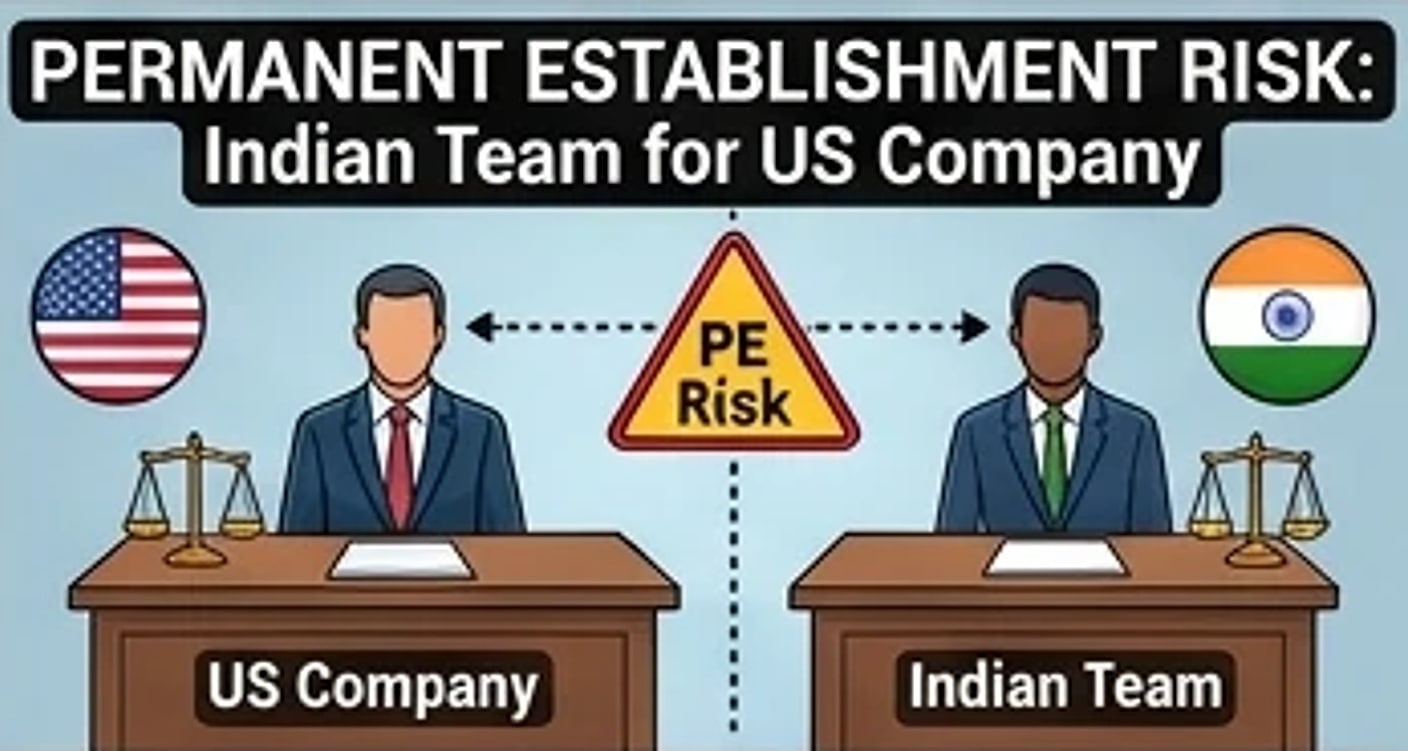
The equalisation levy has changed over time, and digital advertising levy provisions were withdrawn in 2025, according to reports, so check what remains in force. Also consider a permanent establishment risk if you have staff or agents in India. US federal and state taxes are separate and need US advice. Withholding is separate from GST on SaaS India US company contracts, so review both.
Next steps and quick answers
Classify your customers, decide whether you will register, set up invoicing, check withholding questions and take Indian tax advice. This is general information, not tax or legal advice, and Halverton & Co. does not advise on US tax. Review GST on SaaS India US company exposure whenever you add a plan for Indian consumers.
Related reading: selling SaaS in India from the UK, SaaS terms for Indian users, licensing US software in India: withholding tax, the DPDP Act for US SaaS companies, permanent establishment risk for Indian teams and paying contractors in India with USDC; also SaaS agreements with Indian customers and UAE e-invoicing in 2026; also auto-renewal laws for SaaS in the US and SaaS terms for Indian customers from the UK.
Quick answers
Do US SaaS companies need to register for GST in India?
Generally for B2C sales to unregistered Indian users, yes under the OIDAR simplified scheme. For sales to GST-registered businesses, the Indian buyer usually pays under reverse charge. Confirm with an adviser.
What is GSTR-5A?
It is the monthly return filed by non-resident OIDAR suppliers who are registered under the simplified scheme to report supplies to non-taxable online recipients.
What is the GST rate on SaaS?
Sources report 18% IGST for most OIDAR services. Verify current rates.
Is the GST rate on SaaS 18%?
Sources report 18% for most OIDAR services, but verify the rate for your service.
Final word
Halverton & Co. is an Indian law firm advising US companies, founders, investors and law firms on Indian law, including Indian tax, GST and contract questions for US technology companies selling into India. We practise in Jharkhand, Maharashtra and before the Supreme Court of India, and work alongside US counsel, who advise on US law. Halverton & Co.: Where tech needs law! If you have a question about Indian law, write to us at office@halvertonandco.com, or get in touch.
This article reflects developments reported up to 31 October 2026. It is for general information only, is not legal advice, and does not create an attorney-client relationship. Halverton & Co. is an Indian law firm and does not advise on US law; US-law points should be confirmed with US counsel.
Sources
Related practice area
Startups & Venture
From incorporation to term sheet. The documents a company needs to be fundable.
View the practice areaComments
No account needed. Comments are reviewed before they appear, so yours will show here once approved. Please do not share confidential details or describe your own legal matter: replies are general discussion, not legal advice, and do not create an advocate-client relationship. For your own situation, write to office@halvertonandco.com.