Key takeaways
- Official patent fees are lower for natural persons, recognised startups and small entities, with startups described as getting an 80% rebate against large entities.
- Reported Form 1 e-filing fees are ₹1,600 for startups and small entities and ₹8,000 for others; check the current schedule.
- A request for examination, extra pages and claims and annual renewal fees add to the cost.
- Professional fees for drafting and prosecution are usually the largest cost, so ask for staged quotes.
Cost is the first question most founders ask about patents. The patent filing cost India startup applicants face is made of official fees, which are lower for recognised startups, and professional fees for drafting and prosecution, which are usually larger. Knowing which fees are fixed by the Patent Rules and which depend on your attorney helps you plan, and a few steps, such as claiming startup status correctly, can cut the official cost sharply.
This guide explains the fee categories, how startups and small entities pay less, the main forms and when each fee falls due, what provisional filings cost, annual renewal fees and a sample budget. Fee figures come from secondary sources and change with amendments, so check the Patents Rules and IP India’s fee schedule before you pay. This is general information, not legal advice.
Who pays lower fees
India’s patent fees depend on the type of applicant. The Patents Rules set different fees for natural persons, recognised startups, small entities, educational institutions and others, which are usually larger entities. Since the 2020 amendments, small entities pay the same official fee as natural persons and startups, which is much lower than the fee for other applicants. Startups also benefit from an 80% rebate on fees relative to large entities, according to the rules as summarised by practitioners. This is why patent filing cost India startup budgets differ from those of large companies. The 80% rebate on patent fees applies only to eligible applicants.
To claim the lower fee, you must qualify and document it. A startup needs recognition by the Department for Promotion of Industry and Internal Trade, and a small entity needs a certificate showing its status, such as an enterprise registration under the Micro, Small and Medium Enterprises law. The applicant must file Form 28 with each document for which a fee is specified, to show its status. Missing Form 28 can mean the full rate is charged. Form 28 for startups is the form that proves your status.
Check that the applicant is the right entity. If a founder files as an individual and a company later takes over, fee status and ownership need to be consistent. If a startup is not yet recognised, apply for recognition before filing if you can. Note that recognition rules changed in 2026, with a new deep tech category and longer periods, which may help some companies keep their status for longer.
The main official fees
The first fee is for filing the application on Form 1 together with the specification. Sources report the e-filing fee for a natural person, startup, small entity or educational institution at ₹1,600, against ₹8,000 for other entities. That is the figure most often quoted for the patent filing fee India startup applicants pay, but you should confirm it against the current schedule, because amendments and different filing modes change the numbers. Plan the patent filing cost India startup teams face stage by stage.
| Applicant | Form 1 filing fee as reported | Note |
|---|---|---|
| Natural person, startup, small entity, educational institution | ₹1,600 | Form 28 needed |
| Other entities | ₹8,000 | Per the secondary sources |
| Request for examination (Form 18) | Varies by applicant | Check the schedule |
| Annual renewal | From the third year, rising | Lower for startups and small entities |
Additional fees apply for longer applications. The Rules charge extra fees for specifications with more than a set number of pages and for claims above a set number, for each additional page or claim, with lower amounts for startups and small entities. If you are drafting, keep the specification focused and the claims to the number you need. Other forms may be needed, such as the form for a declaration of inventorship and the form for foreign filing details, usually without a separate fee.
If you want early publication of your application, you can request it by filing a form with its own fee, and publication otherwise occurs after eighteen months from the priority date. If you claim priority from an earlier application, the dates matter. Check which forms are needed in your case, since a missing or late form can cost more than the fee itself. A patent attorney should provide a list with the amounts.
Provisional, complete and examination costs
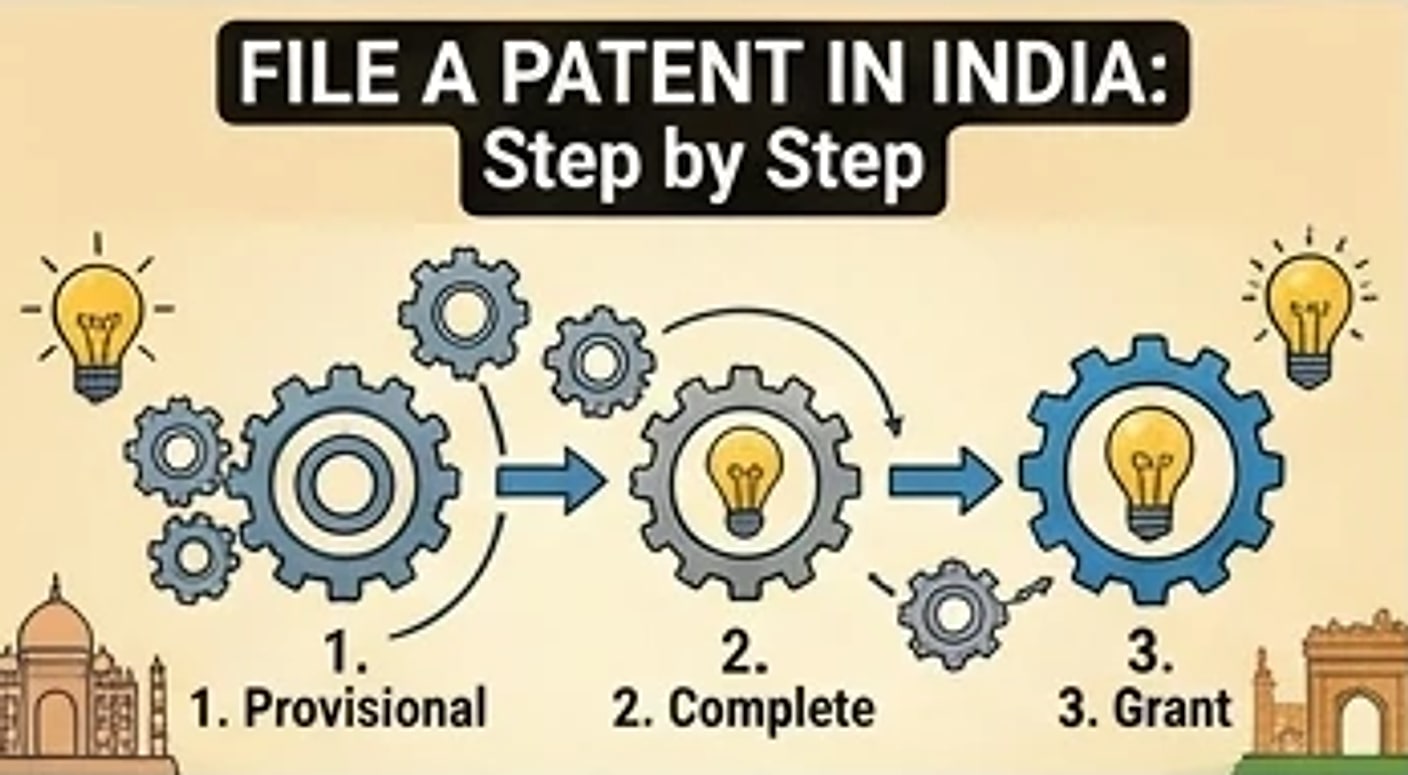
A provisional specification secures a filing date while you refine the invention. It is filed on Form 1 with Form 2 as a provisional specification, with the same filing fee in principle, and you must file the complete specification within twelve months. The provisional vs complete specification fee India applicants pay depends on the applicant category and the forms used. A provisional filing keeps early costs down and gives you time to raise funds or test the market.
The complete specification is where costs rise. It must be drafted with claims, and the attorney’s drafting fee is often the largest single cost. After filing, examination does not start automatically. You must file a request for examination on Form 18, within the time allowed, with a fee that differs by applicant type. Startups can request expedited examination, which shortens the time to a first examination report, with a separate form and fee. Check the schedule for the amounts. Drafting is the biggest part of the patent filing cost India startup founders see.
Prosecution costs depend on objections. The Patent Office issues a first examination report with objections, and your attorney replies, possibly through several rounds and a hearing. The Patents (Amendment) Rules, 2024 changed some timelines and procedures, with a reported 10% reduction in annual fees where at least four years of fees are paid in advance. Treat the secondary source’s description with caution and check the gazette. Budget more if the invention is software or biotechnology, where objections are frequent.
Annual fees and professional costs
Once a patent is granted, you pay annual renewal fees to keep it in force, generally starting from the third year from the date of filing and rising over time, with lower rates for startups and small entities. Missing a renewal can cause the patent to lapse, with restoration possible in some cases. The patent renewal fee India owners pay each year should be diarised, and your attorney can set up a docket.
Professional fees are separate from official fees. They include the patentability search, drafting the specification and claims, filing, replying to examination reports and attending hearings. Charges vary widely with complexity and the attorney’s experience. Ask for fixed-fee quotes for each stage, and for an estimate of the likely number of rounds. Be wary of very low quotes that exclude drafting quality, because a weak specification can limit your protection for twenty years.
Plan a sample budget. For a simple invention by a startup, you might budget for a search, a provisional or complete filing, a request for examination, one or two replies, a hearing, the grant and the first renewals, with official fees a smaller share than attorney fees. If you also file abroad through the Patent Cooperation Treaty or the Paris Convention route, add the costs of each country. Use grants and government schemes that reimburse patent costs where available. Use a staged budget to control the patent filing cost India startup plans carry.
Next steps and quick answers
Get startup recognition, decide between a provisional and a complete filing, ask your attorney for a staged quote, collect the forms and certificates for the lower fee, and set a docket for examination and renewals. Check the current fee schedule. This is general information, not legal advice. Update your patent filing cost India startup budget each year.
Related reading: patent deadlines under the 2024 Patent Rules, DPIIT startup recognition and benefits, India’s new deep tech startup category, filing a patent in India after a US provisional, software patents and Section 3(k), can you patent AI and Indian patent prosecution for US firms; also how to file a patent in India; also Form 27 and the patent working statement and free patent search in India; also patent registration in the UAE.
Quick answers
How much does it cost to file a patent in India as a startup?
The official filing fee for a startup is reported at ₹1,600 for e-filing against ₹8,000 for other applicants, with additional fees for forms such as the request for examination and for extra pages and claims, plus professional fees. Check the current schedule.
Do startups get a rebate on patent fees in India?
Yes. Recognised startups get lower fees, summarised by practitioners as an 80% rebate compared with large entities, and must file Form 28 to claim it.
Is a provisional patent application cheaper in India?
It spreads the cost. You pay a filing fee and drafting fees for the provisional now, and the complete specification must follow within twelve months. Total cost is usually higher than filing complete at once, but the timing is easier.
Is the 80% rebate automatic?
No. You must qualify as a recognised startup or small entity and file Form 28 with each document that carries a fee.
Is a provisional filing cheaper?
It spreads the cost, but the complete specification must follow within twelve months, so total cost is usually higher.
Final word
Halverton & Co. is an Indian law firm advising founders, startups, technology companies and investors on Indian law, including patent filing and prosecution in India for startups, fee strategy, and startup IP and funding advice. We practise in Jharkhand, Maharashtra and before the Supreme Court of India, and act as fractional legal counsel for technology-driven businesses. Halverton & Co.: Where tech needs law! If you have a question about Indian law, write to us at office@halvertonandco.com, or get in touch.
This article reflects developments reported up to 31 October 2026. It is for general information only, is not legal advice, and does not create an advocate-client relationship. Halverton & Co. is an Indian law firm.
Sources
Related practice area
Intellectual Property
Trade marks, copyright, patents and designs. Searched, filed, licensed and enforced under Indian law.
View the practice areaComments
No account needed. Comments are reviewed before they appear, so yours will show here once approved. Please do not share confidential details or describe your own legal matter: replies are general discussion, not legal advice, and do not create an advocate-client relationship. For your own situation, write to office@halvertonandco.com.