Key takeaways
- Reserved instrument activities cover the preparation of certain documents for the transfer of interests in land, and only authorised persons may carry them out.
- Will writing and many related tasks are not reserved, but quality and regulatory risks remain.
- Research, searches and administrative support can usually be given to unauthorised providers under supervision.
- Check the exact definitions in Schedule 2 of the Legal Services Act 2007 before delegating.
Reserved instrument activities are one of the six legal activities that only authorised or exempt persons may carry on in England and Wales. In plain terms they cover the preparation of certain documents that transfer or charge land and similar property interests, and the lodging of applications for registration. The phrase is often grouped in searches with probate activities, which is a separate reserved activity. Understanding reserved instrument activities helps buyers, sellers and executors know who can lawfully do their paperwork.
This guide explains what the term means, who is authorised, how it differs from probate activities, what falls outside the reserved category and what happens if an unauthorised person prepares reserved documents. It is written by an Indian law firm for UK readers. Check Schedule 2 of the Legal Services Act 2007 for the exact wording, and take advice from an English solicitor for a particular transaction.
What reserved instrument activities cover
The Legal Services Act 2007 reserves six activities. Paragraph 5 of Schedule 2 deals with reserved instrument activities. Commentary describes them as the preparation of certain instruments relating to real or personal property, such as an instrument of transfer or charge for the purposes of the Land Registration Act 2002, and the making of an application or lodging of a document for registration under that Act. The detailed definition and its exclusions should be read in the Act.
In everyday terms, this covers the drafting and lodging of documents such as a transfer of land, a mortgage or charge, and related registration applications. It is the legal core of conveyancing. The exact boundary matters because conveyancing as a whole includes many tasks, such as searches, advice and correspondence, that are not reserved. Only the specific instrument-preparation and registration steps are reserved instrument activities.
Some instruments are carved out of the reserved category. Commentators note that certain documents, such as wills and some other instruments, are not reserved instruments. That is why will writing is treated as an unreserved activity, while the preparation of a transfer deed is reserved. Check the paragraph and its exceptions when you assess a particular document.
Who is authorised
A person can carry on a reserved activity if they are authorised by an approved regulator or if an exemption applies. For reserved instrument activities, the usual authorised persons are solicitors regulated by the Solicitors Regulation Authority and licensed conveyancers regulated by the Council for Licensed Conveyancers, known as the CLC. Some other regulated professionals, such as authorised members of the Chartered Institute of Legal Executives who have the relevant rights, may also be authorised. A licensed conveyancer vs solicitor comparison shows that both can act, with different training routes.
| Task | Reserved? | Note |
|---|---|---|
| Preparing a transfer or lease of land | Often yes | Authorised persons only |
| Preparing a will | Not reserved | Risk of poor drafting |
| Preparing probate papers | Separate reserved activity | Authorised persons only |
| Searches and information gathering | Usually no | Under supervision |
| Checking a draft for errors | Depends on role | Take advice |
Authorisation is held by individuals and by entities. A regulated firm employs authorised individuals and is itself regulated. Employees who are not authorised may do supporting work under supervision, but the reserved step must be done by or under the supervision of an authorised person. A CILEx conveyancer authorised to practise independently must meet the regulator’s conditions, so check the register.
Check the register before you instruct. The SRA, the CLC and CILEx regulators keep public registers where you can confirm a person’s status. Ask about insurance, complaints routes and compensation arrangements. A person who is not authorised and not exempt should not prepare a reserved instrument, and a firm that offers conveyancing should be able to show its regulatory status.
Probate activities and what is not reserved
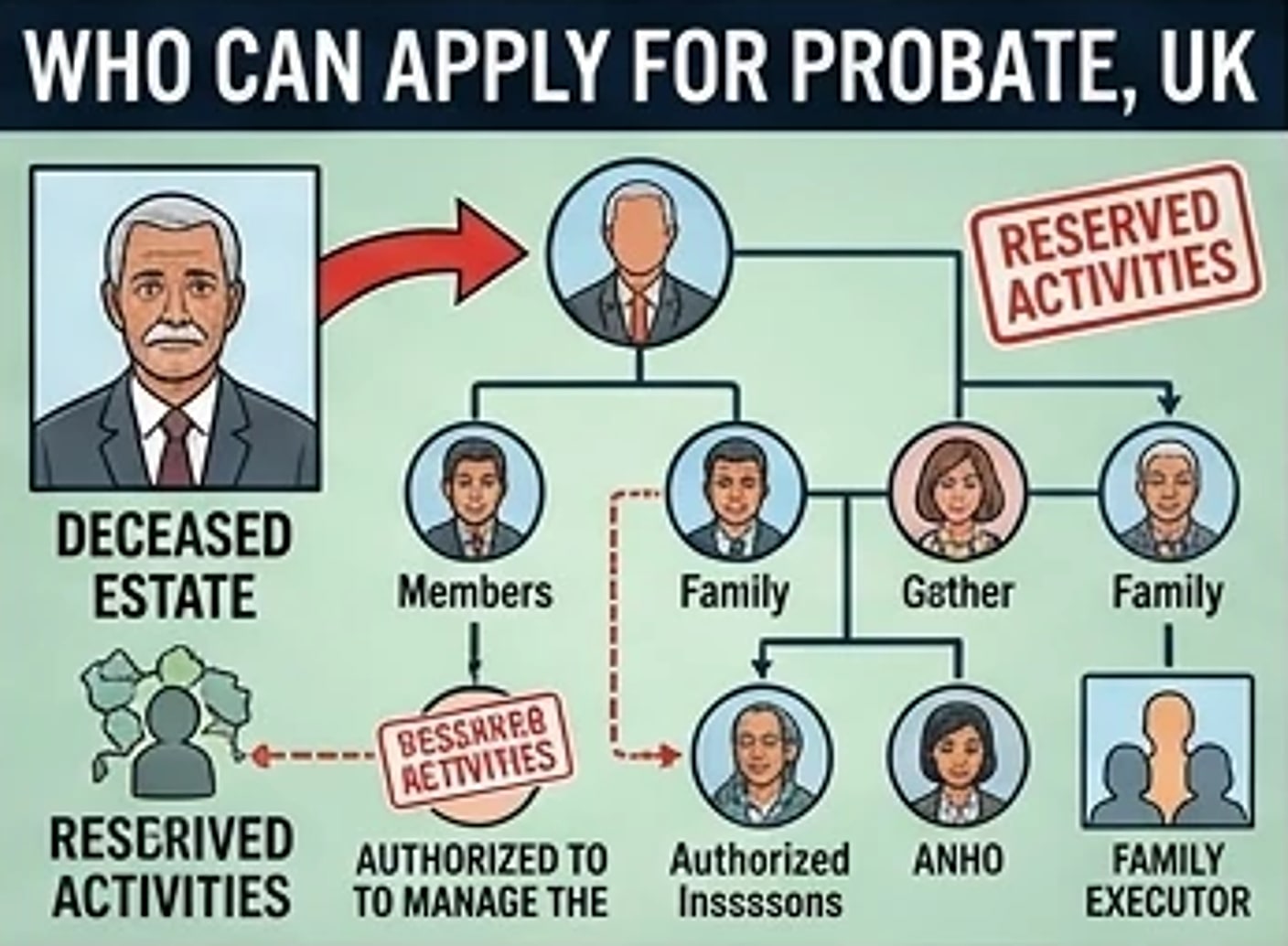
Probate activities are a separate reserved activity under paragraph 6 of Schedule 2. They cover preparing probate papers on which to found, or oppose, a grant of probate or letters of administration. Many authorised persons can do this, including solicitors, some licensed conveyancers with probate rights and some other bodies such as certain accountants’ regulators. The question of probate activities reserved who can apply for grant has a short answer: an authorised person, or the personal representative acting for themselves.
An executor or administrator may apply for a grant themselves without being authorised, because they act for the estate and exemptions apply. What is reserved is doing the paperwork for someone else for reward, unless the person is authorised or exempt. Many people apply for small estates themselves using the court service’s online process, which is lawful.
Much of estate work is unreserved. Giving advice on inheritance tax, collecting assets, paying debts, distributing the estate and drafting wills are not reserved, even though they are legal in nature. Unregulated estate administrators and will writers therefore operate lawfully for these tasks, though they may not have the protections that come with regulation. This is why the line between reserved and unreserved activities is important for consumers.
Risks and practical points
The offence of carrying on a reserved activity without entitlement under section 14 of the Act applies to reserved instrument and probate activities. In practice, the more common problem is quality and protection: an unregulated provider that prepares documents may lack indemnity insurance or access to the Compensation Fund, and mistakes can be costly in property and estate matters.
Supporting teams, including offshore ones, can lawfully do preparatory and clerical work, such as drafting for review, preparing schedules and chasing searches, if an authorised person supervises and takes responsibility for the reserved steps. Document the supervision. Do not let non-authorised staff sign or lodge reserved documents on their own, and do not describe unauthorised providers as regulated conveyancers.
Keep an eye on reform. The Legal Services Board has said that the case for reviewing the list of reserved activities is growing. Any change would take time, but it could affect who can prepare these documents. Meanwhile, rely on the current Act. If you run a service that touches these activities, map each task and keep records of who did what. Always map each document to Schedule 2 Legal Services Act instruments before you delegate it.
Next steps and quick answers
If you are buying, selling or administering an estate, check the regulatory status of the person who will prepare the documents. If you provide support services, map tasks to Schedule 2 and keep reserved steps with authorised persons. This is general information, not legal advice.
Related reading: reserved legal activities and outsourcing to India, unreserved legal activities in England and Wales, whether the reserved activities list will change, paralegal support for solicitors offshore, NRIs in the UK: property and inheritance disputes in India and a legal outsourcing agreement for solicitors; also reserved probate activities in England.
Quick answers
What are reserved instrument activities?
Under Schedule 2 of the Legal Services Act 2007, they cover preparing certain instruments relating to property, such as transfers and charges for Land Registry purposes, and lodging registration applications. Only authorised or exempt persons may carry them on.
Who can do conveyancing in England and Wales?
Solicitors regulated by the SRA, licensed conveyancers regulated by the CLC and some other authorised practitioners. Check the regulator’s register.
Do I need a solicitor to apply for probate?
No. An executor or administrator can apply for a grant themselves. Preparing probate papers for others is a reserved activity unless the person is authorised or exempt.
Can an offshore team prepare a conveyancing document?
Not if the task is a reserved instrument activity. They can help with research and administration under supervision.
Final word
Halverton & Co. is an Indian law firm advising UK companies, founders, investors and law firms on Indian law, including legal support services for UK law firms and cross-border estate and property matters between India and the UK. We practise in Jharkhand, Maharashtra and before the Supreme Court of India, and work alongside your UK solicitors, who advise on English law. Halverton & Co.: Where tech needs law! If you have a question about Indian law, write to us at office@halvertonandco.com, or get in touch.
This article reflects developments reported up to 31 October 2026. It is for general information only, is not legal advice, and does not create a solicitor-client relationship. Halverton & Co. is an Indian law firm, is not authorised or regulated by the Solicitors Regulation Authority, and does not advise on English law; UK-law points should be confirmed with UK advisers.
Sources
Related practice area
Startups & Venture
From incorporation to term sheet. The documents a company needs to be fundable.
View the practice areaComments
No account needed. Comments are reviewed before they appear, so yours will show here once approved. Please do not share confidential details or describe your own legal matter: replies are general discussion, not legal advice, and do not create an advocate-client relationship. For your own situation, write to office@halvertonandco.com.