Key takeaways
- Under a final rule published on 20 March 2026, foreign-domiciled applicants and patent owners must be represented by a registered US patent practitioner.
- Later papers from a foreign applicant are not entered unless a registered practitioner signs them.
- Sources give an effective date of 18 or 20 July 2026, and the Federal Register citation should be checked.
- Appoint US counsel early and review every pending US filing.
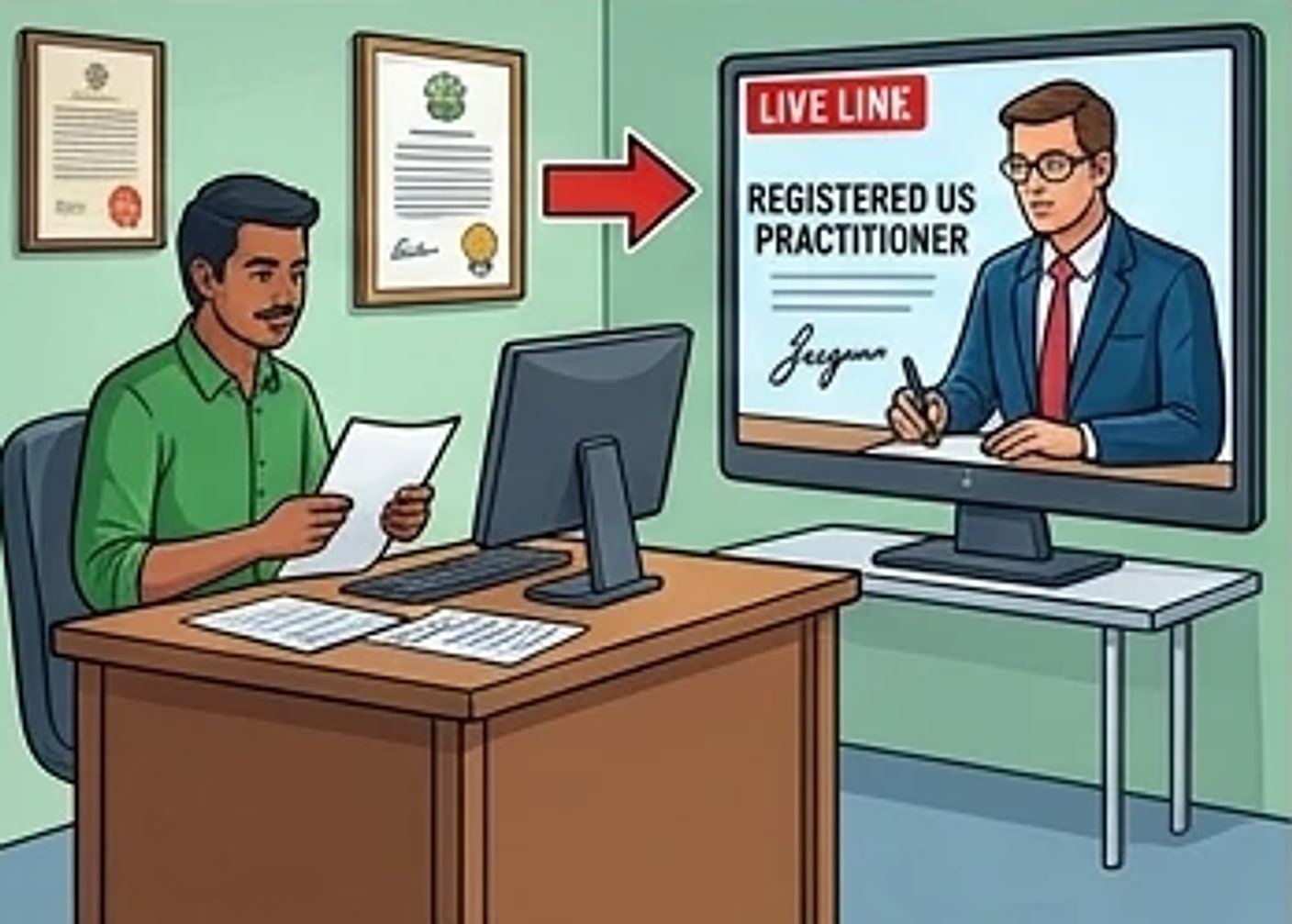
The USPTO foreign applicant patent attorney requirement is now in force. Under a final rule published on 20 March 2026 and effective in the second half of July (most sources say 20 July), applicants and patent owners who live or are based outside the United States have to be represented by a registered US patent practitioner. Papers from them that aren’t signed by one won’t be entered.
For Indian inventors and start-ups filing in the US, that changes the plan. A filing you used to do yourself or through an Indian agent now needs a US attorney or registered agent for anything after the first step. For US firms, it is a source of new work. This piece covers what the rule does and how to handle it, without pretending the rule is simpler than it is. The USPTO foreign applicant patent attorney requirement means appointing counsel at the start. A registered patent practitioner requirement now applies.
What the rule says
The final rule requires patent applicants and patent owners domiciled outside the United States and its territories to use a registered US patent practitioner. Reports say there is no exception for mixed groups: if any applicant is foreign-domiciled, the requirement applies to the whole application. The USPTO considered carve-outs and declined them. The USPTO foreign applicant patent attorney requirement is part of a wider USPTO final rule foreign-domiciled applicants must follow.
The rule bites on later papers. A foreign applicant can still get a filing date without a practitioner, but after that, filings won’t be entered unless a registered practitioner signs them. Some certifications, such as claiming micro entity status, must also be signed by a practitioner.
Sources differ by a couple of days on the effective date, with July 18 and July 20 both appearing, and the Federal Register citation quoted in one note could not be confirmed. Check the Federal Register notice of 20 March 2026 for the exact reference. This USPTO final rule foreign-domiciled applicants face is the second step in a longer campaign against low-quality filings. Whichever date you use, the USPTO foreign applicant patent attorney requirement applies to later papers, and the practical rule is that foreign applicant papers not entered unless signed by a practitioner will sit unprocessed.
What it changes for Indian applicants
If you are an Indian inventor or company filing directly at the USPTO, you need a US practitioner on the file for anything beyond the initial filing. That includes responding to office actions, filing amendments, paying certain fees through counsel and managing maintenance. An Indian patent agent can still advise, but the signature has to come from a registered US attorney or agent. Under the USPTO foreign applicant patent attorney requirement, an Indian inventor US patent counsel arrangement is no longer optional.
Cost is the obvious worry. A start-up that used to file a provisional itself, or through an Indian agent, now builds in a US counsel fee. It is worth asking early how the work will be divided: who drafts, who reviews, who signs. A good arrangement keeps the technical drafting with people who know the invention and uses the US practitioner for the legal steps and filing.
Entering the US through the PCT national phase is affected too. The designated office will expect a practitioner to sign the national stage papers. Plan the budget at the same time as the PCT application, not at month 30.
What it changes for US firms
For a US patent firm, the Indian inventor patent US counsel need is real demand. Applicants who didn’t think they needed a US firm now do, and many have no existing relationship. They will ask about price, communication and time zones. For firms, a US patent firm Indian clients relationship now starts with an engagement and a power of attorney.
| Stage | Foreign applicant alone? | Needs US practitioner? |
|---|---|---|
| Initial filing for a date | Reported possible | Check current rule |
| Responses and amendments | No | Yes |
| Micro entity and similar certifications | No | Yes |
| PCT national phase papers | No | Yes |
Expect questions on how the firm works with Indian drafting support. Some firms already use Indian teams for searches and drafting, which raises the foreign filing licence, export control and confidentiality issues covered in our post on outsourcing patent drafting to India. A US firm that signs for foreign applicants also takes on the practitioner’s duties, so it must review what it signs and not simply act as a mailbox.
Mind the conflicts and engagement paperwork. Foreign clients need clear engagement letters about who instructs the firm, who pays, how documents are verified and how the firm gets authority to sign. Representation of a foreign owner typically needs a proper power of attorney and a path to reach the client quickly when deadlines loom. The USPTO foreign applicant patent attorney requirement raises conflicts and engagement points too.
Practical steps and pitfalls
Before you file, decide who the US practitioner will be and have them in the loop from the start. A last minute switch of representatives means extra paperwork and delay. Check that the person is on the USPTO’s roster of registered practitioners, and that they are comfortable acting for a foreign client. Before the USPTO foreign applicant patent attorney requirement bites on your portfolio, list every pending filing.
Fix your existing portfolio too. A pending application with Indian signatures on the file is exactly what the rule hits. List every pending US filing, check what’s due in the next six months, and appoint counsel in good time. A missed response deadline is far more costly than a retainer.
Keep the other US rules in view. Foreign filing licences for inventions made in the US, export controls and confidentiality all still apply to how you handle drafts, wherever they are prepared. And be wary of anyone who offers a “workaround” that avoids a registered practitioner. The rule leaves very little room for one. Nobody should pay for a workaround, because the USPTO foreign applicant patent attorney requirement leaves little room.
Questions people ask
The rule is simple in principle and fiddly in practice. The way to keep it simple is to appoint counsel early and to treat the signature as the point of control. The USPTO foreign applicant patent attorney requirement is simple in principle.
Related reading: Indian patent prosecution for US firms, outsourcing patent drafting to India: US rules, patent paralegal outsourcing in India, filing in India after a US provisional, how to file a patent in India and patent filing costs in India for startups; also USPTO likelihood of confusion refusals and USPTO specimen refusals.
Quick answers
What is the USPTO foreign applicant patent attorney requirement?
Under a 2026 final rule, applicants and patent owners domiciled outside the US must be represented by a registered US patent practitioner. Later papers from them are not entered unless a registered practitioner signs them. The USPTO foreign applicant patent attorney requirement is in the final rule.
Can an Indian inventor still get a US filing date without a US attorney?
Reports say a foreign-domiciled applicant can still obtain a filing date without a practitioner’s signature, but later filings need a registered practitioner to sign. Take US advice before relying on this.
Does the rule apply if only one of several applicants is foreign?
Reports say the USPTO declined to create an exception for mixed groups, so one foreign-domiciled party triggers the requirement for the application.
Does the rule apply if one of several applicants is foreign?
Reports say the USPTO declined an exception for mixed groups, so one foreign-domiciled party triggers it.
Final word
Halverton & Co. is an Indian law firm advising US companies, founders, investors and law firms on Indian law, including Indian patent prosecution and drafting support for US patent firms and Indian applicants, working alongside registered US practitioners. We practise in Jharkhand, Maharashtra and before the Supreme Court of India, and work alongside US counsel, who advise on US law. Halverton & Co.: Where tech needs law! If you have a question about Indian law, write to us at office@halvertonandco.com, or get in touch.
This article reflects developments reported up to 31 October 2026. It is for general information only, is not legal advice, and does not create an attorney-client relationship. Halverton & Co. is an Indian law firm and does not advise on US law; US-law points should be confirmed with US counsel.
Sources
Related practice area
Intellectual Property
Trade marks, copyright, patents and designs. Searched, filed, licensed and enforced under Indian law.
View the practice areaComments
No account needed. Comments are reviewed before they appear, so yours will show here once approved. Please do not share confidential details or describe your own legal matter: replies are general discussion, not legal advice, and do not create an advocate-client relationship. For your own situation, write to office@halvertonandco.com.