Key takeaways
- 35 U.S.C. 184 requires a foreign filing licence before certain inventions made in the United States are filed abroad, and sending details offshore can raise the same issue.
- A 2008 USPTO notice said that disclosing technical data to an offshore vendor to prepare a US application is not covered by a foreign filing licence.
- Export controls under the EAR can apply to technical data regardless of where the application is filed.
- Build a pre-transfer check, a confidentiality agreement and an access log before any invention leaves the firm’s systems.
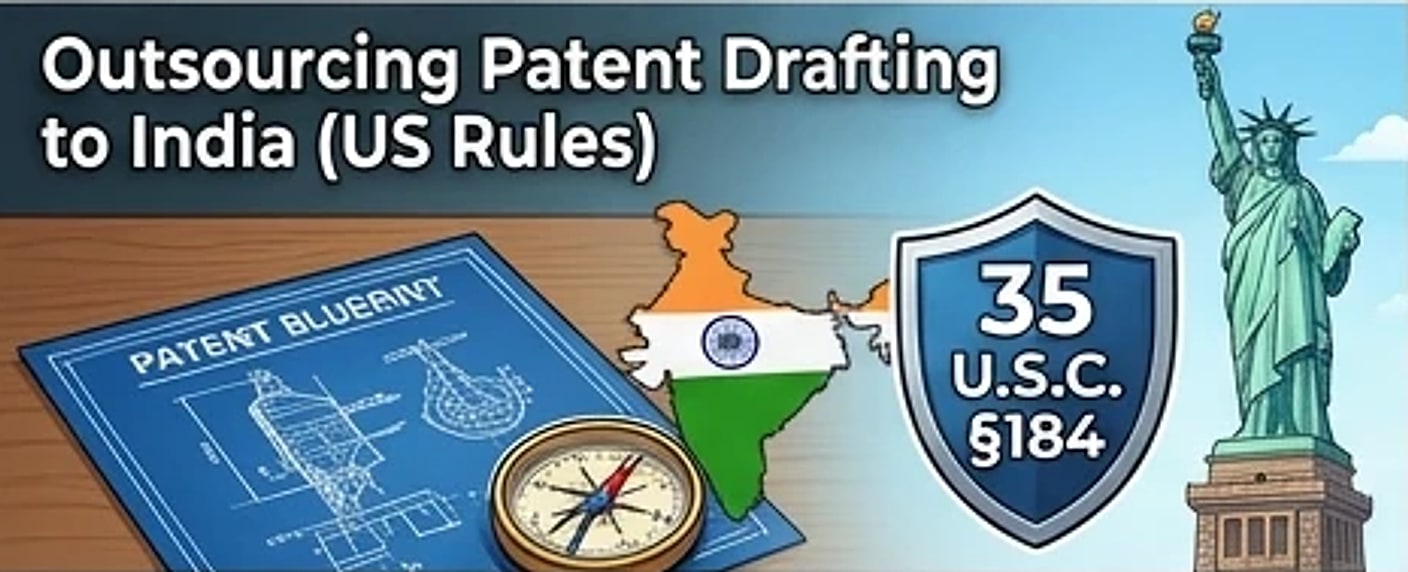
US firms often outsource patent drafting to India to control cost and use technical talent. The risk is that US law regulates where an invention made in the United States may be sent and filed. 35 U.S.C. 184 requires a foreign filing licence before a patent application on a US-made invention is filed abroad, and export controls can apply when technical data is sent to a drafter overseas. If you outsource patent drafting, you should understand both.
This guide explains what the foreign filing licence is, why it does not by itself authorise sending technical data to an Indian drafter, how export rules and secrecy orders fit in, a practical workflow for US firms, and how to document compliance. It is written by an Indian law firm for US readers. US patent and export law points must be confirmed with US counsel and export-control specialists.
The foreign filing licence rule
Section 184 of Title 35 says that a person shall not file or cause or authorise to be filed a patent application in a foreign country for an invention made in the United States unless a licence has been obtained from the USPTO. The regulation is 37 CFR 5.11. In practice, the licence is granted automatically when the USPTO issues a filing receipt for a US application, usually within weeks, unless a secrecy order applies. The foreign filing licence 35 U.S.C. 184 requires is therefore normally easy to get, but only if you file first in the US. Any firm that decides to outsource patent drafting should map these rules first.
Commentary also describes a time-based route: a licence is not needed if six months have passed since the US filing and no secrecy order has been imposed. If the licence is missed, the US patent can be invalid under section 185, but a petition for a retroactive licence is available where the failure was through error without deceptive intent. These are costly problems, so check dates and invention origin before any foreign filing.
The rule turns on where the invention was made, not on the nationality of the inventor. An invention made in the US by a foreign national, or by a US citizen abroad, may be treated differently. Document the facts of invention at the start. If the work is done by a team spread across countries, ask counsel where the invention was made before you decide on filing strategy.
Why a licence does not cover offshore drafting
A common mistake is to think the foreign filing licence authorises sending the invention abroad for drafting. It does not. A USPTO notice in 2008 said that a licence is limited to the filing of foreign patent applications and does not authorise exporting subject matter for the preparation of patent applications to be filed in the US, whether or not a licence has been granted. So when you send an invention disclosure to an Indian drafter for a US application, the licence is not the relevant authority.
The question then moves to export control. Technical information sent abroad can be an export under the Export Administration Regulations, enforced by the Bureau of Industry and Security, or under the International Traffic in Arms Regulations if the technology is defence related. Some commentators say that exporting technical information for drafting falls under the jurisdiction of the Bureau of Industry and Security. The analysis depends on the technology, its classification and the destination. The export control patent drafting offshore analysis is separate from the licence.
For many commercial inventions, the technology will be classified in a way that allows export to India without a licence, but that must be checked, not assumed. Technologies in areas such as encryption, semiconductors, advanced computing, aerospace and defence need specific analysis. Ask export-control counsel to classify the technology before you send the disclosure. Outsource patent drafting only after that step is recorded.
Export controls and secrecy orders
A secrecy order is issued by the USPTO where an application contains subject matter that could harm national security if published. It restricts disclosure and foreign filing. If you have sent a disclosure to an offshore drafter and a secrecy order later issues, you may have an unwanted disclosure. Reduce the risk by filing a US provisional first for sensitive inventions, so that the USPTO review and licence happen before wide circulation. A secrecy order foreign filing restriction can follow a disclosure that has already been sent abroad.
| Check | Why it matters | Who decides |
|---|---|---|
| Where was the invention made? | Foreign filing licence rules turn on place of invention and filing | US patent counsel |
| Is the subject matter export controlled? | The EAR may restrict technical data | Export control counsel |
| Is the invention already filed in the US? | Filing status changes the licence position | US patent counsel |
| Who will see the disclosure? | Confidentiality and access control | Firm and vendor |
| How is data stored and transferred? | Security and records | Firm IT and vendor |
Sanctions and entity lists also matter. US firms should check that the Indian vendor and its staff are not on restricted lists and that the vendor does not onward-transfer data to restricted countries. Contract terms should prohibit onward transfers, require compliance with export laws and give audit rights. A vendor that uses cloud services or subcontractors outside India creates additional export paths. Anyone who decides to outsource patent drafting should also record export classification.
India also has its own rules. Indian patent law requires an Indian resident inventor to obtain permission before filing a patent application abroad, under section 39 of the Patents Act, 1970, and the same applies to a person who makes an invention in India for a US client. Indian drafters should not file abroad on behalf of US clients without checking this rule. The practical lesson is that foreign filing law operates in both countries and has to be mapped for each invention.
A compliant workflow
Start with intake. Ask the inventor where the invention was made, who contributed, whether it relates to controlled technology and whether any government funding or contract applies. Record the answers. For controlled or sensitive cases, do not send the disclosure offshore until export-control counsel has cleared it. For routine software or mechanical cases, document a classification and a no-licence-required conclusion. For a US firm, 37 CFR 5.11 foreign filing license compliance and export classification should be recorded for each matter.
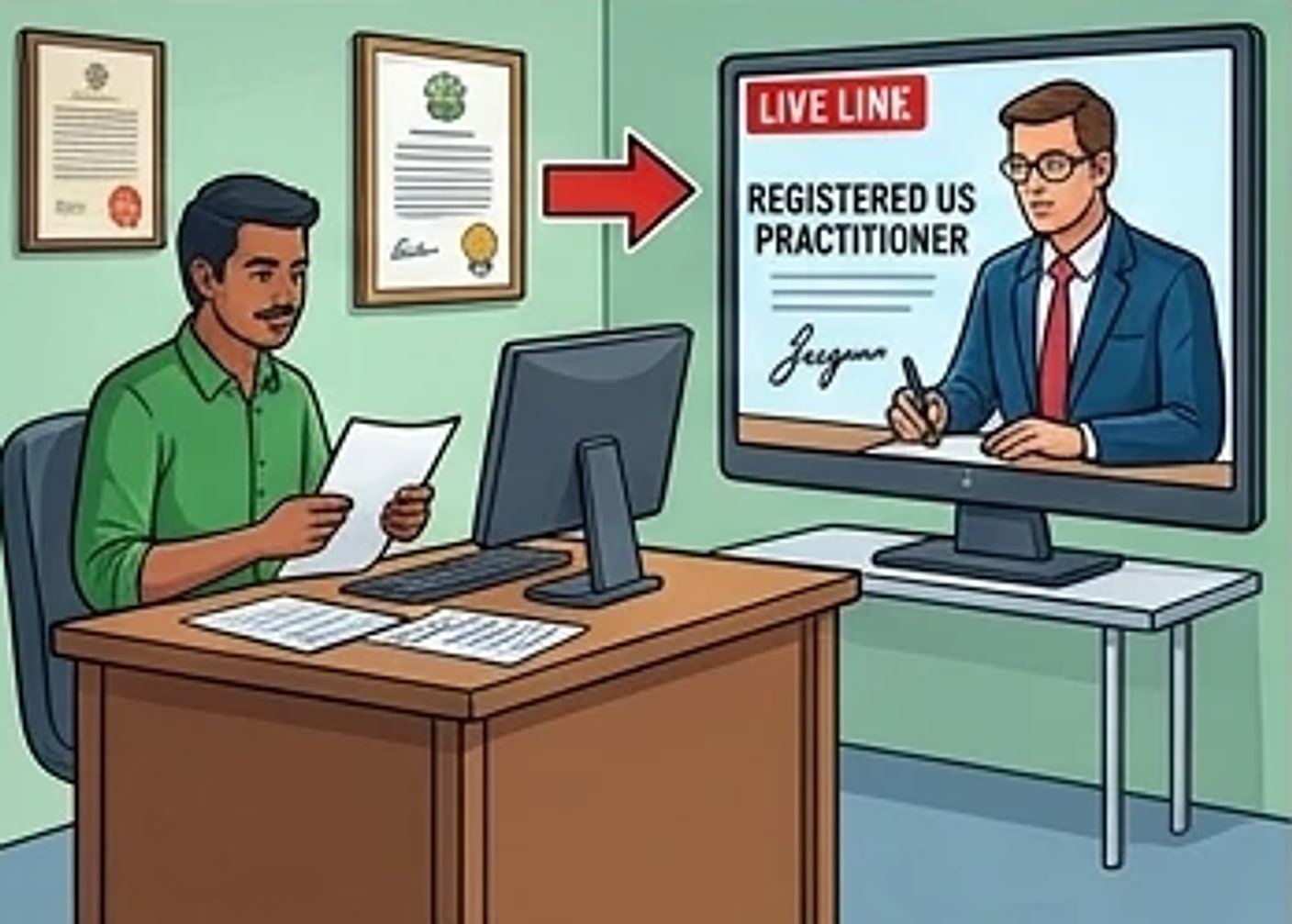
Use a secure process. Send disclosures through a controlled system, restrict access to named people, prohibit local copies and onward sharing, and keep logs. The vendor contract should include confidentiality, data security, export-control compliance, no subcontracting without consent, audit rights and prompt return or deletion. File the US application first where possible, and let the filing receipt confirm the licence before any foreign filing.
Check the quality side too. A US patent attorney remains responsible for the application and for signing it, and must review the offshore draft. Keep a record of supervision, comments and approvals. ABA ethics rules on outsourcing apply to the US firm, which must protect client confidences and supervise non-lawyer work. Treat outsourced drafting as an extension of your practice, not a separate service. A US patent attorney who relies on patent drafting India US patent attorney support must still review and sign every application.
Next steps and quick answers
Before your next offshore drafting job, add export classification, invention origin and secrecy checks to your intake form, update the vendor contract and keep records. Ask US counsel for a short policy. This is general information, not legal advice, and US export law should be confirmed with specialists. Build these steps into the policy whenever you outsource patent drafting.
Related reading: Indian patent prosecution for US firms: Form 3 and Form 27, patent paralegal outsourcing to India, ABA Opinion 08-451 and outsourcing legal work to India, software patents in India for US tech companies, privilege and offshore legal vendors and client consent for offshore legal work; also patent registration in the UAE.
Quick answers
Does a foreign filing licence let me send an invention to India for drafting?
No. The licence relates to filing abroad. A USPTO notice said it does not authorise exporting subject matter for preparing US applications. Technical data sent abroad for drafting is analysed under export control rules, so get classification advice.
What happens if I file abroad without a licence?
The US patent can be held invalid under section 185, but a petition for a retroactive licence may be available if the failure was through error without deceptive intent. Act quickly and take US advice.
Do I need to check Indian rules too?
Yes. Section 39 of the Patents Act, 1970 requires permission for foreign filing of inventions made in India by Indian residents, so check the inventor’s location and residence.
Is outsourcing patent drafting to India allowed?
It is not banned, but a US firm must address foreign filing licences, export controls, confidentiality and supervision first. Take US export control advice.
Final word
Halverton & Co. is an Indian law firm advising US companies, founders, investors and law firms on Indian law, including patent drafting and prosecution support for US firms, Indian foreign filing permission, IP assignment and technology contracts. We practise in Jharkhand, Maharashtra and before the Supreme Court of India, and work alongside US counsel, who advise on US law. Halverton & Co.: Where tech needs law! If you have a question about Indian law, write to us at office@halvertonandco.com, or get in touch.
This article reflects developments reported up to 31 October 2026. It is for general information only, is not legal advice, and does not create an attorney-client relationship. Halverton & Co. is an Indian law firm and does not advise on US law; US-law points should be confirmed with US counsel.
Sources
Related practice area
Intellectual Property
Trade marks, copyright, patents and designs. Searched, filed, licensed and enforced under Indian law.
View the practice areaComments
No account needed. Comments are reviewed before they appear, so yours will show here once approved. Please do not share confidential details or describe your own legal matter: replies are general discussion, not legal advice, and do not create an advocate-client relationship. For your own situation, write to office@halvertonandco.com.