Key takeaways
- India has no statute on voice cloning, but Delhi and Bombay High Court orders have protected celebrities against AI cloning.
- Cloning a famous voice without permission risks an injunction, damages and takedowns, and performers’ rights under the Copyright Act also matter.
- With written consent, a clear licence that covers AI and proper labelling, cloning can be lawful.
- The 2026 IT Rules require synthetic content to be declared and labelled on platforms.
Is AI voice cloning legal India creators and advertisers ask about? It depends entirely on whose voice and whether they said yes. Cloning your own voice is fine. Cloning a voice actor’s voice with a signed licence that covers AI is fine. Cloning a famous singer’s voice for an ad without permission is the kind of thing Indian courts have been stopping, quickly.
There is no statute on voice cloning in India. What exists is a mix of personality rights built by courts, performers’ rights in the Copyright Act, privacy, passing off, advertising rules and the 2026 IT Rules on synthetic media. This post sets out the rules in practice for someone about to commission a cloned voice for an ad, a podcast or a game, and the contract terms that keep you safe. So, is AI voice cloning legal India law allows? Only with consent, and the Copyright Act performers rights voice actors hold also matter.
What the courts have said
Indian courts haven’t ruled on voice cloning in the abstract, but they have granted interim orders protecting people from it. In 2023 the Delhi High Court protected actor Anil Kapoor’s name, image, voice and mannerisms against misuse including AI-generated content. In July 2024 the Bombay High Court restrained a company from using AI to clone singer Arijit Singh’s voice, in a case involving a voice-cloning tool. AI voice cloning legal India questions are decided by courts, not a statute.
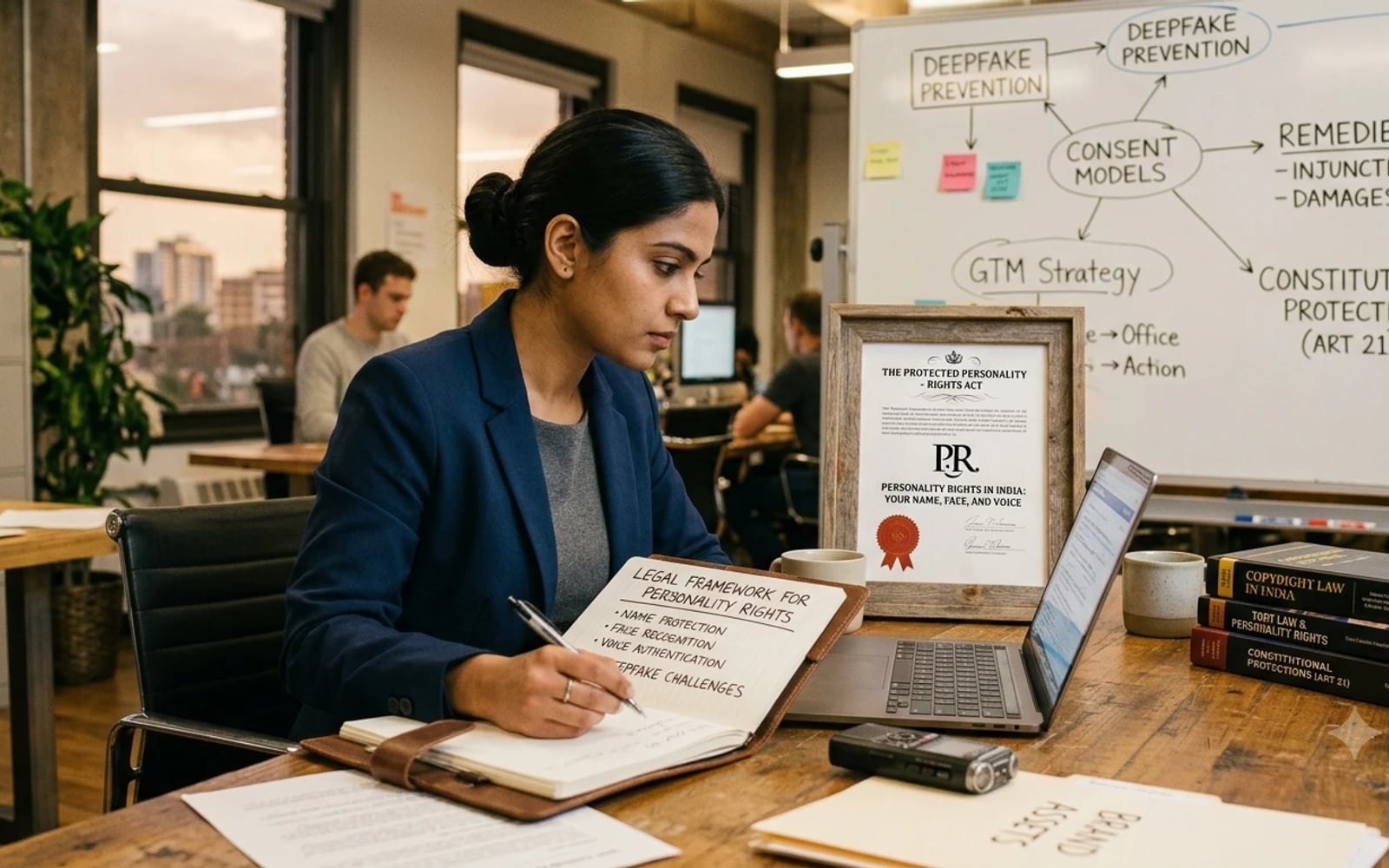
Those cases rest on personality rights: the idea that a person with a reputation controls commercial use of their identity. The orders usually prohibit use of the person’s name, voice, likeness and signature elements without consent and direct platforms to remove infringing content. They are interim and fact specific, but a pattern is clear, and later cases have followed. Personality rights singer voice cloning cases show courts are willing to act fast.
Courts also rely on passing off, since using a celebrity’s voice to sell goods can suggest an endorsement, and on privacy and the right to be left alone. Whether a less famous person can use the same route depends on proof of reputation and harm, but the law isn’t limited to film stars. On AI voice cloning legal India orders protect more than film stars. Personality rights singer voice cloning cases are the model.
Cloning a famous voice: why it is risky
If you clone a well-known person’s voice for an ad without permission, expect trouble. You may face an injunction, a damages claim, takedown demands to the platform and an adverse press cycle. The ad agency, the brand and the tool provider can all be named as defendants. Courts have not been sympathetic to the argument that “it is only AI”. AI voice cloning legal India risk is highest when the voice is famous.
Sound-alike voices are a grey zone. A voice actor imitating a celebrity’s style has long been tricky, and passing off applies if the public would believe the celebrity is involved. Using AI to produce a near-identical copy makes the case stronger for the celebrity. A parody label doesn’t always save you in a commercial ad.
Performers’ rights also matter. Under Sections 38 and 38A of the Copyright Act, performers have rights in their performances, including moral rights. Using a recording of someone’s performance to train a voice model, without a licence that covers it, can raise performers’ rights and copyright issues. Voice cloning for advertisements India is therefore a legal exercise first and a creative one second. For voice cloning for advertisements India law is unforgiving of shortcuts.
Cloning with consent: how to do it properly
Get a written voice cloning consent agreement India lawyers would recognise as clear. It should name the person, define the voice data to be used, state the purposes (for example one campaign or an AI voice product), say how long and where the clone may be used, and set out payment. Say whether the licence is exclusive, whether it can be transferred, and what happens when it ends. A voice cloning consent agreement India lawyers would sign is specific about AI.
| Term | What to say | Why |
|---|---|---|
| Voice data and purpose | Name the data and each use | Scope of consent |
| AI consent | Express consent to training and cloning | Older contracts are silent |
| Term and territory | Length and where it may be used | Limits on use |
| Payment and approval | Fee for ongoing use and approval rights | Fair value |
| Deletion | Disable the model at the end | Control after term |
Address AI specifically. Many older voice actor contracts say nothing about synthetic reproduction, and a court may read silence against the producer. Spell out whether the actor consents to training a model on their voice, what limits apply (no political or adult content, no uses that harm reputation), and a right to approve or audit. Include a clause that the model must be deleted or disabled at the end of the term.
Pay fairly and record it. A single payment for a recording session isn’t the same as a licence to create a perpetual clone. Payment terms for ongoing use should reflect the value of the clone. And keep the consent and the audio source records in case a dispute arises or a platform asks. Record payment terms, since AI voice cloning legal India disputes often turn on the licence.
Labels, ads and platform rules
The 2026 IT Rules amendment defines synthetically generated information and requires platforms to ask users to declare synthetic content and to label it prominently. If you publish a cloned voice as part of a video or podcast, expect to have to label synthetic audio IT Rules 2026 require. Skipping the label risks takedown and could cost an intermediary its safe harbour. If you publish a clone, label synthetic audio IT Rules 2026 require, as AI voice cloning legal India practice now expects.
Advertising has its own rules. The Advertising Standards Council of India expects ads not to mislead consumers, and the Consumer Protection Act, 2019 deals with misleading ads and endorsements. If a cloned voice suggests that a real person endorses a product, that is potentially misleading. Say clearly when a voice is AI-generated.
Think about platform policies too. YouTube, Instagram and other platforms have their own rules on synthetic media and impersonation, and they may remove content on a complaint without a court order. A creator who wants a stable channel should follow those rules, whether or not Indian law requires it. Platform rules apply to AI voice cloning legal India creators use, whatever the court orders say.
Questions people ask
A simple test before any cloning job: would the person whose voice it is be happy to see this, and can you prove they said so? If the answer to either is no, stop and talk to a lawyer. AI voice cloning legal India law will keep developing.
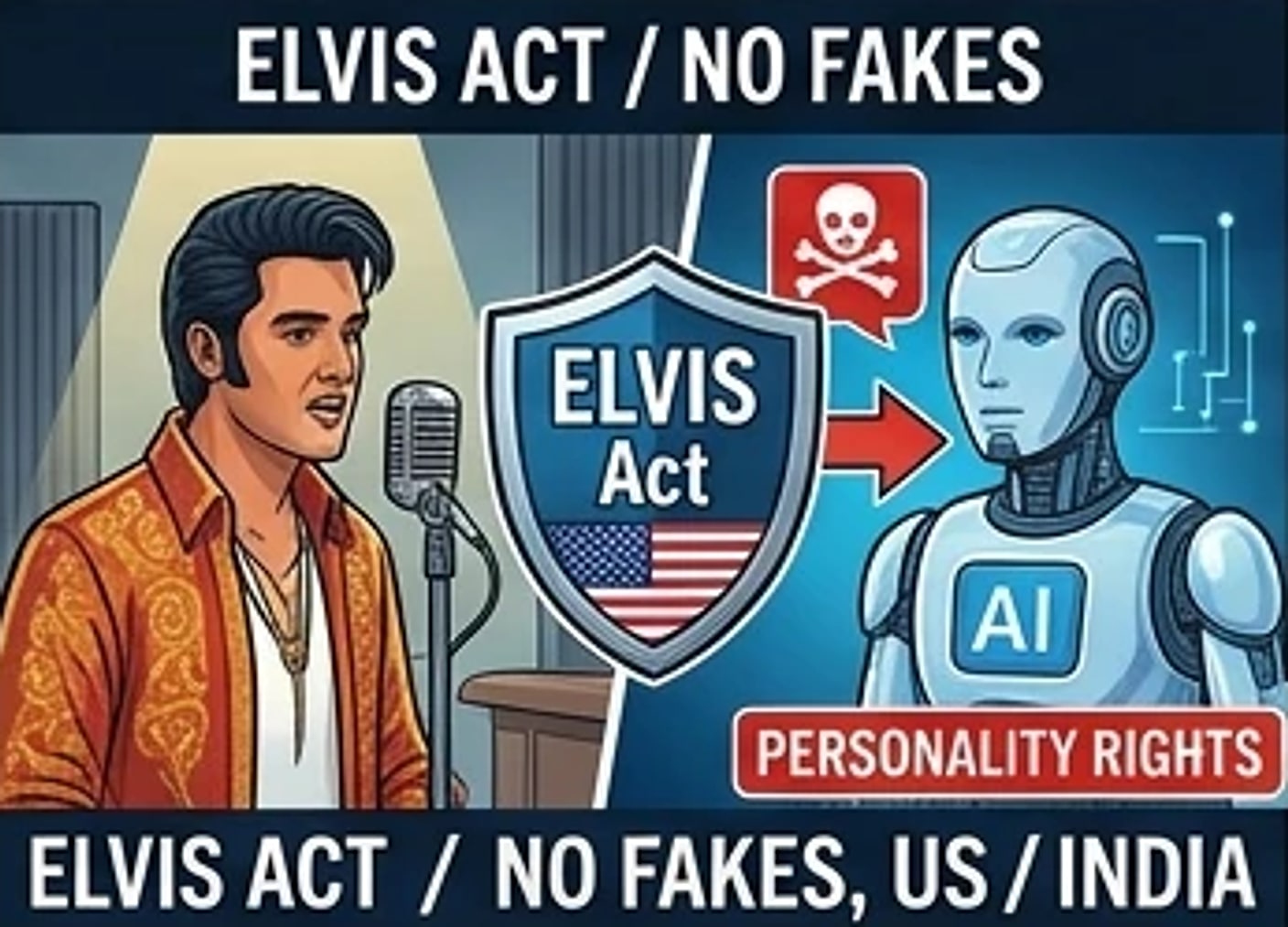
Related reading: deepfakes and personality rights in India, deepfake removal in India, AI voice and likeness law: ELVIS, NO FAKES and India, AI-generated content labelling in India, ASCI influencer guidelines and who owns influencer content for a brand.
Quick answers
Is AI voice cloning legal India law allows?
There is no statute banning it, but cloning a person’s voice without consent can breach personality rights, passing off, performers’ rights and privacy. Courts have granted orders against it. With written consent, a clear licence and labelling, it can be lawful.
Can I clone a celebrity’s voice for an ad in India?
Not without their permission. Courts in Delhi and Bombay have restrained AI cloning of celebrity voices, and ads using a cloned voice risk injunctions, damages and takedowns.
What should a voice cloning contract include?
Include the person, the voice data, purposes, term, territory, exclusivity, payment, limits on use, approval and audit rights, deletion at the end and an express AI consent clause.
Can I clone a celebrity’s voice for an ad?
Not without permission. Courts have restrained AI cloning of celebrity voices.
Final word
Halverton & Co. is an Indian law firm advising founders, startups, technology companies and investors on Indian law, including media, advertising and AI technology contracts for creators, agencies and platforms in India. We practise in Jharkhand, Maharashtra and before the Supreme Court of India, and act as fractional legal counsel for technology-driven businesses. Halverton & Co.: Where tech needs law! If you have a question about Indian law, write to us at office@halvertonandco.com, or get in touch.
This article reflects developments reported up to 31 October 2026. It is for general information only, is not legal advice, and does not create an advocate-client relationship. Halverton & Co. is an Indian law firm.
Sources
Related practice area
Technology & AI Law
Contracts, data protection and AI policies for products that handle other people’s data.
View the practice areaComments
No account needed. Comments are reviewed before they appear, so yours will show here once approved. Please do not share confidential details or describe your own legal matter: replies are general discussion, not legal advice, and do not create an advocate-client relationship. For your own situation, write to office@halvertonandco.com.