Key takeaways
- A UK patent attorney stays responsible for outsourced work under the IPReg regime.
- Searches, claim charts, formalities and docketing are common support tasks; opinions and strategy stay with the attorney.
- Section 23 of the Patents Act 1977 restricts foreign filing without permission, so check before sending unfiled inventions offshore.
- Use a written agreement covering confidentiality, security, data protection and exit.
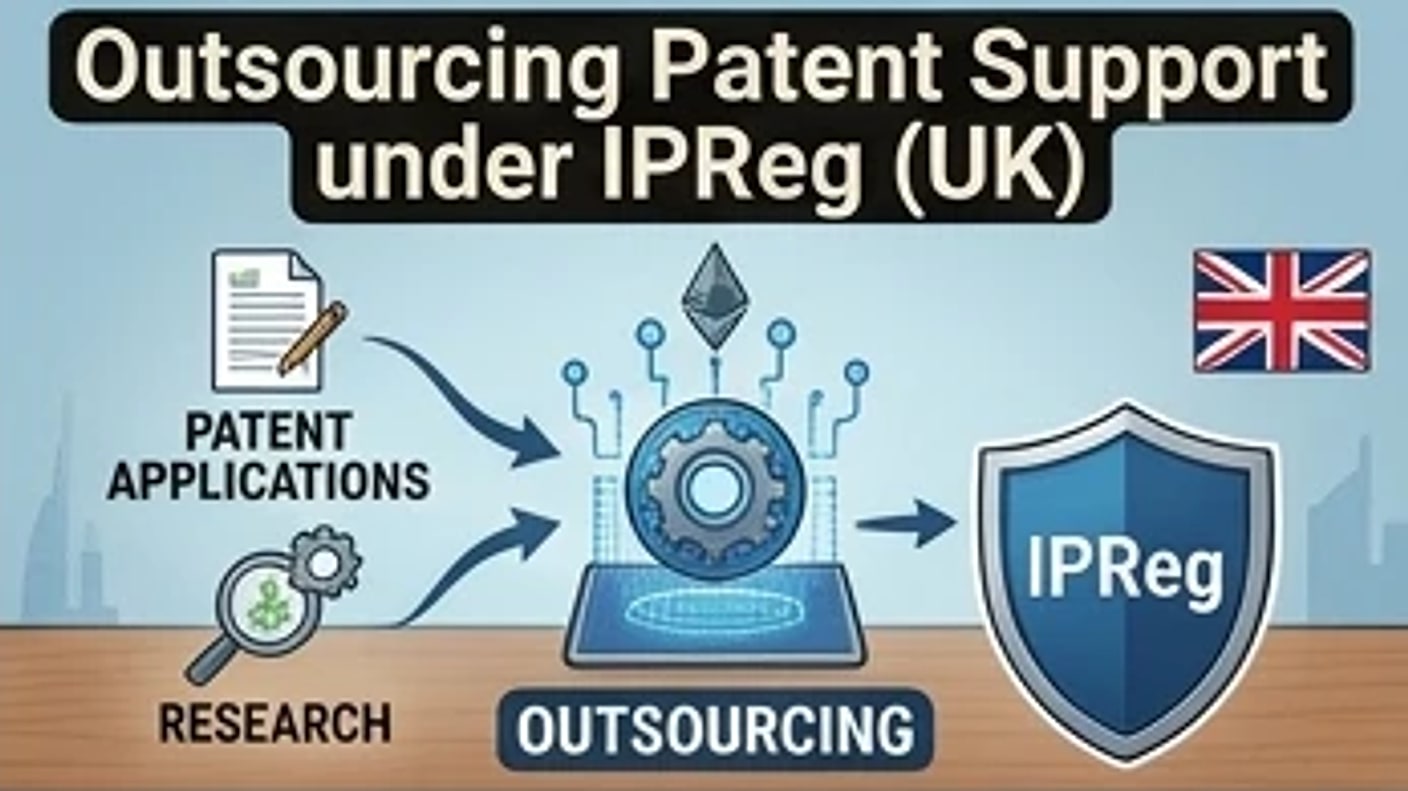
Patent attorney outsourcing UK firms consider is usually practical: prior art searches, claim charts, drafting support, formalities and docketing sent to an offshore team to keep fees competitive. Regulated patent attorneys remain responsible for their work, so the main question is not whether support can be used but how to do so safely under the IPReg regime, the Patents Act 1977 and client confidentiality duties.
This guide sets out the main points a UK patent firm should consider when sending work to India or elsewhere, with a clear limit: the points here come from general regulatory principles and professional commentary rather than IPReg guidance specific to outsourcing, and they must be checked against IPReg’s current Code of Conduct. It is written by an Indian law firm for UK readers and is not legal advice. Patent attorney outsourcing UK firms use should be documented in engagement terms.
The regulatory frame
The Intellectual Property Regulation Board regulates registered patent attorneys and trade mark attorneys and their firms in the UK. A new core regulatory framework, including a Code of Conduct and disciplinary processes, came into effect on 1 July 2023, according to a CIPA presentation. IPReg Code of Conduct outsourcing questions turn on general duties: act in the client’s best interests, keep client information confidential, be competent, supervise those who work for you and not mislead.
Because the regulated person remains responsible, an offshore team is support, not a substitute. The attorney must understand and review the work and take ownership of what goes to the client or the patent office. The regulatory arrangements and code are the primary source, so read them and ask IPReg if unsure.
Also consider how firms describe the arrangement. Clients should not be misled about who does the work or where. Terms of engagement should say whether support is used, how it is supervised and what safeguards apply. Some clients, especially corporates, have outside counsel guidelines that restrict offshore processing or require consent.
What support work is usually suitable
Tasks that are commonly delegated include patent landscape and prior art searches, claim charts, formalities and form preparation, docketing and deadline management, translation checks, proofreading, and first drafts of descriptions from an inventor’s disclosure that an attorney then reviews. Patent drafting support India teams provide can reduce cost, but quality control is vital.
| Task | Suitable offshore? | Condition |
|---|---|---|
| Prior art searches | Yes | Reviewed by the attorney |
| Claim charts and formalities | Yes | Docket control |
| First drafts of descriptions | With care | Attorney rewrites and signs off |
| Infringement and validity opinions | No | Attorney responsibility |
| Unfiled inventions | Check section 23 first | Secrecy and permission rules |
Tasks that need more care include opinions on infringement and validity, advice on strategy and any communication that gives legal advice to the client. These should be carried out or finalised by the attorney. Confidential pre-filing disclosures are sensitive because early leaks can destroy novelty.
Separate technical from legal work. A technically trained offshore team can analyse prior art and technical features, but the legal judgment on patentability and claim scope should rest with the responsible attorney. Record who did what, and keep the supervising attorney’s review in the file. Patent attorney outsourcing UK practice varies by firm and client. Patent drafting support India UK firms use is reviewed by the responsible attorney.
Foreign filing and secrecy rules
Section 23 of the Patents Act 1977 restricts UK residents from applying for a patent abroad for an invention unless they first filed in the UK and either the Comptroller gave permission or a period of six weeks has passed without a secrecy direction, in general terms. The Patents Act 1977 section 23 foreign filing rule means a firm should consider whether sending invention details abroad could amount to, or be linked with, an application abroad. Take advice on the scope.
Section 22 allows the Comptroller to prohibit publication or communication of information relating to inventions that may be prejudicial to national security or public safety. Defence and security-related inventions need special care before any information leaves the UK. Check whether the invention touches those areas.
The US has its own foreign filing licence system, and US clients will have their own constraints. A multi-jurisdiction invention may be subject to several regimes. Build a pre-transfer check into the workflow: sensitivity classification, filing status, destination and approval. Do not send unfiled inventions offshore without checking the position. Patent attorney outsourcing UK workflows need a pre-transfer check for unfiled inventions.
Contract and practical safeguards
The written agreement should deal with confidentiality, assignment of IP in work product, conflicts, security, data protection, audit, insurance and exit. UK patent attorney confidentiality offshore arrangements need restricted access, secure platforms, logging, staff screening, and a ban on use of public AI tools with client technical information. Include a duty to notify breaches quickly.
Data protection applies if personal data of inventors or clients is shared. The provider is usually a processor under UK GDPR, and a transfer mechanism is needed for India. Keep the technical disclosure separate from personal data where possible. Client consent patent outsourcing steps should be recorded in engagement terms or by separate consent where the client’s rules require it.
Test the provider. Start with low-risk tasks, review output closely and measure quality. Keep an inventory of what is sent and where it is stored. Review the arrangement each year. Because IPReg guidance specific to outsourcing is not widely published, consider contacting IPReg or your professional indemnity insurer to confirm expectations. Patent attorney outsourcing UK contracts should be reviewed each year.
Next steps and quick answers
Read the IPReg Code and regulatory arrangements, classify tasks, check foreign filing and secrecy issues, update engagement terms and sign a robust contract. This is general information, not legal advice. Halverton & Co. is an Indian law firm and does not advise on English law. Patent attorney outsourcing UK arrangements should be reviewed when IPReg updates its Code.
Related reading: patent paralegal outsourcing in India, Indian patent prosecution for US firms, trade secret protection in India for source code, a legal outsourcing agreement for solicitors, UK GDPR and outsourcing to India and outsourcing patent drafting to India: US rules.
Quick answers
Can a UK patent attorney outsource work offshore?
Support work can be delegated under supervision, but the regulated attorney remains responsible. Check IPReg’s Code and your clients’ requirements.
Does Section 23 affect offshore support?
It restricts foreign patent applications by UK residents without permission. Take advice on whether sending invention details abroad engages it.
Do clients need to consent?
Often advisable, and sometimes required by client guidelines. Record it in your terms of engagement.
Does IPReg have specific outsourcing rules?
Specific outsourcing guidance was not found in the sources reviewed. Read the Code of Conduct and ask IPReg.
Final word
Halverton & Co. is an Indian law firm advising UK companies, founders, investors and law firms on Indian law, including patent and IP support for UK and other foreign firms, including prior art searching, Indian patent prosecution and cross-border coordination. We practise in Jharkhand, Maharashtra and before the Supreme Court of India, and work alongside your UK solicitors, who advise on English law. Halverton & Co.: Where tech needs law! If you have a question about Indian law, write to us at office@halvertonandco.com, or get in touch.
This article reflects developments reported up to 31 October 2026. It is for general information only, is not legal advice, and does not create a solicitor-client relationship. Halverton & Co. is an Indian law firm, is not authorised or regulated by the Solicitors Regulation Authority, and does not advise on English law; UK-law points should be confirmed with UK advisers.
Sources
Related practice area
Intellectual Property
Trade marks, copyright, patents and designs. Searched, filed, licensed and enforced under Indian law.
View the practice areaComments
No account needed. Comments are reviewed before they appear, so yours will show here once approved. Please do not share confidential details or describe your own legal matter: replies are general discussion, not legal advice, and do not create an advocate-client relationship. For your own situation, write to office@halvertonandco.com.